
TL;DR
Always tee your ball between the markers, up to two club-lengths back, never in front, penalty is two strokes in stroke play or loss of hole in match play.
Key Takeaways
- Teeing area = between tee markers, two club-lengths deep.
- Ball only must be inside; stance can be outside.
- No teeing in front of markers.
- Re-tee allowed if ball falls or is moved before stroke.
- Ball in play only after a stroke (air shot counts).
- Penalty: Two strokes (stroke play) or loss of hole (match play).
- 2019 update simplified rules, removed unfair penalties, and sped up play.
What Are the New Tee Box Rules?
The new tee box rules state that a player must tee the ball within the teeing area, between the tee markers and up to two club-lengths back, but never in front of the markers.
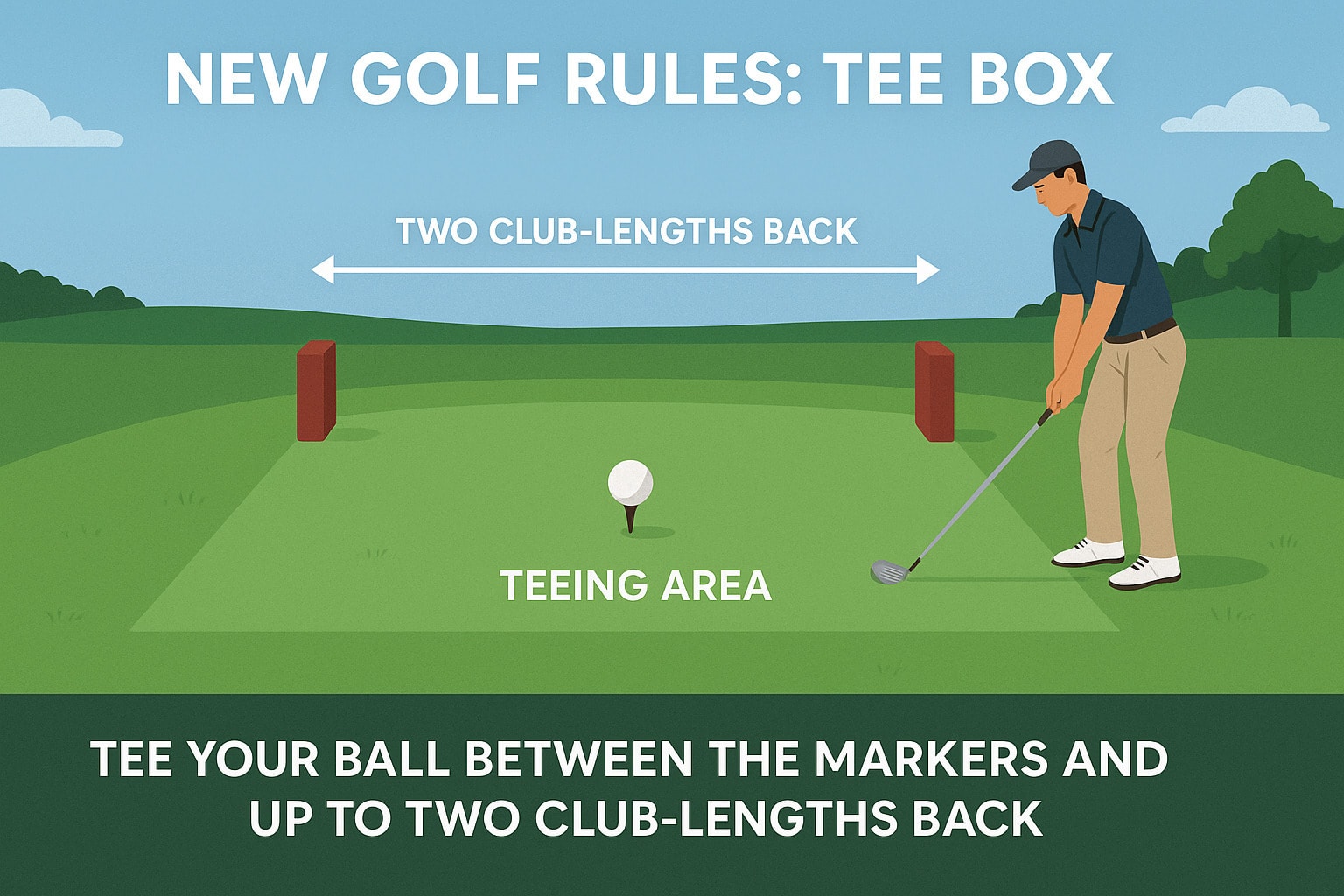
This means the ball is only in play when struck from this defined area, and while your stance may be outside the box, the ball itself must be inside. If you tee off outside the area, the penalty is two strokes in stroke play or loss of hole in match play.
The 2019 USGA/R&A updates also clarified that if the ball falls off the tee or is accidentally moved before a stroke, there is no penalty, and you can simply reset it. These changes make the rules easier to understand, reduce unnecessary penalties, and allow golfers to use the extra two club-lengths strategically for better angles off the tee.
Tee Box Rules in Detail
The tee box rules cover defining the area, where the ball can be placed, your standing position, re-tee allowance, when the ball is in play, and penalties for playing outside.
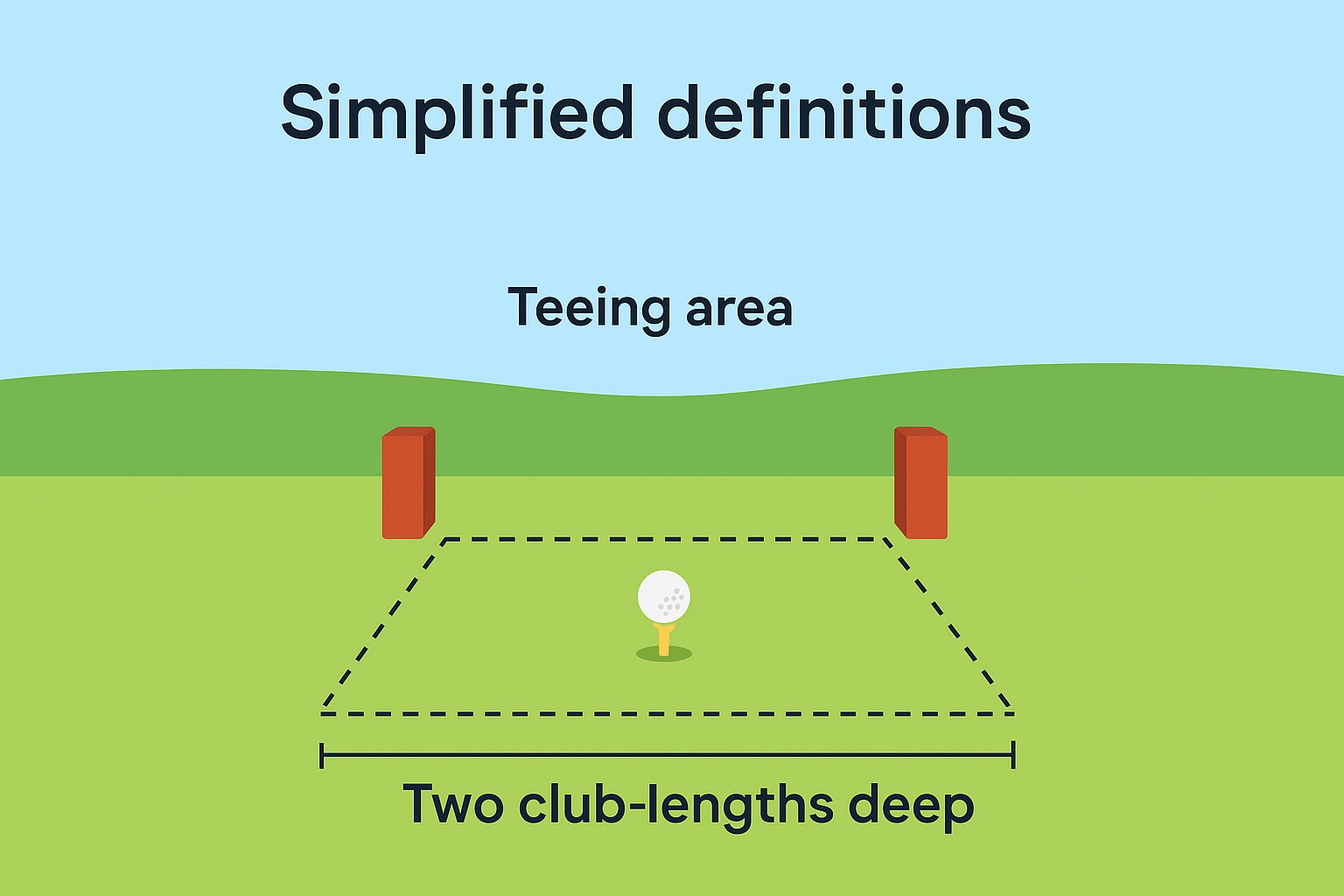
- Defining the area: The teeing area is an imaginary rectangle formed by the front edges of the tee markers and extending back two club-lengths.
- Where the ball can be placed: You may tee the ball on the ground, on a tee, or on a natural object (like a small tuft of grass).
- Standing position: Your stance or feet may be outside the teeing area, but the ball itself must always be inside.
- Re-tee allowance: If the ball falls off the tee or is accidentally moved before a stroke, there is no penalty, you may simply reset it.
- When the ball is in play: A ball only becomes in play once you make a stroke from within the teeing area. An air shot counts as your first stroke.
- Penalties for playing outside: Teeing off outside the area leads to a two-stroke penalty in stroke play (and the shot must be replayed), or loss of hole in match play.
Common Mistakes to Avoid
The most common tee box mistakes include placing the ball in front of the markers, forgetting the two club-length depth, assuming your stance must be inside, and overlooking penalties.
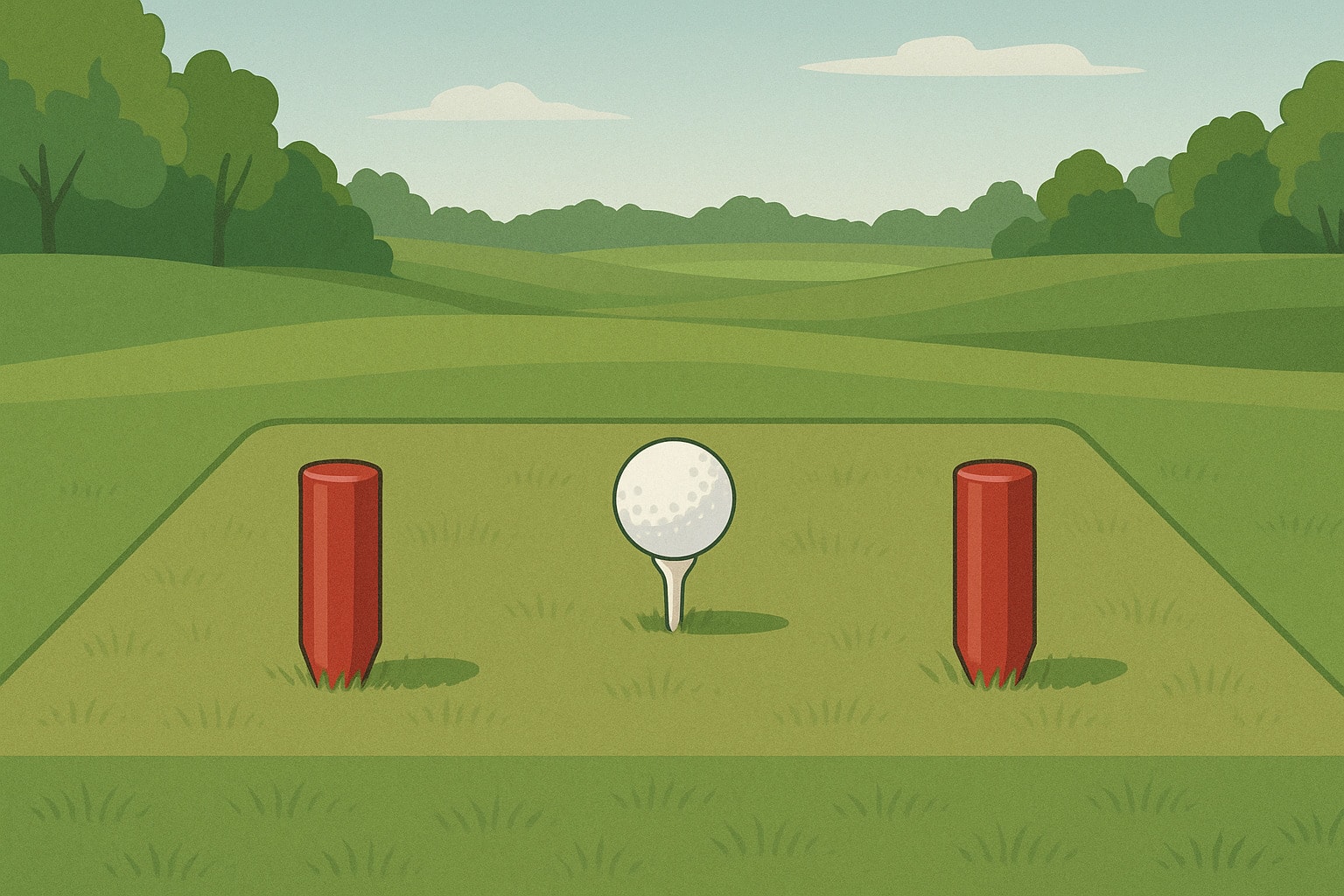
- Placing the ball in front of the markers: This is the most frequent error. Even a few inches ahead is outside the teeing area and will cost you a penalty.
- Forgetting the two club-length depth: Many golfers only use the space between the markers and don’t realize they can go back two club-lengths for a better angle or comfort.
- Assuming your stance must be inside: Only the ball needs to be within the teeing area. Your feet and body can be outside, which gives you more room to set up.
- Overlooking penalties: Playing from outside the teeing area brings a two-stroke penalty in stroke play (and you must replay the shot) or loss of hole in match play.
Why the Rule Changed (2019 Update)
The 2019 update to the tee box rules was made to simplify definitions, reduce unnecessary penalties, and make the game easier for beginners and faster to play.
- Simplified definitions: The “teeing area” was clearly defined as the space between the markers and two club-lengths back, so there’s no confusion.
- No penalty for accidents: If a ball falls off the tee or is moved by the player before a stroke, it no longer counts as in play, saving golfers from unfair penalties.
- Faster play: By clarifying that only the ball must be in the teeing area (not the stance), golfers have more freedom to set up and play quicker.
- Consistency worldwide: The USGA and R&A unified the rules so golfers everywhere follow the same modernized standards.
The 2019 tee box rule changes made golf simpler, fairer, and faster by clarifying the teeing area, removing penalties for accidents, and unifying rules worldwide.
Tee Box Rules vs. Other Rules
Tee box rules differ from other golf rules by defining the starting area, when the ball is in play, re-tee options, and penalties.
| Aspect | Tee Box Rules | Other Rules (General Play) |
|---|---|---|
| Defined area | Teeing area = between markers, two club-lengths deep | General area = all parts of the course except teeing area, penalty areas, bunkers, greens |
| Ball in play | Ball only in play after a stroke is made | Ball is in play once it comes to rest anywhere else on the course |
| Re-tee option | Ball may be re-teed with no penalty before a stroke (falls off or moved) | Ball moved usually requires replacing or taking relief, often with penalty |
| Penalty for error | Playing from outside teeing area = two strokes (stroke play) or loss of hole (match play) | Penalties depend on situation (lost ball, hazard, unplayable, etc.) |
Pro Tips for Tee Box Setup
Smart tee box play comes from checking your ball position, using the full area, knowing stance flexibility, and playing the angles.
- Check your ball position: Always glance at the markers to confirm your ball is not in front. Even a small error leads to penalty.
- Use the full two club-lengths: Don’t limit yourself to just between the markers, stepping back can create a better angle or swing comfort.
- Know your stance freedom: Your feet and body can be outside the teeing area as long as the ball is inside. Use this to adjust for balance.
- Play the angles: On doglegs or narrow holes, teeing up on one side of the box can open your shot shape and improve accuracy.
- Stay consistent: Develop a routine, pick a spot, check alignment, and set up the same way every time for confidence under pressure.

FAQs About Tee Box Rules
Can I tee off outside the markers?
No. The ball must be within the teeing area. Playing from outside is a penalty, two strokes in stroke play or loss of hole in match play.
Does my stance have to be inside the teeing area?
No. Only the ball must be inside the teeing area. Your feet and body can be outside.
What if my ball falls off the tee?
No penalty. You may re-tee the ball as long as you haven’t made a stroke.
What if I accidentally knock the ball off the tee while addressing it?
No penalty. The ball isn’t in play until you make a stroke, so you can reset it.
What happens if I hit from outside the teeing area in stroke play?
You receive a two-stroke penalty and must correct the mistake by replaying from inside the teeing area before starting the next hole.
What happens if I hit from outside the teeing area in match play?
You automatically lose the hole.
In short, the new tee box rules make it clear: tee between the markers, never in front, and know your penalty if you don’t. By mastering these basics, you’ll start every hole with confidence and stay within the rules.
Get instant access to the PDF version of this article with additional resources and insights.