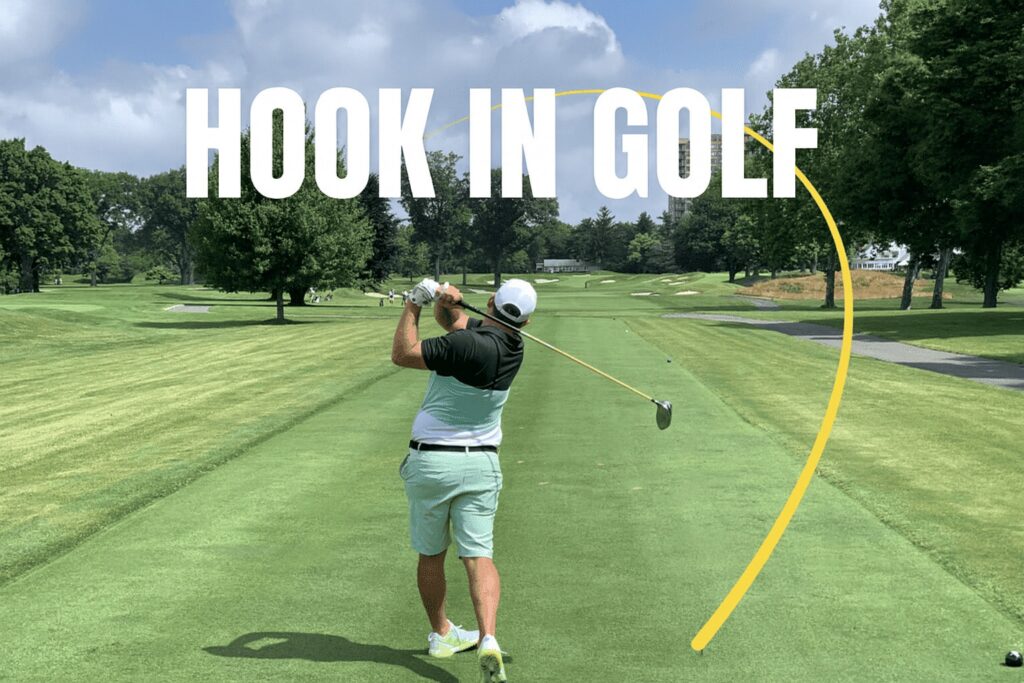
TL;DR – Hook in One Line
A hook is an unintended right-to-left shot that usually sends the ball deep left and into trouble.
Key Takeaways
- Hook curves hard left (RH players) and often misses the fairway.
- Closed clubface + inside-out path are the primary culprits.
- Neutral grip and square face drills are the fastest fixes.
- Hooks travel farther than slices but can find deeper trouble.
- Controlled hooks help shape shots around doglegs or obstacles.
What Is a Hook in Golf?
A hook in golf is a shot that curves sharply from right to left for right-handed players (left to right for left-handed).
A hook typically features a right-starting direction, hard left curve, excessive side spin, a closed clubface with an inside-to-out swing path, lack of control, and strong severity compared to a draw.
- Start direction: Begins right of the target
- Shot shape: Curves hard left mid-flight
- Ball spin: Has excessive left-side spin (for right-handers)
- Cause: Comes from a closed clubface and an inside-to-out swing path
- Control: Usually unintentional and harder to manage than a draw
- Severity: More aggressive curve than a draw, often leading to missed fairways or trouble
Hook vs Draw vs Slice: Key Differences
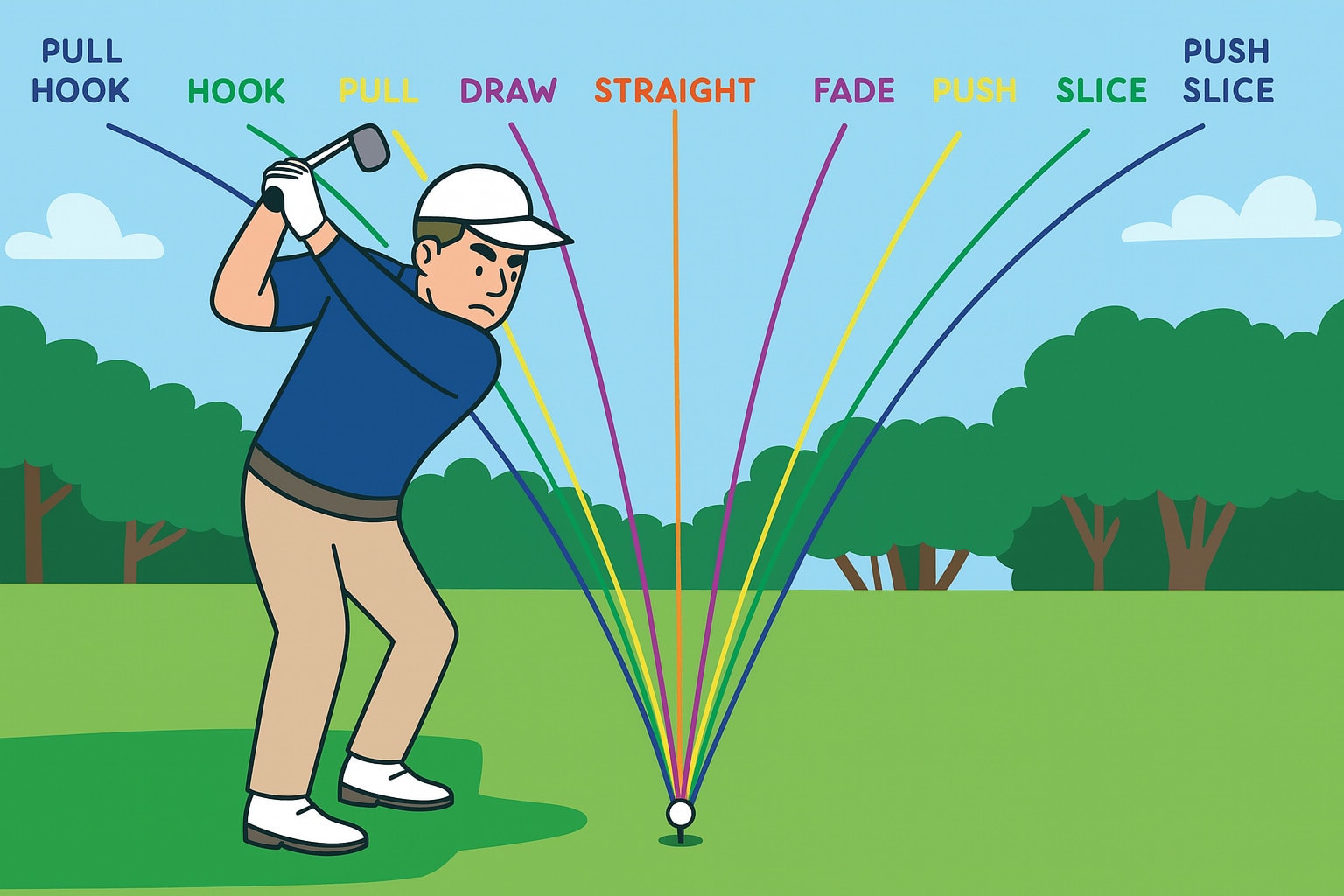
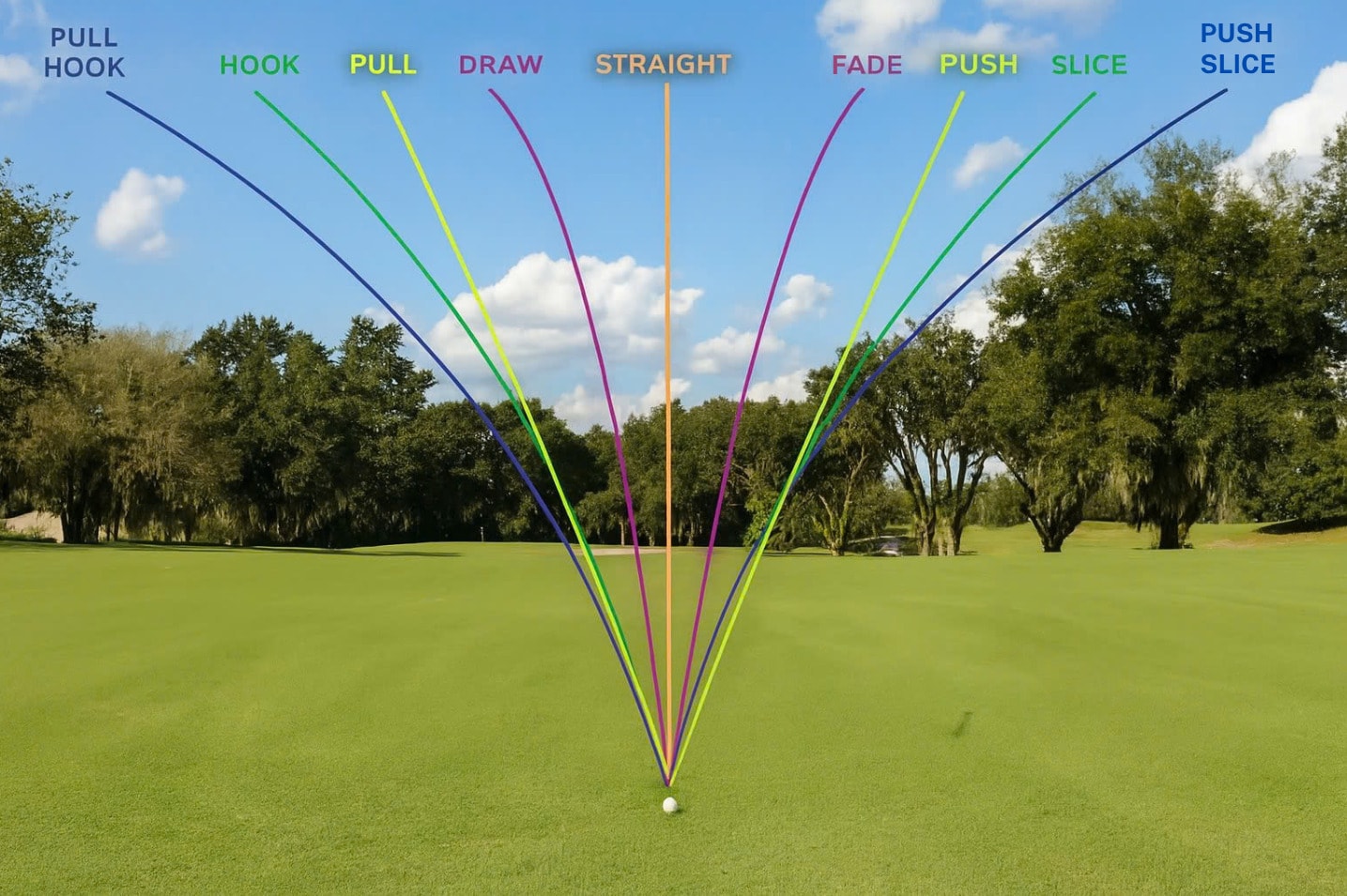
Here’s how hook, draw, and slice differ in curve direction, severity, intent, and cause:
| Shot Type | Curve Direction (RH Player) | Curve Severity | Intentional | Common Cause |
|---|---|---|---|---|
| Draw | Right to Left | Gentle (3–8°) | Yes | Slightly closed face, inside-out path |
| Hook | Right to Hard Left | Sharp (10°+) | No (usually) | Closed face, extreme inside-out path |
| Slice | Left to Hard Right | Sharp (10°+) | No | Open face, outside-in path |
Summary:
A draw is a controlled, minor curve often desired by players.
A hook is an exaggerated version of a draw with more risk.
A slice is the opposite of a hook and a common miss among amateurs.
What Causes a Hook?
A hook is caused by a combination of swing path, clubface angle, and grip or hand action that imparts excessive spin to the ball.
The most common causes include a closed clubface, strong grip, inside-to-out swing path, overactive hands, and poor alignment or ball position.
- Closed clubface: The face is pointing left of the swing path at impact
- Strong grip: Hands are rotated too far to the right (for right-handers), closing the face
- Inside-to-out swing path: Club travels too far from inside the target line, exaggerating curve
- Overactive hands or wrists: Too much rotation through impact adds left spin
- Poor alignment or ball position: Can encourage compensations that cause hooking
How to Fix a Hook in Golf
To fix a hook, you need to correct your grip, clubface control, swing path, alignment, and ball position to eliminate excess curve and regain accuracy:
- Grip: Use a more neutral grip, rotate hands slightly left (for right-handers) to avoid closing the face
- Clubface control: Focus on keeping the clubface square through impact, not snapping shut
- Swing path: Reduce an extreme inside-to-out path, feel more “straight through” or even slightly left
- Alignment: Make sure your feet, hips, and shoulders are aligned parallel to the target
- Ball position: Avoid placing the ball too far forward, which can promote a hook
- Tempo and hands: Keep your hands quiet through impact and maintain a smooth rhythm
Fixing a hook takes practice, not perfection. Small changes in grip and swing path can make a big difference.
Stay patient, make one adjustment at a time, and trust the process.
When Is a Hook Useful?
A hook can be helpful when you need to shape around obstacles, recover from trouble, maximize roll, hit a low punch shot, or intentionally curve into a tight pin.
- Shaping around obstacles: Useful on dogleg holes or to curve around trees
- Recovery shots: Helps escape from trouble when a straight shot isn’t an option
- Maximizing roll: A low hook with topspin can produce extra ground roll on firm fairways
- Low punch hook: Keeps the ball under branches or wind, especially from the rough
- Intentional curve: Advanced players may use a hook to access tucked pin positions
While most hooks are unintentional mistakes, a controlled hook can be useful for certain strategic shots in golf.

Examples of Hooks in Real Play
Hooks can show up in various situations like a tee shot into trouble, an overdrawn approach, a low recovery hook, an intentional hook around obstacle or a hooked fairway wood:
- Tee shot into trouble: A driver hook that curves hard left into trees or out of bounds
- Overdrawn approach: An iron shot that starts right and hooks off the green or past the target
- Low recovery hook: A punch hook used to escape under branches from the rough
- Intentional hook around obstacle: Curving the ball around a tree to reach the green
- Hooked fairway wood: Off the deck, a fairway shot overhooks and runs through the fairway into hazards
Hooks are a common miss for golfers of all skill levels, while often unintentional, they’re a normal part of the game and can even be used strategically when controlled.

FAQs About Hook in Golf
Is a hook the same as a draw?
No. A draw is a controlled, gentle curve right to left, while a hook is more extreme and often unintentional.
What causes a hook in golf?
The most common causes are a closed clubface, strong grip, and inside-to-out swing path that creates excessive spin.
Is a hook worse than a slice?
Not necessarily, both are misses. A hook can go farther but often curves more aggressively and gets into deeper trouble.
Can professional golfers hit a hook on purpose?
Yes. Skilled players sometimes use a controlled hook to shape shots around obstacles or escape trouble.
How do I know if I’m hooking the ball?
If your ball starts right (for right-handers) and curves sharply left, especially into trouble, you’re likely hitting a hook.
Get instant access to the PDF version of this article with additional resources and insights.