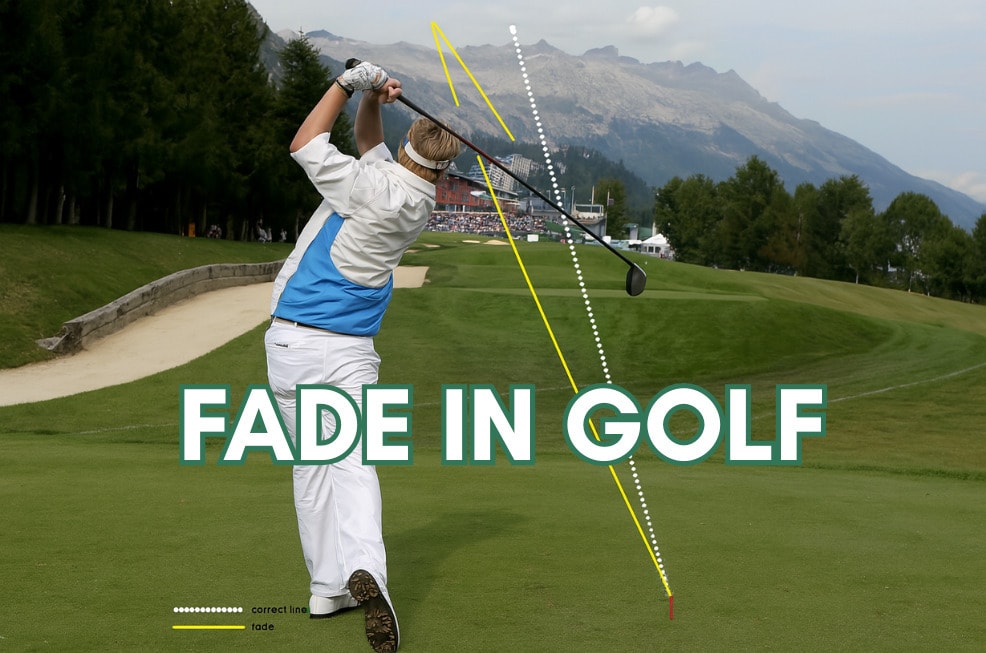
TL;DR – Fade in One Line
A fade is a controlled left‑to‑right shot (RH) that sacrifices a little distance for maximum accuracy and soft landings.
Key Takeaways
- A fade is a controlled left-to-right golf shot (for right-handed players).
- Created by an outside-to-in swing with a slightly open clubface.
- Offers more accuracy and softer landings than a draw.
- Helps avoid hazards on the left and works well in left-to-right wind.
- Trusted by many pros for its predictability under pressure.
What Is a Fade in Golf?
A fade in golf is a controlled shot that curves gently from left to right for right-handed players (right to left for left-handed).
Here’s what defines a fade:
- Starts slightly left of the target (for right-handed players)
- Curves gently back toward the target
- Produced by an outside-to-in swing path with a slightly open clubface
- Offers accuracy, control, and a soft landing
- Intentional shot, not to be confused with a slice
A fade is a deliberate shot shape that gives skilled players a repeatable, reliable ball flight, ideal for tight setups, strategic shaping, and landing softly on fast greens.
Fade vs Draw vs Slice
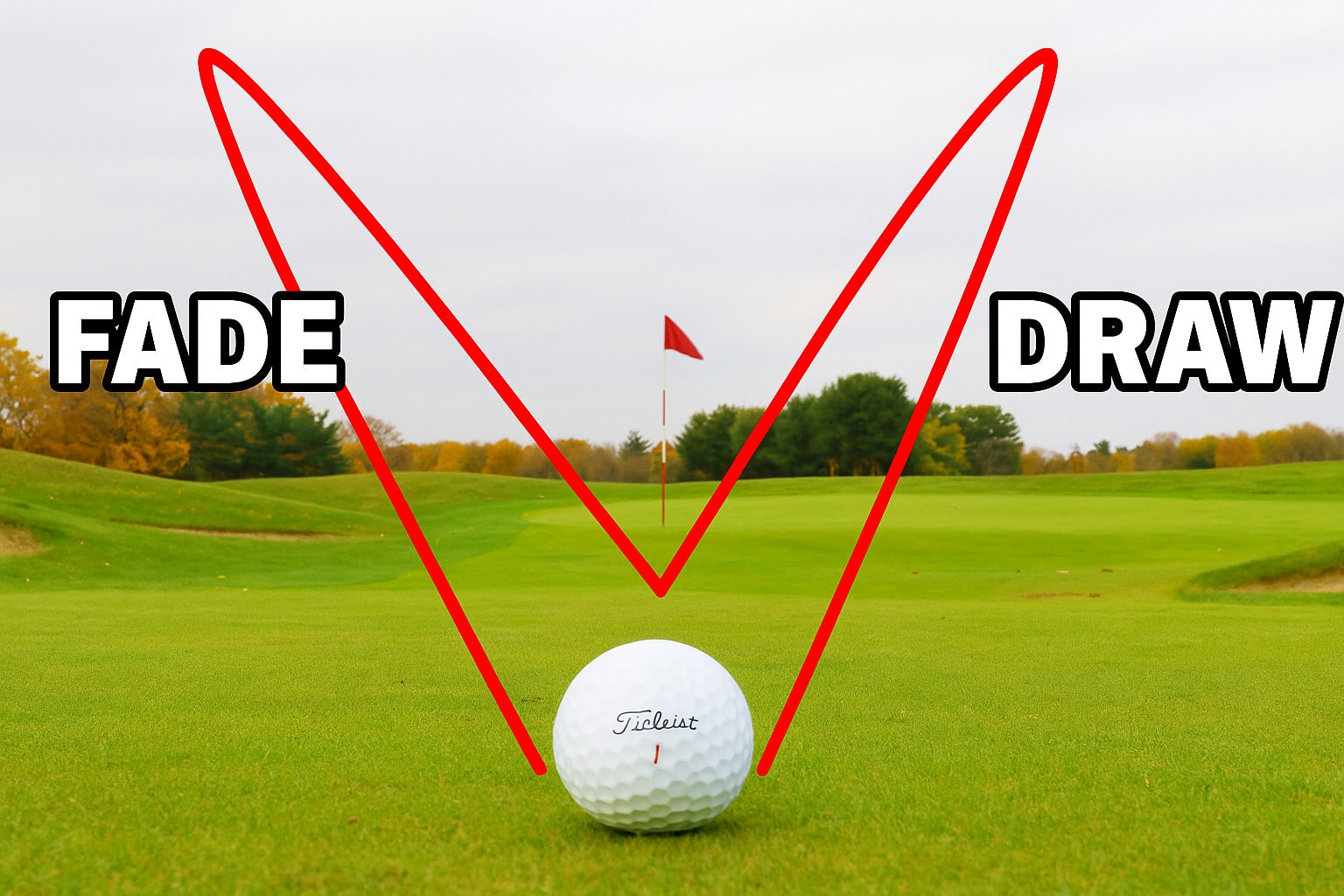
While all three are curving golf shots, only fade and draw are intentional. A slice is typically a mishit. Here’s how they compare:
| Shot Type | Direction (RH) | Swing Path | Clubface Angle | Intentional | Typical Use | Curve Severity (°) |
|---|---|---|---|---|---|---|
| Fade | Left to right | Outside-to-in | Slightly open to path | Yes | Accuracy, soft landing, control | 3°–8° |
| Draw | Right to left | Inside-to-out | Slightly closed to path | Yes | Distance, roll, shaping around doglegs | 3°–8° |
| Slice | Sharp left to right | Steep outside-to-in | Wide open to swing path | No | Mishit, often ends in trouble (O.B., rough) | 10°–30°+ |
Key differences:
- Fade vs Slice: A fade is gentle and controlled, a slice is wild and unintended.
- Fade vs Draw: A draw offers more distance and roll, a fade provides more accuracy and a softer landing.
- Shot shape depends on clubface angle and swing path.
How to Hit a Fade
These 5 simple steps will help you build a consistent and confident way to hit a fade, perfect for control and shot shaping.
1. Aim your body left
Align your feet, hips, and shoulders slightly left of your target (for right-handed players).
2. Open the clubface slightly
Point the clubface just right of your target, this helps the ball curve back gently.
3. Swing along your body line
Make your swing follow your body’s alignment (outside-to-in swing path).
4. Keep your swing smooth
Focus on rhythm, not power. Let the shape happen naturally.
5. Play the ball a little forward
Position the ball just ahead of center in your stance for better contact.
With a bit of practice, these steps will turn the fade into a reliable go-to shot in your game.
When to Use a Fade
You can use a fade on dogleg-right holes, in left-to-right wind, when hazards or bunkers are on the left, on tight fairways, firm greens, approach shots, pressure situations, or when shaping around trees, especially if a fade is your natural shot shape.
| Situation | Why Use a Fade |
|---|---|
| Dogleg-right holes | Matches the curve of the fairway for better positioning |
| Wind from the left | Holds its line better in a left-to-right crosswind |
| Hazards on the left | Starts left and fades back to avoid danger |
| Tight fairways | Offers more control and precision than a draw |
| Firm or fast greens | Higher, softer landing helps the ball stop quickly |
| Approach shots | Easier to land near the pin with accuracy |
| Fairway bunkers on the left | Curves away from danger while still attacking the target |
| Pressure shots (tee or approach) | More predictable and easier to control under stress |
| Playing around trees or obstacles | Gently shapes the shot without over-curving it |
| Preferred shot shape (comfort) | Some players hit fades more naturally and consistently |
Mastering when to fade gives you a big edge in both course management and confidence.
Tips for Mastering the Fade
To master the fade, focus on alignment, swing path, clubface control, tempo, ball position, video feedback, and using your natural shot shape.
1. Use alignment sticks
They help you align your body slightly left and train the proper swing path.
2. Focus on swing path and clubface
A true fade needs an outside-in path with a slightly open clubface, both matter.
3. Start with short irons
Begin with wedges or short irons to feel the fade without overpowering the swing.
4. Keep your tempo smooth
Avoid swinging too hard, tempo and control make the fade consistent.
5. Adjust ball position
Play the ball slightly forward in your stance to encourage a higher, softer shot.
6. Film your swing
Recording helps you check alignment, path, and face angle for better feedback.
7. Play your natural shot shape
If fade feels easier than draw, embrace it, many pros favor the fade for control.
Practice with purpose, and the fade will become one of your most dependable shots.
Common Mistakes to Avoid
When trying to hit a fade, avoid these common mistakes: over-opening the clubface, swinging too steep, poor alignment, ball too far back, and rushing your tempo.
1. Over-opening the clubface
Too much face angle turns a fade into a slice, keep it just slightly open to the swing path.
2. Swinging too steep or across the ball
Exaggerated outside-in paths can cause mishits or weak contact.
3. Poor alignment
If your body isn’t aimed correctly (slightly left for right-handed players), the fade won’t start on the right line.
4. Ball too far back in stance
This reduces loft and encourages a pull or low slice, keep the ball slightly forward.
5. Rushing your tempo
A fade needs control, not power. Quick swings disrupt timing and feel.
A consistent fade comes from small, deliberate adjustments, not big or forced changes.
Famous Golfers Known for Their Fade
Many of golf’s greatest players: Jack Nicklaus, Dustin Johnson, Collin Morikawa, Tiger Woods, Ben Hogan, Lee Trevino, and Jon Rahm, have built their games around a reliable fade, using it for control, consistency, and championship-level performance.
- Jack Nicklaus: Known for a high, soft power fade, aimed his body left and set the clubface slightly open to the target for control under pressure.
- Dustin Johnson: Uses a modern power fade built on a bowed lead wrist and neutral clubface, replacing his old draw for better consistency and driving accuracy.
- Collin Morikawa: Relies on a soft fade with both irons and driver; uses a weak grip and precise swing path to shape shots with pinpoint control.
- Tiger Woods: Adopted a fade-biased swing in his later career for control, especially under coach Sean Foley, used a steeper swing and out-to-in path.
- Ben Hogan: Hit a classic power fade with square clubface and leftward divots, famously called it his secret to accuracy and ball-striking mastery.
- Lee Trevino: Played a low, penetrating fade ideal for windy conditions and tucked right pins, his fade helped avoid left-side trouble throughout his career.
- Jon Rahm: Favors a baby fade off the tee, combines a neutral clubface with an aggressive left path for a reliable, soft-fading ball flight.
Why so many pros lean on the fade
Stability with modern gear, hazard control, softer landings, and pressure-proof mechanics make the fade a favorite among pros:
- Stability in modern gear: More spin equals more stability, making a fade predictable even with today’s low-spin drivers.
- Hazard management: A fade eliminates the fear of the quick hook left (for right-handers), a miss that often finds O.B. or trouble.
- Softer landings: Higher flight and extra spin help the ball hold firm greens.
- Pressure proof: Out-to-in path with an open face is simpler to repeat than timing a toe-closing draw, so many stars trust it under the gun.
Fade Shot FAQs
Is a fade better than a draw?
It depends on your style and goals. A fade offers more control and softer landings, while a draw gives more distance and roll.
Is a fade easier to hit than a draw?
For many players, yes. A fade is often easier to control because it follows a more natural swing for right-handed golfers.
Why do pros prefer the fade?
Pros like the predictability and control of the fade, especially under pressure or on tight fairways.
Can beginners learn to hit a fade?
Absolutely. With simple setup changes and practice, any golfer can learn to hit a fade.
What clubs are best for fading the ball?
Fades can be hit with any club, but most players start practicing with short or mid-irons before trying drivers.
Get instant access to the PDF version of this article with additional resources and insights.