TL;DR
A double bogey is a score of two strokes over par on a hole. It hurts your score but is common for beginners.
Key Takeaways
- Double bogey = par + 2 strokes (e.g., 6 on a par 4).
- Common for high-handicappers, less frequent for skilled players.
- Often caused by tee shot errors, hazards, penalties, and poor short game.
- Can be avoided with course management and conservative play.
- In Stableford, often scores 0 points depending on handicap.
What Is a Double Bogey in Golf?
A double bogey is when you take two more strokes than par on a hole.
For example, that’s 5 strokes on a par 3, 6 on a par 4, or 7 on a par 5. It’s one step worse than a bogey (+1) and one better than a triple bogey (+3).
- On a par 3, that means 5 strokes.
- On a par 4, that means 6 strokes.
- On a par 5, that means 7 strokes.
- It sits between a bogey (+1) and a triple bogey (+3) in scoring difficulty.
Double bogeys are common for beginners and high-handicap players, but even experienced golfers can make them if a hole goes wrong.
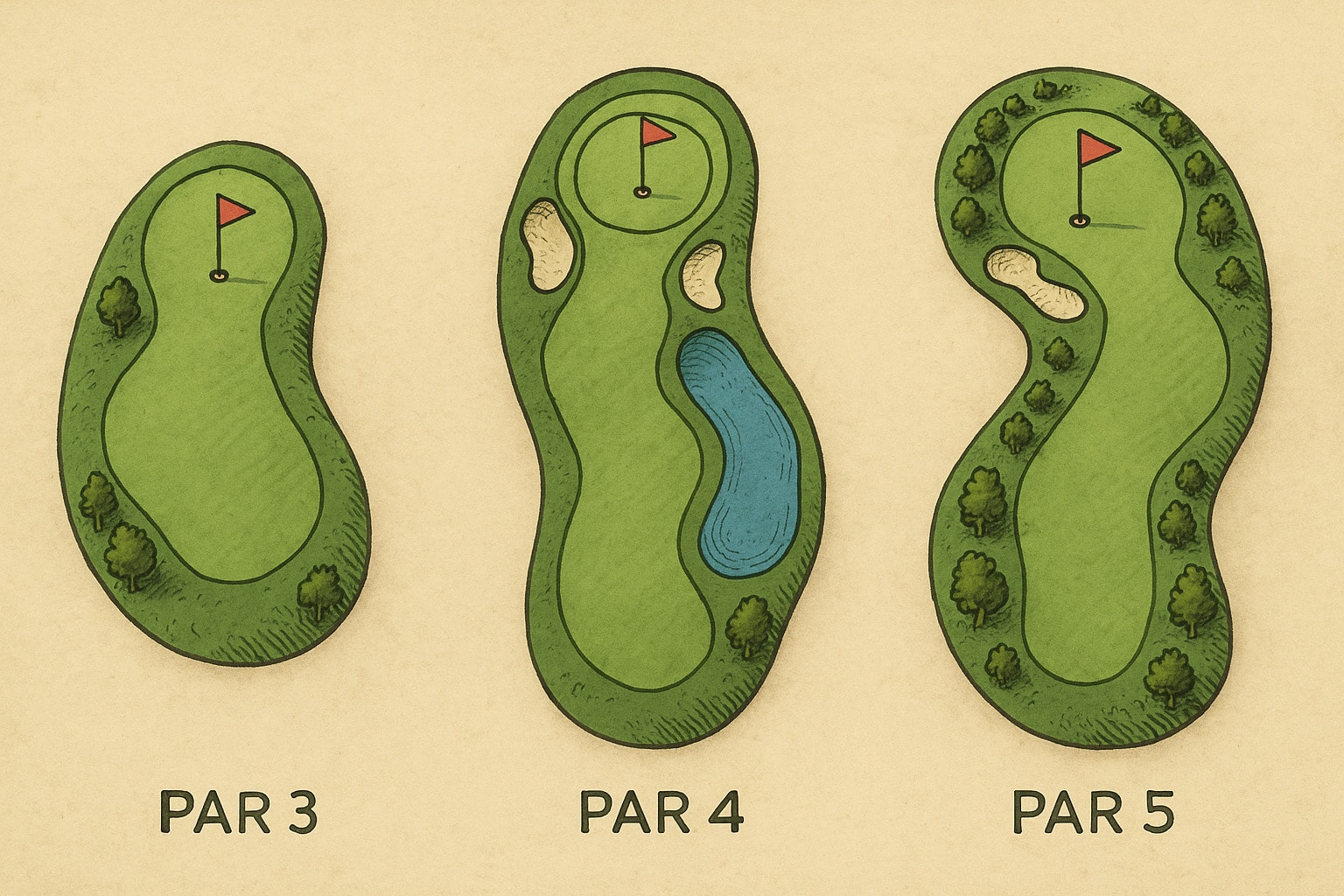
Why Double Bogeys Happen
Double bogeys happen when a hole includes a poor tee shot, penalty strokes, missed recovery, weak short game, or over-aggression.
- Poor tee shot: lands in deep rough, trees, or a hazard, making the next shot harder.
- Penalty strokes: added for out-of-bounds, lost balls, or hitting into water.
- Missed recovery: failing to advance the ball back to safety after trouble.
- Weak short game: chunked or thinned chips, plus extra putts on the green.
- Over-aggression: choosing risky shots instead of taking the safe route.

Don’t worry! Double bogeys happen to everyone, and with smarter decisions and steady practice, you can turn them into bogeys or even pars.
Impact on Your Game
A double bogey affects your stroke play score, match play results, Stableford points, and overall momentum during a round.
- Stroke play: adds two strokes to your total and can lower your position.
- Match play: often means losing the hole unless your opponent also makes mistakes.
- Stableford: usually earns zero points, depending on your handicap.
- Momentum: can break your rhythm and confidence if you don’t recover quickly.

How to Avoid Double Bogeys
You can avoid double bogeys by focusing on accurate tee shots, smart decisions, solid recovery, strong short game, and better risk control.
- Accurate tee shots: aim for fairways to set up easier second shots.
- Smart decisions: choose safe targets instead of forcing risky plays.
- Solid recovery: get back in position quickly after trouble.
- Strong short game: sharpen chipping and putting to save strokes.
- Better risk control: know when to play conservatively to limit damage
Staying calm and sticking to smart, simple shots can turn the rest of your round around.
Double Bogey vs Other Scores
Let’s take a look at how a double bogey compares to other popular golf scores: birdie, par, bogey, and triple bogey.
| Score Name | Relative to Par | Example on Par 4 |
|---|---|---|
| Birdie | -1 | 3 |
| Par | 0 | 4 |
| Bogey | +1 | 5 |
| Double Bogey | +2 | 6 |
| Triple Bogey | +3 | 7 |
Famous Examples of Double Bogeys
Here are verified famous double‑bogey moments: Phil Mickelson (2006 U.S. Open), Colin Montgomerie (2006 U.S. Open), Rory McIlroy (2011 Masters), Francesco Molinari (2019 Masters).
- Phil Mickelson, 2006 U.S. Open (Winged Foot): double bogey on 18 after a wayward drive and bunker trouble, lost by one
- Colin Montgomerie, 2006 U.S. Open (Winged Foot): from the middle of the fairway, mis-hit approach and three‑putt led to a double bogey on 18, title chance gone.
- Rory McIlroy, 2011 Masters: four‑putt double on the 12th during his back‑nine collapse (after a triple at 10).
- Francesco Molinari, 2019 Masters: doubles at 12 and 15 (both after water), surrendering the lead as Tiger surged.
FAQs
1. What is a double bogey in golf?
A double bogey is a score of two strokes over par on a single hole (e.g., 6 on a par 4).
2. How many strokes is a double bogey on each hole type?
- Par 3 → 5 strokes
- Par 4 → 6 strokes
- Par 5 → 7 strokes
3. Is a double bogey bad?
It’s not ideal, but it’s common for beginners and high-handicap golfers. Even pros make them occasionally.
4. What’s the difference between a bogey and a double bogey?
A bogey is +1 over par, a double bogey is +2 over par.
5. How can I avoid making double bogeys?
Play safe off the tee, recover quickly from trouble, and sharpen your short game.
6. Do double bogeys affect Stableford scoring?
Yes. In many formats, a double bogey scores zero points unless handicap strokes are applied.
7. Do professionals ever make double bogeys?
Yes, famous examples include Phil Mickelson at the 2006 U.S. Open and Francesco Molinari at the 2019 Masters.
Get instant access to the PDF version of this article with additional resources and insights.