
TL;DR
A thin shot in golf is ball-first, turf-last contact that flies low with little spin.
Key Takeaways
- Definition: Thin shot = club strikes ball too high on its face.
- Result: Low flight, little spin, too much rollout.
- Causes: Setup flaws, swing faults, tricky lies.
- Fix: Adjust stance, ball position, and shaft lean.
- Practice: Use drills to control low point and improve contact.
What Is a Thin Shot?
A thin shot is when the club strikes the ball too high on its face, near the middle or equator.
This leads to:
- Low launch and little spin, causing the ball to run too far.
- A harsh feel in the hands at impact.
- Misses that often fly past the target, especially with wedges or short irons.
- Causes including early extension, scooping, or poor low-point control.
In short, a thin shot is a mis-hit that sacrifices control and stopping power by sending the ball too low and too far.
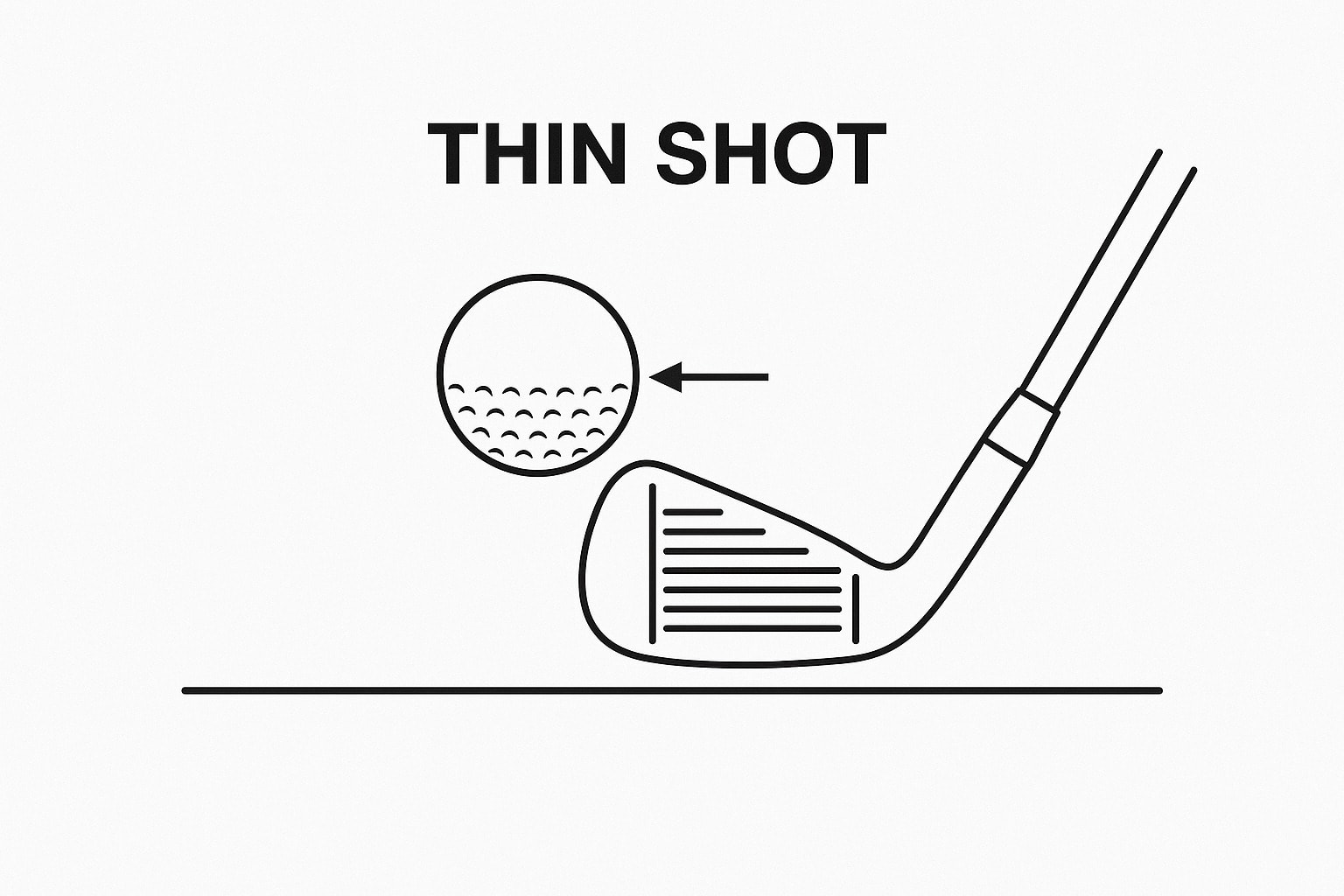
Thin vs Skulled vs Topped
Let’s break down how a thin shot stacks up against two other common mis-hits: the skulled shot and the topped shot.
- Thin: Strikes the ball just below its midpoint; flies low but still airborne.
- Skulled: Hits with the club’s leading edge at or above the equator; rockets low with almost no height or spin.
- Topped: Contacts the very top of the ball; it bounces or rolls along the ground without proper flight.
All three are mis-hits, but the thin shot still gets airborne, while skulled and topped shots stay much lower.

Ball-Flight Symptoms & Telltales
A thin shot is easy to recognize by its trajectory, spin, feel, contact point, and result.
- Trajectory: Low launch with a flat, piercing flight.
- Spin: Little to no backspin, causing extra rollout after landing.
- Feel: Harsh or clunky sensation through the hands at impact.
- Contact Point: Strike marks appear mid-to-low on the clubface.
- Result: Often overshoots the target, especially with wedges or short irons.
These signs not only reveal when you’ve hit a thin shot, but also help pinpoint why it happened.
Common Causes
The most common causes of a thin shot in golf are setup flaws, swing mechanics, low-point control issues, and lie conditions.
- Setup: Ball too far back, weight stuck on the trail foot, or handle set too high at address.
- Swing Mechanics: Early extension, scooping or flipping the wrists, lack of rotation, or an overly shallow swing arc.
- Low-Point Control: Bottom of the swing arc behind the ball, inconsistent forward shaft lean, or poor weight shift.
- Lie & Conditions: Tight lies, hardpan, downhill stances, or firm turf making clean contact harder.
Most thin shots trace back to poor setup, faulty swing motion, or tricky lies that disrupt clean contact.

When Thin Shots Happen Most
Thin shots often show up on tight or firm turf, downhill stances, long bunker shots, partial wedge swings, and nervous or pressured shots.
- Tight or firm turf: Less margin for error and no cushion under the ball.
- Downhill stances: Promotes a shallow swing and early contact with the ball.
- Long bunker shots: Tempts a sweep, increasing the risk of striking the ball’s equator.
- Partial wedge swings: Smaller swings make low-point control harder.
- Nervous or pressured shots: Tension and quick tempo can cause lifting through impact.
These situations make it harder to control the low point of your swing or maintain proper posture through impact, both of which are key to avoiding thin contact.
Quick On-Course Fixes (Use Mid-Round)
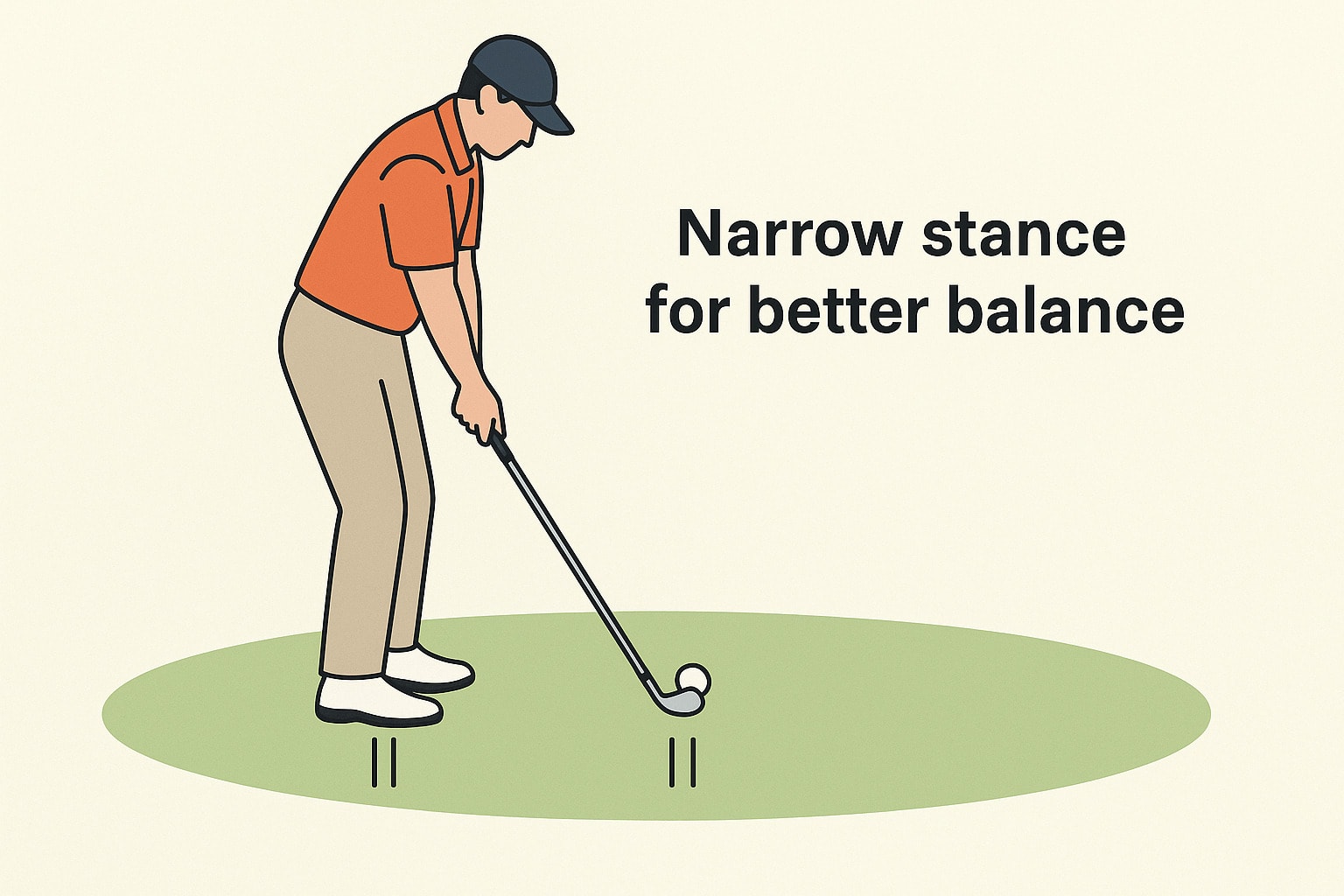
If you catch one thin mid-round, don’t panic, just make a couple of small tweaks. Start by narrowing your stance a bit so you feel more balanced and in control over the ball.
Next, nudge the ball a touch back of center with your wedges or short irons, and feel a slight forward shaft lean so your hands stay ahead through impact. This helps you find the bottom of the swing in the right spot.
From there, try shortening your backswing so it’s easier to make solid contact, and keep your focus on brushing the turf just after the ball. Think “down and through,” not “up and scoop,” and you’ll have a much better chance of flushing the next one.
Summary:
- Narrow stance for better balance.
- Move ball slightly back of center.
- Maintain modest forward shaft lean.
- Shorten backswing for control.
- Focus on brushing turf after the ball.
Step-by-Step: Technique to Stop Hitting Thin
Wanna stop hitting thin? Follow these 5 simple steps from setup to finish to groove solid, ball-then-turf contact every time.
Setup: 55–60% weight on lead side; ball slightly back of center (wedges/short irons); hands just ahead. Cue: chest “covering” the ball.
Backswing: Keep posture; create width without swaying; set the trail‑wrist (hinge) and keep the handle from rising too high.
Transition: Shift pressure to the lead foot before the downswing; rotate hips/chest; keep the trail‑wrist set.
Impact: Hands ahead, chest over the ball; deliver a slight downward strike and brush turf after the ball (low point ahead).
Finish: Balanced, belt buckle to target, divot starts in front of where the ball was.
Quick checks: divot ahead, strike mark mid‑low on face (not on the leading edge), “click‑then‑brush” sound sequence.
Best Drills to Cure Thin Shots
You can fix thin shots, and the Low-Point Line Drill, Coin or Tee Brush Drill, Towel-Ahead Drill, Step-Change Drill, and Gate/Impact Spray Drill will train you to strike the ball clean and crisp every time.
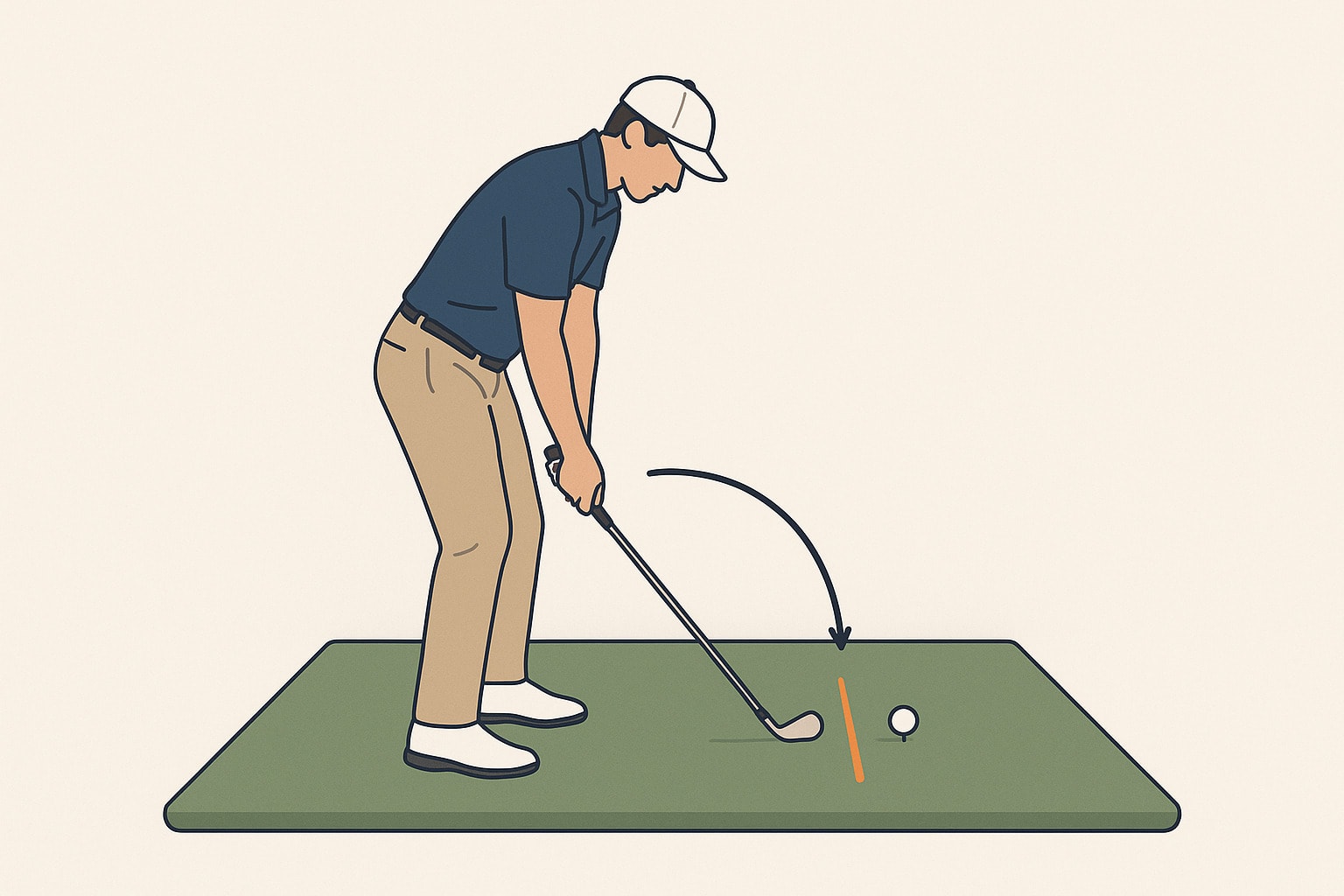
- Low-Point Line Drill: Draw a line on the turf or mat and practice striking just ahead of it, without a ball at first.
- Coin or Tee Brush Drill: Place a coin or tee where the ball would be, and focus on brushing it cleanly without digging.
- Towel-Ahead Drill: Lay a small towel 4–6 inches in front of the ball; avoid hitting it by striking down correctly.
- Step-Change Drill: Start with feet together, step into your lead foot during the downswing to promote forward weight shift.
- Gate/Impact Spray Drill: Use two tees as a gate or spray the clubface with foot powder to monitor centered contact.
Tip: Mix these drills into your warm-up so the feel of proper contact becomes automatic on the course.
Specialty Lies & Club Choices
Thin shots get even trickier on tight lies, downhill lies, fairway bunkers, and driver off the deck, here’s how to handle each.
- Tight lies/hardpan: Use a club with more loft and a clean, committed strike; keep modest shaft lean to avoid digging.
- Downhill lies: Match your shoulders to the slope, move the ball slightly back, and make a shorter, controlled swing.
- Fairway bunkers: Play the ball slightly forward, keep lower body quiet, and focus on clipping the ball first.
- Driver off the deck: Tee height isn’t an option — move the ball forward, keep the swing smooth, and sweep without trying to lift it.
Bottom line: Adjusting your setup and club choice to the lie will help you maintain clean, ball-first contact even in tough situations.

Equipment Tweaks (If Problems Persist)
If thin shots keep showing up, a few equipment adjustments can make clean contact easier.
- Wedges: Choose the right bounce and sole width for your turf; low bounce for firm ground, higher bounce for softer turf.
- Lie Angle & Shaft Length: Clubs that are too upright or too long can raise the handle and promote thin contact. Get them checked.
- Loft Gapping: Ensure you have enough loft in the clubs you use for partial swings; don’t force a low-loft club from a tight lie.
- Shaft Flex & Weight: A poorly matched shaft can affect swing timing and low-point control.
Tip: A quick fitting or adjustment session can fix gear-related problems that practice alone might not solve.
Practice Plan (15 Minutes)
Got 15 minutes? Here’s a quick practice routine that’ll help you clean up contact and say goodbye to thin shots.
- 5 minutes Low-Point Line Drill: Draw a line and practice brushing just ahead of it, no ball at first, then add a ball.
- 5 minutes Coin or Tee Brush Drill + Impact Spray: Focus on clean, centered contact; use spray to check strike location.
- 5 minutes Random Lies & Targets: Mix in tight lies, partial swings, and different clubs; finish with a 3-ball up-and-down challenge.
This combo builds low-point control, improves feedback awareness, and applies the skills to real-world shot variety.
Common Mistakes to Avoid
When you’re working on fixing thin shots, watch out for forcing a high-loft shot from a tight lie, hanging back on your trail foot, excessive forward shaft lean, and chasing swing speed over strike quality, here’s why and how to avoid them.
- Avoid forcing a high-loft shot from a tight lie: The lack of grass cushion makes it easy to catch the ball’s equator; instead, choose a safer shot with a clean, committed strike.
- Avoid hanging back on the trail foot: Shifts the low point behind the ball; focus on moving weight into your lead side before impact.
- Avoid excessive forward shaft lean: Can dig the leading edge in and raise the handle; aim for modest lean with the handle just ahead of the ball.
- Avoid chasing swing speed over strike quality: Adds tension and inconsistency; prioritize smooth tempo and solid contact before going for more distance.
Fixing these habits takes a bit of awareness and practice, but once you dial them in, your strikes will feel cleaner and your shots will fly exactly how you pictured.
FAQs – Thin Shot
Do thin shots go farther?
Sometimes, the low spin and extra rollout can add distance, but it’s usually uncontrolled and hard to stop on the green.
Why do I thin wedges more than irons?
Wedges require precise low-point control, and their shorter swings often tempt players to scoop or decelerate.
Is a thin shot better than a fat shot?
In most cases, yes. A thin shot might still reach or even pass the target, while a fat shot usually comes up short.
How do wind and firm greens affect a thin shot?
Downwind or on firm greens, the lack of spin means even more rollout, making it tougher to hold the green.
Can equipment cause thin shots?
Absolutely, lie angle, shaft length, and bounce can all influence strike height. A proper fitting can help.
Get instant access to the PDF version of this article with additional resources and insights.