
TL;DR – Tee Box in One Line
The tee box is the designated starting area of each hole where golfers take their first shot.
Key Takeaways
- The tee box is the starting area of every hole.
- Golfers must tee off between the markers, up to two club lengths behind.
- Tee boxes are color-coded based on skill level and distance.
- Playing from the correct tee improves pace, fairness, and enjoyment.
- Smart tee strategy helps avoid hazards and lower scores.
What Is the Tee Box?
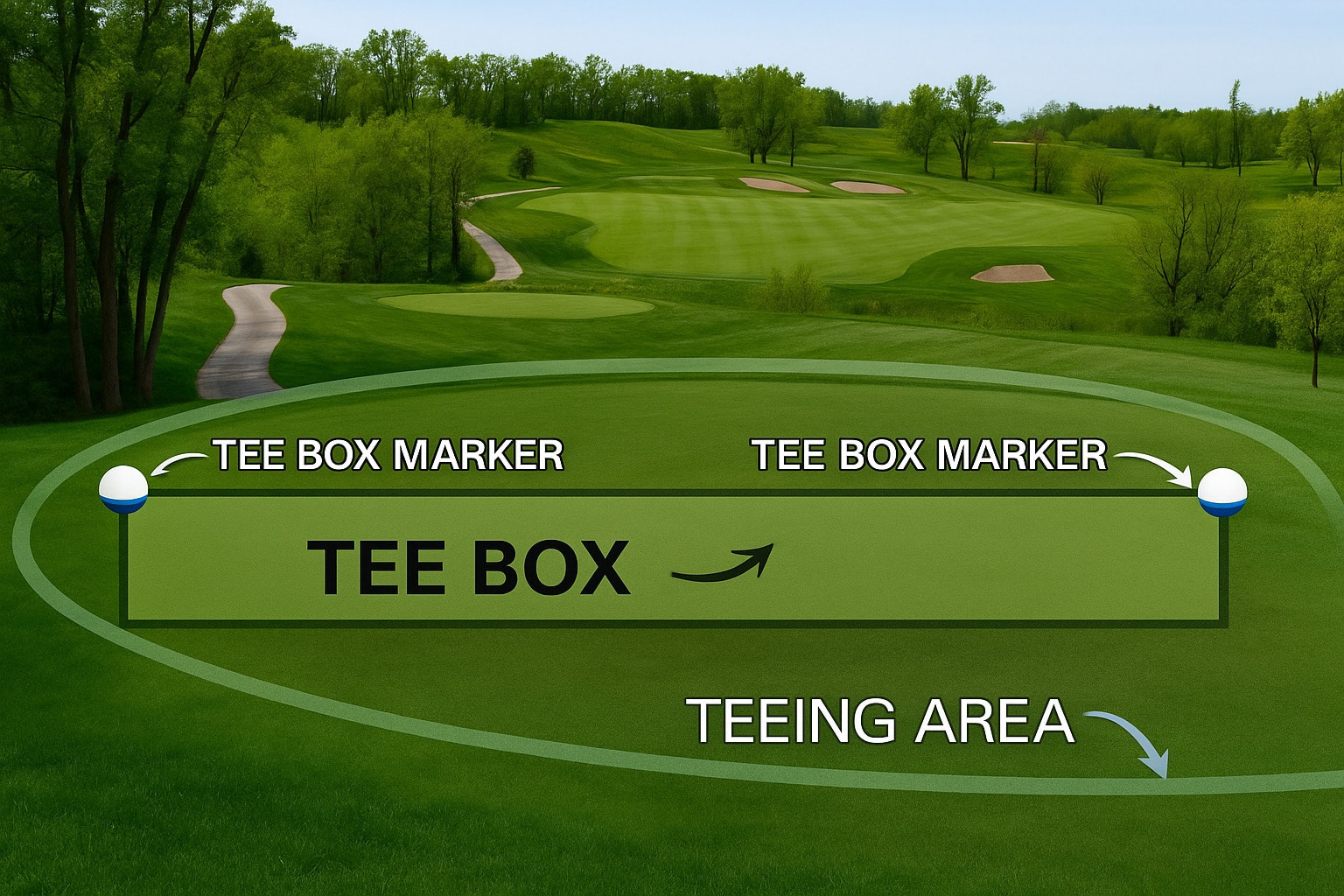
The tee box is the designated area where each hole begins on a golf course. It’s the only spot where golfers are allowed to tee up the ball before their first shot. The ball must be played from between the two tee markers and no more than two club lengths behind them.
The purpose of the tee box is to provide a fair and consistent starting position based on a golfer’s ability, helping balance challenge and enjoyment.
Types of Tee Boxes
Tee boxes are often color-coded: black, blue, white, gold, red, and green to represent different skill levels and playing distances:
| Color | Also Called | Who It’s For |
|---|---|---|
| Black | Championship Tees | Professional and low-handicap golfers |
| Blue | Back Tees | Advanced male golfers |
| White | Regular/Men’s Tees | Average male golfers, intermediate players |
| Gold | Senior Tees | Senior men or shorter-hitting players |
| Red | Forward/Ladies’ Tees | Women, juniors, and beginners |
| Green | Beginner/Junior Tees | New golfers, juniors, or family play |
Some modern courses use gender-neutral tee setups based purely on skill or driving distance rather than age or gender. Always choose the tee box that gives you the best chance for fair play and enjoyment.
While tee box colors indicate skill level, the tee box setup also varies by hole type: Par 3, Par 4, and Par 5
| Hole Type | Tee Box Setup |
|---|---|
| Par 3 | Tee boxes are closest to the green (often 100–230 yards). Focus is on accuracy, not power. |
| Par 4 | Tee boxes offer moderate distance (240–490 yards). Players use drivers or fairway woods. |
| Par 5 | Tee boxes are farthest back (450–700+ yards). Designed for long drives and multi-shot strategy. |
Each tee box location is carefully designed to fit the challenge and length of the hole, giving players a fair but varied starting point.
Golf Rules: Teeing Area (Rule 6.2b)
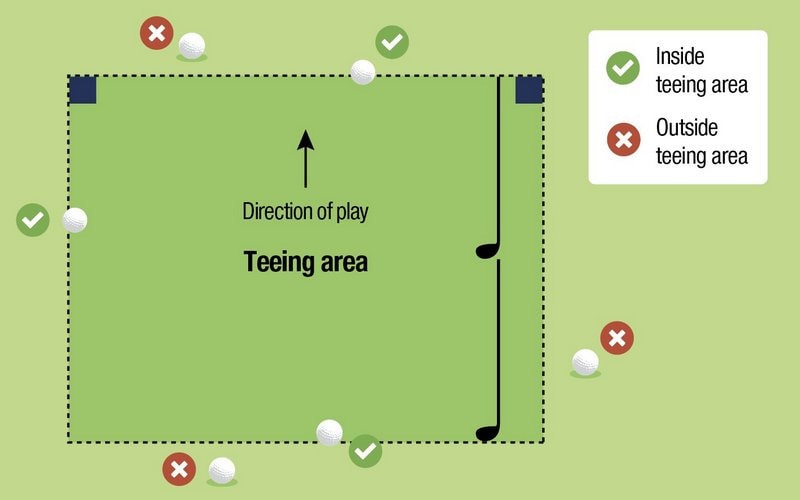
Rule 6.2b of the Rules of Golf defines what you can and cannot do in the teeing area, where every hole begins.
When the Ball Is in the Teeing Area
- The ball is considered in the teeing area when any part of it touches or is above any part of the teeing area.
- You may stand outside the teeing area to hit a ball that’s within it.
How You Can Tee the Ball
- You may play the ball from a tee or directly from the ground (including sand or natural materials).
- Tees must conform to the rules (e.g., max 4 inches high).
- If you breach this (e.g., use an illegal tee), you receive:
- First breach: General Penalty (2 strokes in stroke play)
- Second breach: Disqualification
What You’re Allowed to Improve
Before hitting from the teeing area, you’re allowed to:
- Flatten or adjust the ground
- Move or break natural objects (grass, weeds, etc.)
- Remove sand, soil, dew, frost, or water
But doing anything else to improve conditions (like removing a tree branch outside the teeing area) is a penalty under Rule 8.1a.
Tee-Marker Rules
- Tee markers must not be moved to improve your shot, doing so = General Penalty.
- If a marker is missing, ask the Committee. If not available, use reasonable judgment to estimate its position.
Important Notes
- A ball is not in play until you make a stroke at it.
- If your teed ball falls off before your swing, no penalty — re-tee.
- If you swing and miss the ball, it’s in play and you may re-tee without penalty.
This rule ensures that all players start each hole under equal and fair conditions. For full details, refer to the official Rules of Golf – Rule 6.2b.

Tee Box Strategy: How to Play It Smart
Key strategies include: choosing the right tee, aiming with intention, using the full teeing area, factoring in wind and elevation, and playing to your strengths.
1. Choose the Right Tee
Play from a tee box that matches your skill level and average driving distance. Don’t let pride dictate your choice, the right tee helps you score better and enjoy the round.
2. Aim With Intention
Use course features to pick a smart target line. Tee off from the side that gives you the best angle away from hazards or trouble spots.
3. Use the Full Teeing Area
You’re allowed to tee up anywhere between the markers and up to two club lengths behind them. Position your ball to support your natural shot shape or avoid specific obstacles.
4. Factor in Wind and Elevation
Always check for wind direction and elevation changes. These can greatly affect ball flight, especially on longer holes or when accuracy is crucial.
5. Play to Your Strengths
You don’t always need to hit driver. Choose a club that keeps you in play and sets up your next shot, especially on tight fairways or strategic Par 5s.
Common Mistakes to Avoid
Key mistakes include: teeing too far forward, ignoring wind or elevation, always using driver, poor alignment, and underusing the teeing area.
1. Teeing Too Far Forward
Placing the ball even slightly in front of the tee markers is a rule violation and can result in penalties. Always check your ball position before swinging.
2. Ignoring Wind or Elevation
Many players overlook wind direction or uphill/downhill lies from the tee box. This can lead to misjudged distances and missed fairways.
3. Always Using Driver
Using driver on every hole isn’t always the best play. On tight or short holes, a fairway wood or hybrid may offer better control and positioning.
4. Poor Alignment
Failing to aim properly off the tee leads to unintended shot directions. Use intermediate targets or pick a spot on the fairway to line up with.
5. Not Using the Full Teeing Area
Golfers often tee up in the middle without considering their shot shape. Use the space available: left or right side, to create better angles or avoid hazards.
FAQs About the Tee Box
1. Can I stand outside the tee box when hitting my shot?
Yes. Your feet can be outside the teeing area as long as the ball is teed up within the correct area.
2. What happens if I tee off in front of the markers?
That’s a rules violation. In stroke play, it results in a two-stroke penalty and you must replay the shot from inside the teeing area.
3. How far behind the tee markers can I tee up?
You’re allowed to place your ball up to two club lengths behind the front edge of the markers.
4. Can I re-tee the ball if it falls off before I hit?
Yes. If the ball falls off the tee before your swing, there’s no penalty, just re-tee and play your shot.
5. Do I have to use a tee?
No. You can play your tee shot from the ground, using a tee is optional, but allowed only on the first shot of a hole.
Get instant access to the PDF version of this article with additional resources and insights.