
TL;DR – Stance in One Line
In golf, stance is how you position your feet, ball, and body to stay balanced and aligned before swinging the club.
Key Takeaways
- Stance is how you position your feet, ball, and body before the swing.
- Use a shoulder-width stance, adjusted slightly for different clubs.
- Ball position changes based on club type – center for short irons, forward for drivers.
- Keep weight balanced, knees slightly flexed, and posture athletic.
- A consistent stance builds balance, power, and swing accuracy.
What Is Stance in Golf?
In golf, your stance refers to how you position your feet and body at address before swinging the club. It sets the foundation for balance, posture, and power throughout your swing.
A proper stance includes:
- Foot position – how far apart your feet are (stance width)
- Ball position – where the ball sits between your feet
- Weight distribution – how your weight is balanced between your feet
- Posture – your spine angle, knee flex, and overall body alignment
The stance may vary slightly based on the club you’re using. For example, a wider stance is used with drivers for stability and power, while shorter irons call for a narrower stance for better control.
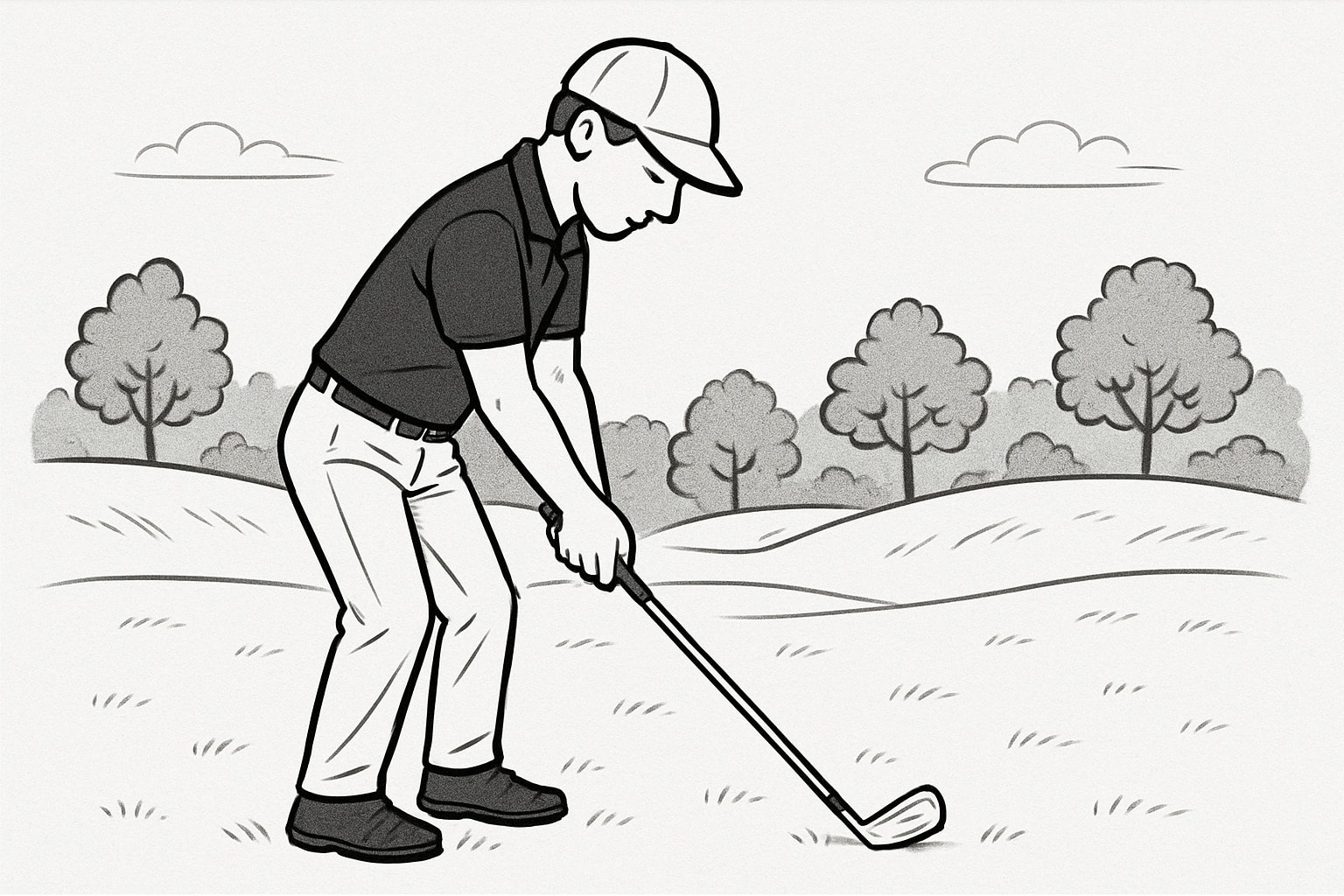
A solid stance keeps your swing grounded, repeatable, and in rhythm—it’s the starting point for every consistent shot.
Why Stance Matters?
A good stance gives you balance, control, and consistency – three essentials for a solid golf swing.
- Balance: A stable base helps you stay grounded through the swing and avoid falling off your shot.
- Swing path control: Proper stance aligns your body and allows the club to move on the correct path.
- Power and accuracy: With the right stance width and posture, you can generate more clubhead speed and hit cleaner shots.
- Consistency: A repeatable stance leads to more repeatable results across different clubs and conditions.
In short, your stance is the setup that makes everything else possible—it’s where every great swing begins.

How to Do Stance Correctly?
Follow these 5 simple steps to build a balanced and consistent stance for any golf shot.
Step 1 – Set Your Feet Shoulder-Width Apart
For most full shots, position your feet about shoulder-width. Use a wider stance for drivers, and a slightly narrower stance for short irons or wedges.
Step 2 – Position the Ball Correctly
- For short irons: Ball centered between your feet
- For mid-irons: Ball slightly forward of center
- For driver: Ball aligned with your lead heel (left heel for right-handed golfers)
Step 3 – Distribute Your Weight Evenly
Start with your weight balanced 50/50 between both feet. For driver swings, a slight tilt toward the trail foot (back foot) is okay.
Step 4 – Flex Your Knees and Tilt From the Hips
Keep a light knee flex and tilt forward from your hips—not your waist. Your arms should hang naturally below your shoulders.
Step 5 – Align Your Body to the Target
Make sure your feet, knees, hips, and shoulders are all aligned parallel to the target line, like standing on a pair of train tracks.
A proper stance keeps you balanced and athletic—ready to make a smooth, powerful swing.
Common Mistakes to Avoid
Most stance mistakes come from poor balance, incorrect ball position, or inconsistent setup.
Feet too wide or too narrow – A stance that’s too wide limits rotation; too narrow reduces stability.
Incorrect ball position – Placing the ball too far forward or back leads to mishits like slices, hooks, or topped shots.
Too much weight on one side – Starting with uneven weight can throw off your swing path and rhythm.
Standing too upright or too hunched – Poor posture affects swing mechanics and contact.
No routine – Inconsistent stance from shot to shot leads to inconsistent results. Always build your stance the same way.
Pro Tips & Drills
These tips and drills will help you build a solid, repeatable stance for more consistent swings.
- Use alignment sticks: Lay one stick along your target line and another across your toes to check foot and body alignment.
- Feet-together drill: Practice swings with your feet close together. This teaches balance and helps you feel centered during your swing.
- Mirror check: Use a mirror or record a side-view video to check your posture, ball position, and stance width.
- Weight check drill: While in stance, lift your toes slightly to feel pressure in the balls of your feet—not your heels or toes.
- Posture reset: Before every shot, build your stance in the same order—feet, ball position, weight, posture, alignment. Make it a habit.
Mastering your stance sets the stage for everything else in your swing—and it’s one of the easiest fundamentals to get right with practice.
FAQs About Stance
How wide should my stance be?
For full swings, your stance should be about shoulder-width apart. Widen it slightly for drivers, and narrow it for wedges or short irons.
Where should the ball be in my stance?
- Short irons: Center of stance
- Mid-irons: Slightly forward of center
- Driver: Aligned with lead heel
Should my weight shift during the swing?
Yes. Start with your weight balanced, then shift slightly to the trail side on the backswing and to the lead side on the downswing for power and control.
Get instant access to the PDF version of this article with additional resources and insights.