
TL;DR
Stance is your foundation, alignment is your aim, together they decide ball flight and consistency
Key Takeaways
- Stance is your foundation: a balanced, shoulder-width setup gives you stability.
- Alignment is your aim: your clubface and body must point where you want the ball to go.
- Work together: stance and alignment combined decide shot direction and consistency.
- Adjust for the shot: narrow stance for short shots, wider for drives, aim left or right for fades/draws.
- Avoid common mistakes: don’t let closed shoulders, uneven weight, or over-aiming ruin accuracy.
- Practice with drills: alignment sticks, mirror checks, and foot-line exercises lock in muscle memory.
What is Stance in Golf?
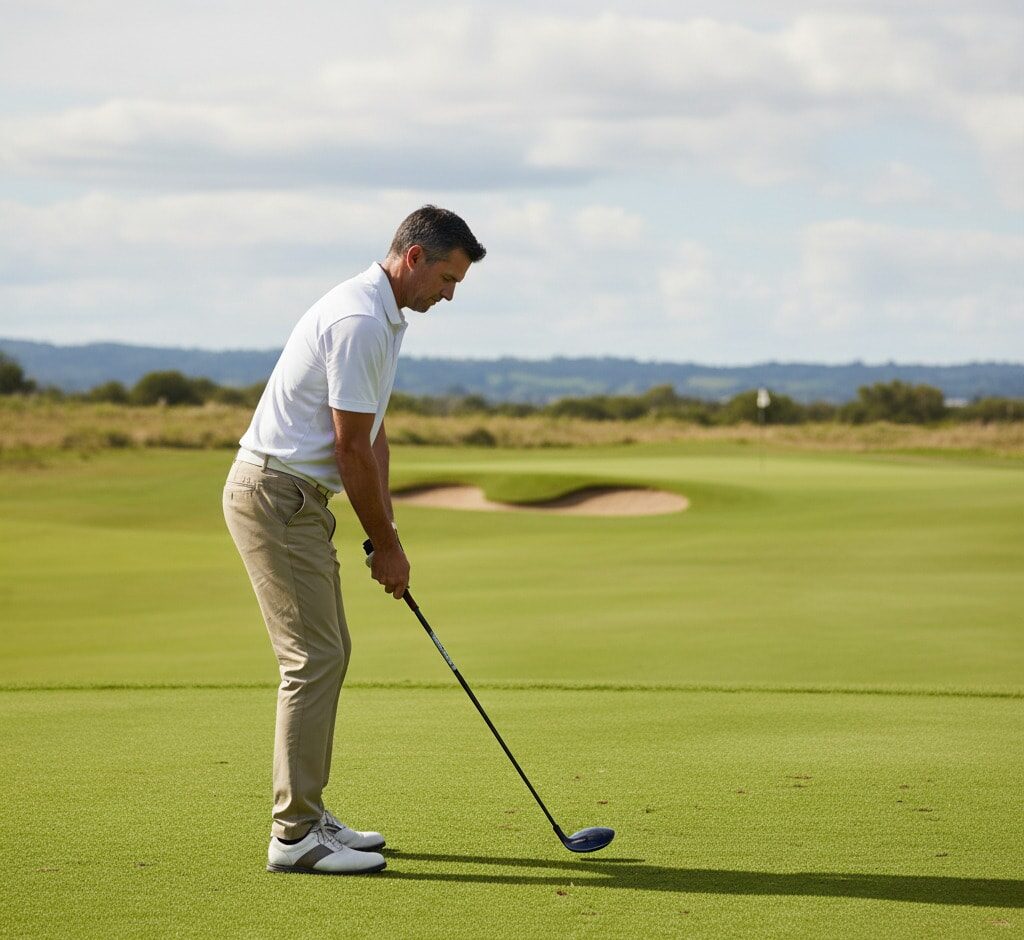
Stance in golf is the way you position your feet and body in relation to the ball before hitting a shot. It determines your balance, stability, and the angle at which the club approaches the ball. A proper stance gives you a strong foundation for accuracy, distance, and consistency.
There are three main types of stances golfers use:
- Square stance: feet, hips, and shoulders parallel to the target line (most common for standard shots).
- Open stance: front foot pulled slightly back, body aimed left of target (useful for fades, bunker shots, or higher trajectory).
- Closed stance: back foot pulled slightly back, body aimed right of target (often used to promote a draw or reduce slicing).
What is Alignment in Golf?
Alignment in golf is how you aim your clubface and body toward the target before swinging. It’s about making sure your clubface, feet, hips, and shoulders are positioned correctly so the ball starts on the intended line. Good alignment works hand in hand with your stance to produce accurate and consistent shots.
Key elements of alignment include:
- Clubface alignment: the clubface should point directly at the target or target line.
- Body alignment: feet, hips, and shoulders should be parallel to the target line (like standing on train tracks, with the clubface on one rail and your body on the other).
Bad alignment is a common cause of slices, hooks, or pushes—even when your swing is solid. Fixing alignment is often the fastest way to improve accuracy without changing your entire swing.
How Stance and Alignment Work Together
Stance and alignment work together to control where the ball goes and how consistently you strike it. Your stance provides the foundation: balance, posture, and stability, while your alignment makes sure both your clubface and body are aimed in the right direction. If either one is off, the ball flight won’t match your intention.
Here’s how they connect:
- Stance sets your base: too narrow or too wide affects balance and swing path.
- Alignment directs the shot: even with a perfect swing, poor alignment sends the ball off line.
- Both influence ball flight: for example, a closed stance with closed alignment encourages a draw, while an open stance with open alignment promotes a fade.
- Consistency comes from combining both: a repeatable stance and reliable alignment routine reduce errors and make your shots more predictable.
Step-by-Step Guide: Setting Up Proper Stance & Alignment
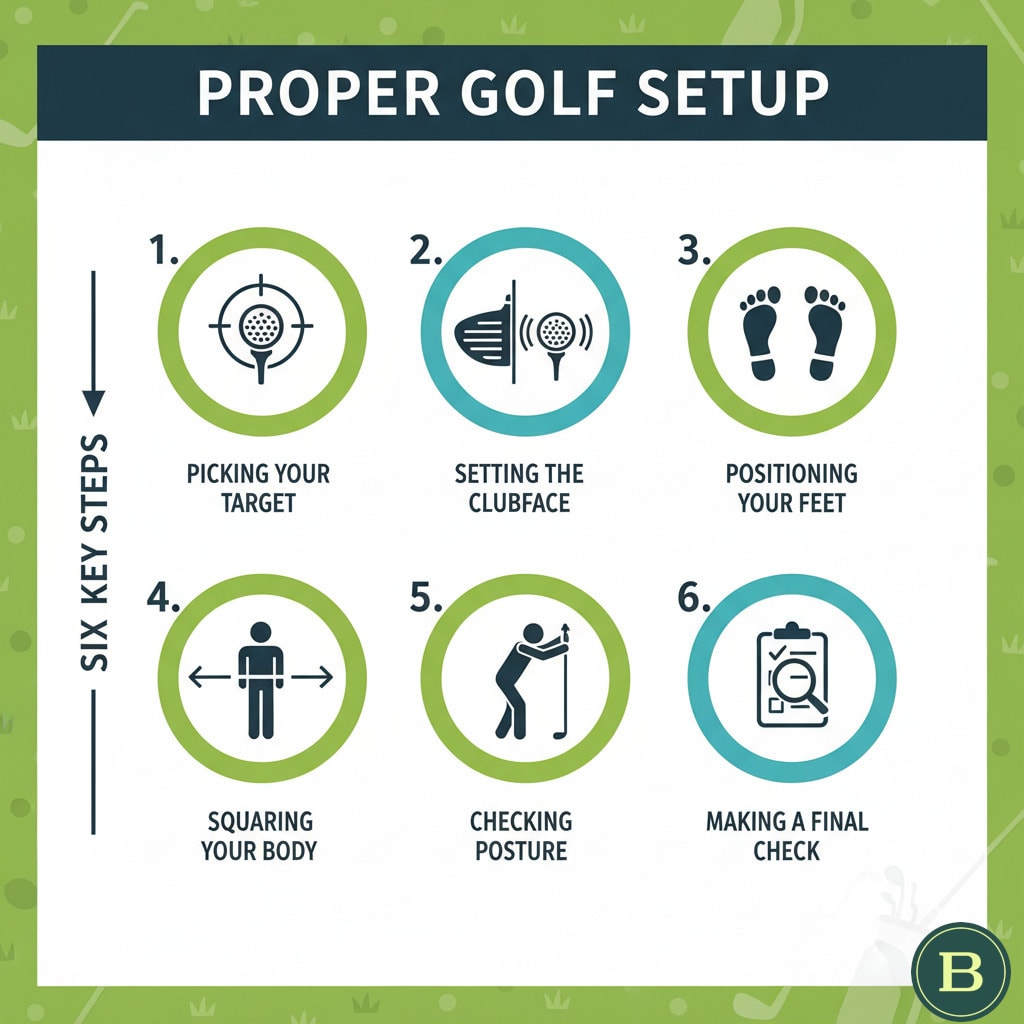
A proper setup includes six key steps: picking your target, setting the clubface, positioning your feet, squaring your body, checking posture, and making a final check. Follow this sequence every time and your stance and alignment will become consistent and reliable.
Pick Your Target
Choose a clear, specific target (tree, flagstick, or spot on the fairway).
This gives you a precise line to aim at, not just “somewhere down the fairway.”
Set the Clubface First
Place the clubface directly at the target line before worrying about your feet.
Clubface alignment matters more than body alignment—it decides where the ball starts.
Position Your Feet
Step into the shot so your feet are parallel to the target line, like standing on train tracks.
Keep stance width comfortable: about shoulder-width for irons, a bit wider for driver.
Square Up the Body
Align hips, shoulders, and knees parallel to your feet.
Imagine a line from your shoulders and hips running left of the target (for right-handed players), just like the outside rail of the tracks.
Check Your Posture
Bend slightly from the hips, keep back straight, and let arms hang naturally.
Weight should be balanced between the balls of your feet—not too much on toes or heels.
Final Check
Do a quick scan: clubface → feet → hips/shoulders → target.
Small pre-shot routine (like tapping the ground or waggling the club) helps lock it in consistently.
Adjustments Based on the Shot
You’ll need to adjust stance and alignment depending on the club, shot shape, and lie: driver vs. irons, draws vs. fades, and special shots like bunker or chips. These small tweaks help you control ball flight and make the shot fit the situation.
Driver vs. Irons
Driver: wider stance, ball positioned more forward, slight tilt in spine.
Irons: shoulder-width stance, ball more centered, weight balanced.
Draw vs. Fade
Draw: closed stance with clubface slightly closed relative to body.
Fade: open stance with clubface slightly open relative to body.
Bunker Shots
Open stance and clubface to help the club slide under the ball.
Weight favoring front foot for cleaner contact.
Chipping and Pitching
Narrow stance, ball back in stance, weight forward.
Promotes downward strike and better control.
Uneven Lies
Uphill: weight on back foot, align shoulders with slope.
Downhill: weight forward, shorter backswing for balance.
Common Mistakes & How to Fix Them
The most common stance and alignment mistakes are standing too narrow or too wide, aiming the body instead of the clubface, overcompensating with alignment, and losing posture during setup. Here’s how to spot and fix each one:
Stance Too Narrow or Too Wide
Problem: Narrow stance = unstable swing, wide stance = restricted movement.
Fix: Keep feet about shoulder-width for irons, slightly wider for driver.
Aiming the Body, Not the Clubface
Problem: Golfers line up their feet and shoulders but forget the clubface.
Fix: Always set the clubface at the target first, then build stance around it.
Overcompensating with Alignment
Problem: Trying to “fix” a slice or hook by aiming far left or right.
Fix: Work on swing fundamentals, use alignment sticks to stay square to target.
Losing Posture at Setup
Problem: Slouching shoulders, too much weight on toes or heels.
Fix: Bend from hips, keep back straight, and balance weight evenly.
Skipping a Pre-Shot Routine
Problem: Inconsistent stance and alignment from shot to shot.
Fix: Create a simple routine—target → clubface → stance → body → swing.
Drills to Improve Stance & Alignment
The best drills to sharpen stance and alignment are the alignment stick drill, railroad track visualization, feet-together drill, and a simple pre-shot routine practice. These help you build consistency and eliminate setup mistakes.
Alignment Stick Drill
Place two alignment sticks on the ground—one pointing at the target (clubface line), the other parallel (feet line).
Practice setting up square to both lines.
Railroad Track Visualization
Imagine your target line as one rail and your feet line as the other.
This mental image keeps clubface and body working together.
Feet-Together Drill
Hit short shots with feet together.
Forces balance and proper body rotation, preventing swaying.
Pre-Shot Routine Practice
Build a repeatable routine: target → clubface → stance → body.
Reinforce muscle memory so alignment feels automatic.
Mirror or Video Check
Use a mirror or record yourself on the range.
Compare setup lines to target line for instant feedback.
Mastering stance and alignment is step one. Next, try these drills to lock in your setup
FAQs About Stance & Alignment in Golf
What is the correct stance in golf?
The correct stance is usually shoulder-width apart, weight balanced, and posture athletic: slight bend from the hips with arms hanging naturally. Adjust width depending on the club (wider for driver, narrower for wedges).
How do I know if my alignment is correct?
A good check is to lay an alignment stick or club on the ground along your target line, then position your feet parallel to it. Your clubface should point directly at the target while your body lines up slightly left (for right-handed players).
What’s the difference between stance and alignment?
Stance is how you position your feet and body in relation to the ball, while alignment is how you aim the clubface and your body toward the target. Together, they control direction and consistency.
Why do I slice even when I feel aligned?
Most slices come from an open clubface or outside-in swing path, but poor alignment can make it worse. Double-check your clubface points at the target, not your body.
Do pros adjust stance and alignment for every shot?
Yes. Pros adapt their stance and alignment based on the club, shot shape (draw/fade), and course conditions, but their pre-shot routine keeps it consistent and repeatable.
Get instant access to the PDF version of this article with additional resources and insights.