
TL;DR
Proper spine position in golf means tilting forward from the hips with a straight, relaxed back – the foundation for power, accuracy, and consistency.
Key Takeaways
- Tilt from hips, not waist for a neutral spine.
- Maintain spine angle throughout backswing to follow-through.
- Spine position controls swing plane, power, and balance.
- Small adjustments by club/lie ensure consistent strikes.
- Fix common errors like hunching or early extension for better results.
What Is the Correct Spine Position in Golf?
The correct spine position in golf is a neutral spine tilted forward from the hips, not the waist, with the back straight but relaxed. Your upper body should bend slightly forward so that your arms can hang naturally, while avoiding a rounded back or excessive arch.
This neutral tilt creates balance, keeps your swing on plane, and allows you to rotate freely without strain. Maintaining this spine angle throughout the swing, backswing, downswing, and follow-through, is key to consistent ball striking.

Key Principles of Proper Spine Angle
The proper spine angle in golf is built on a few simple but critical principles:
- Tilt forward from the hips, not the waist: Bend from your hip joints so your spine stays neutral, instead of rounding your back or slouching forward.
- Keep a straight but relaxed back: Your spine should look straight when viewed from the side, with no exaggerated arch or curve.
- Maintain the angle through the swing: Consistency matters more than perfection. The goal is to hold the same tilt during the backswing, downswing, and follow-through without “standing up” or collapsing.
- Balance over the balls of your feet: A proper spine tilt works with your stance to keep weight evenly distributed for stable rotation.
A correct spine angle sets the foundation for swing plane, power, and accuracy while reducing the risk of strain or injury.
How Spine Position Affects the Swing
Your spine position directly influences the swing plane, power generation, accuracy and consistency, balance and stability, and avoiding swing faults. A consistent spine angle helps your body rotate smoothly and keeps the club on the correct path.
- Swing Plane: A steady spine angle keeps the club moving on-plane, preventing slices, hooks, and topped shots.
- Power Generation: Tilting correctly from the hips allows your body to coil and uncoil efficiently, transferring more energy into the ball.
- Accuracy & Consistency: Maintaining posture through impact ensures cleaner contact and repeatable results.
- Balance & Stability: A proper spine angle keeps your weight centered, reducing the chance of swaying or falling off the shot.
- Avoiding Swing Faults: Poor spine position often leads to early extension, loss of posture, and inconsistent strikes.
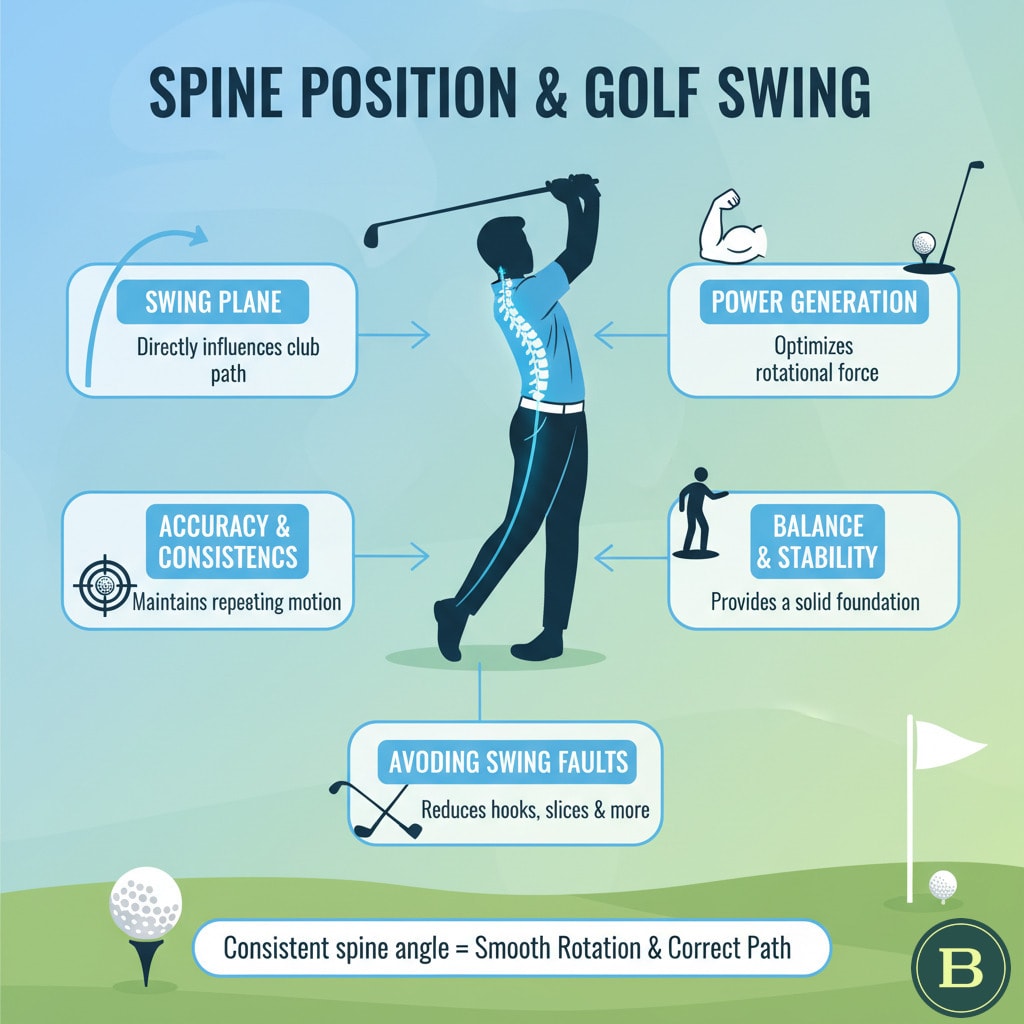
In short, your spine is the “axis” of the golf swing, if it moves or collapses, everything else breaks down.
Common Mistakes Golfers Make
Many golfers struggle with spine position because of small posture errors that snowball into swing problems. The most common mistakes include:
- Hunching the shoulders: Rounding the upper back reduces rotation and leads to weak, inconsistent strikes.
- Too upright or too bent over: Standing too tall causes thin or topped shots, while excessive bend limits mobility and balance.
- Losing spine angle during the swing (early extension): Standing up or thrusting the hips forward during the downswing destroys consistency and club path.
- Tilting from the waist instead of the hips: This creates a rounded spine and forces compensation later in the swing.
- Overly stiff posture: Locking up the back and shoulders restricts fluid rotation.
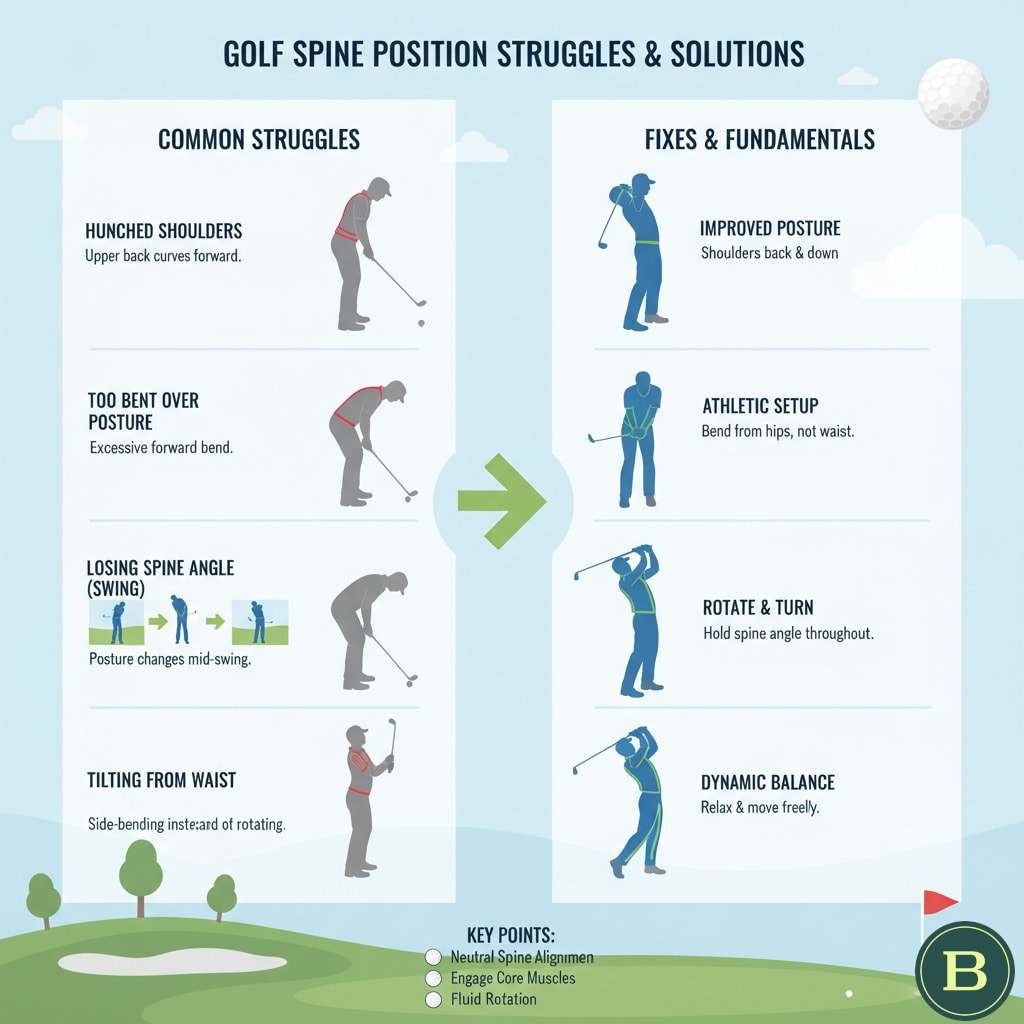
Avoiding these mistakes helps you maintain balance, generate more power, and swing on a repeatable path.
Tips to Improve and Maintain Proper Spine Position
Building a solid spine angle isn’t complicated, small adjustments and simple drills can make a big difference:
- Set up from the hips: Place a club across your waist, then hinge forward from the hips (not the waist) until the club points toward the ground. This ensures the right tilt.
- Use mirror or video feedback: Check your posture from the side to confirm your spine is neutral, not rounded or arched.
- Practice with a club across your chest: Cross a club against your shoulders, bend forward slightly, and rotate. This drill trains you to turn around your spine angle without standing up.
- Stay relaxed: Keep your back straight but not rigid. A neutral, athletic posture allows freer movement.
- Strengthen core and improve flexibility: Core exercises, yoga, or simple stretches make it easier to hold posture throughout the swing.
Consistent practice and awareness of your setup will help you ingrain the correct spine position until it becomes natural.
Spine Position by Shot Type
While the fundamentals of a neutral spine tilt remain the same, you may need small adjustments depending on the club or lie you’re facing.
- Driver: Slightly less tilt forward compared to irons. Because the ball is teed up, your spine angle should stay more upright, with a slight tilt away from the target to encourage an upward strike.
- Irons: Moderate spine tilt forward from the hips. Your spine angle should be balanced to allow a downward strike, compressing the ball cleanly.
- Wedges: A bit more forward tilt than irons. This promotes steeper contact, especially for shorter shots where precision matters more than power.
- Uphill Lies: Match your spine angle to the slope by leaning into the hill, helping you stay balanced and strike clean.
- Downhill Lies: Tilt with the slope so your shoulders match the ground, preventing fat or thin shots.
- Sidehill Lies: Adjust spine tilt to counterbalance the slope, keeping your weight stable throughout the swing.
Small changes in spine position based on the shot type make it easier to maintain balance and deliver consistent contact.
FAQs About Spine Position in Golf
Should your spine be straight or tilted in golf?
Your spine should be straight but tilted forward from the hips, not the waist. This creates a neutral, athletic posture that supports rotation and balance.
What is the difference between spine angle and spine tilt?
Spine angle refers to the forward bend from your hips at setup and how well you maintain it during the swing. Spine tilt usually means the slight lean of your upper body away from the target at address, especially with the driver.
How do I stop losing my spine angle in the swing?
Focus on turning around your spine instead of standing up through the shot. Practicing with a club across your chest in front of a mirror helps train the feel of maintaining angle. Strengthening your core also makes holding posture easier.
Does spine position change with different clubs?
Yes, but only slightly. Drivers require a more upright spine with a tilt away from the target, irons use a moderate forward tilt, and wedges add a bit more lean for steeper contact.
Why is spine position important in golf?
Because it acts as the axis of your swing. If your spine position is off or inconsistent, it affects swing plane, contact, power, and accuracy.
Get instant access to the PDF version of this article with additional resources and insights.