TL;DR
A push in golf starts right and stays straight right, fix it by squaring setup and neutralising swing path.
Key Takeaways
- Push = straight shot right (for right-handers) with no curve.
- Caused by inside-out swing path and square clubface to path (but open to target).
- Not a slice, push flies straight; slice curves right.
- Common causes: poor alignment, ball too far back, weak grip, late weight transfer.
- Fix it with better setup, neutral path, clubface control, and timed release.
- Use drills like the alignment stick, impact gate, and step-through to retrain swing mechanics.
What Is a Push Shot in Golf?
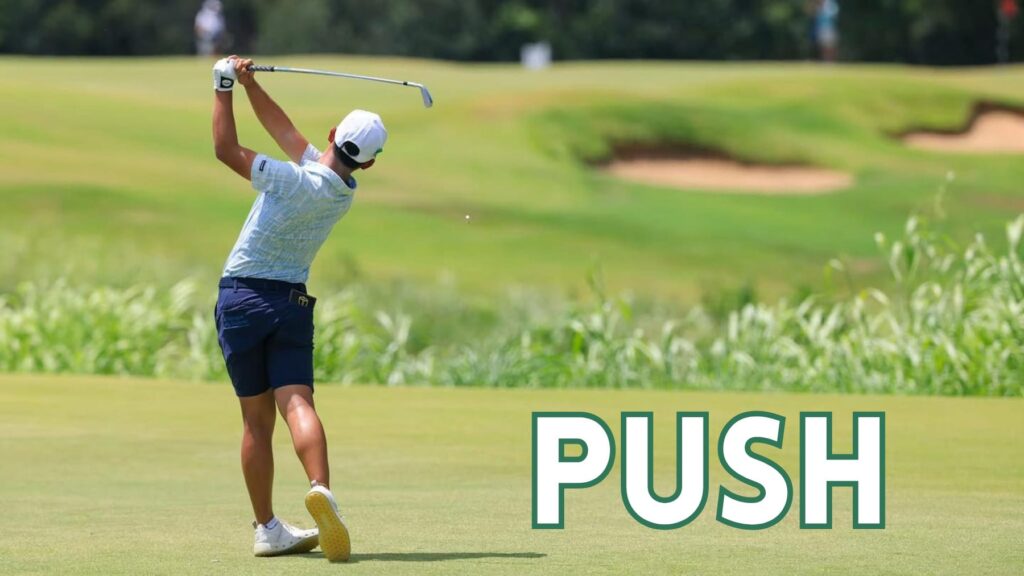
A push shot in golf is a shot that starts right of the target and flies straight right with no curve (for right-handed golfers).
It occurs when the clubface is square to the swing path, but both the path and face are aimed right of the target at impact. This means the ball doesn’t spin sideways, it just flies straight in the wrong direction.
Push shots usually feel solid but miss the target due to alignment errors, poor setup, or an inside-out swing path with insufficient face correction.
Push vs Slice vs Push-Slice
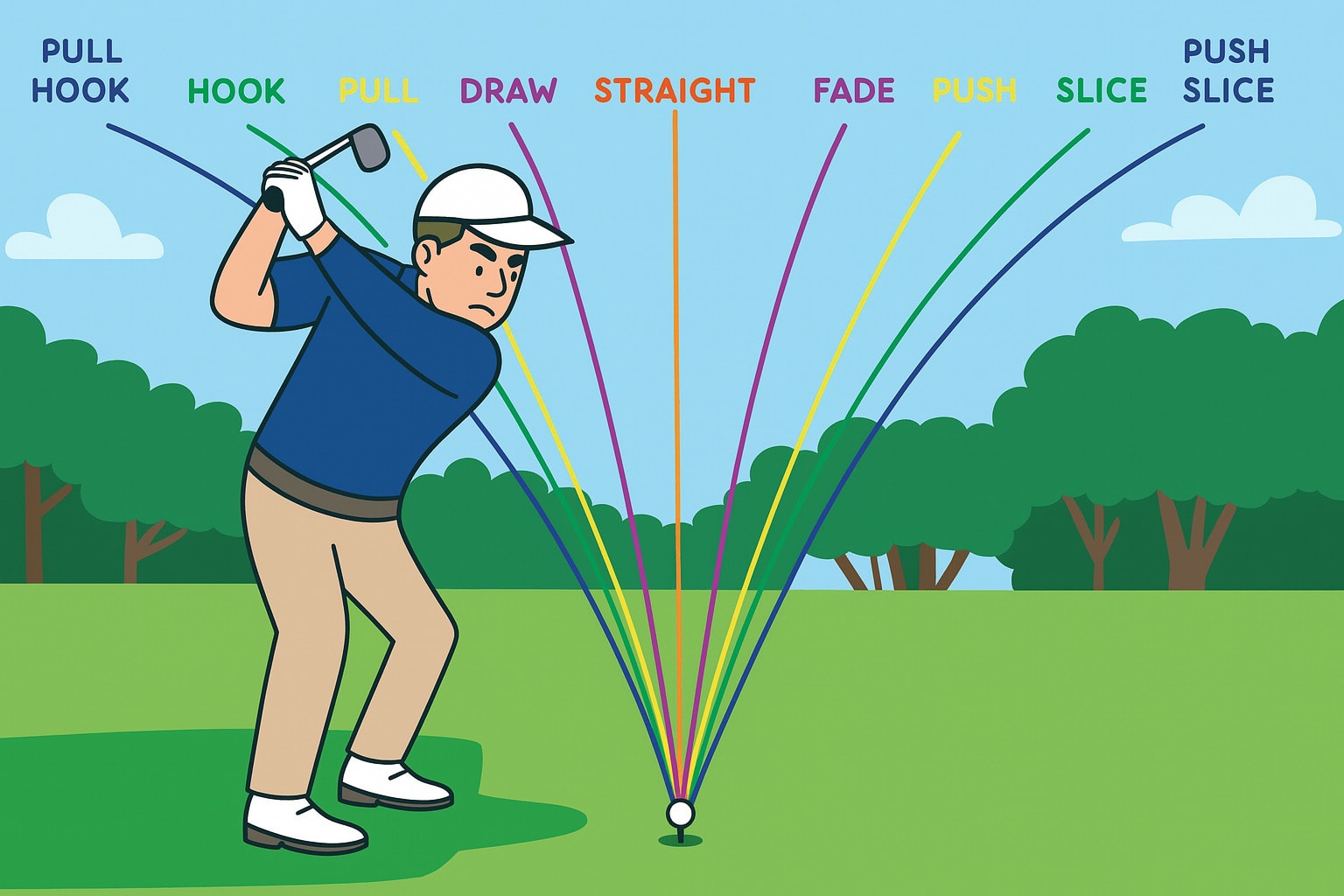
A push starts right and flies straight right. A slice curves right. A push-slice starts right and curves even further right.
| Shot Type | Start Direction | Ball Curve | Cause |
|---|---|---|---|
| Push | Right | None | Inside-out path + square clubface (to path, open to target) |
| Slice | Center or left | Right | Outside-in path + open clubface (to path) |
| Push-Slice | Right | Curves right | Inside-out path + open clubface (to path and target) |
Key difference: Push flies straight right, slice and push-slice involve curve due to an open clubface.
Why Do Golfers Push the Ball?
Golfers push the ball because their clubface and swing path are both aimed right of the target at impact.
This causes the ball to fly straight right with no curve, even if the strike feels solid. Several swing flaws or setup issues can lead to this pattern:
Common causes of a push shot include an inside-out swing path, a square clubface to path (open to target), poor alignment, ball position too far back, lack of weight transfer, and grip or release issues.
Inside-Out Swing Path
Club moves too much from inside the target line on the downswing.
Clubface Square to Path, Not Target
Face looks square to your swing but is actually open to your target.
Poor Alignment
Hips, shoulders, or feet aimed right of the target without realizing it.
Ball Position Too Far Back
Placing the ball behind center pushes the club too far inside-out and leaves the face open to the target, sending the shot straight right.
Lack of Weight Transfer
Hanging back on the trail foot delays rotation, pushing the swing direction right.
Grip and Release Issues
Weak grip or late release can prevent squaring the face to the target.
Fixing a push usually means squaring up your setup and improving swing direction, not just aiming left.
How to Fix a Push Shot
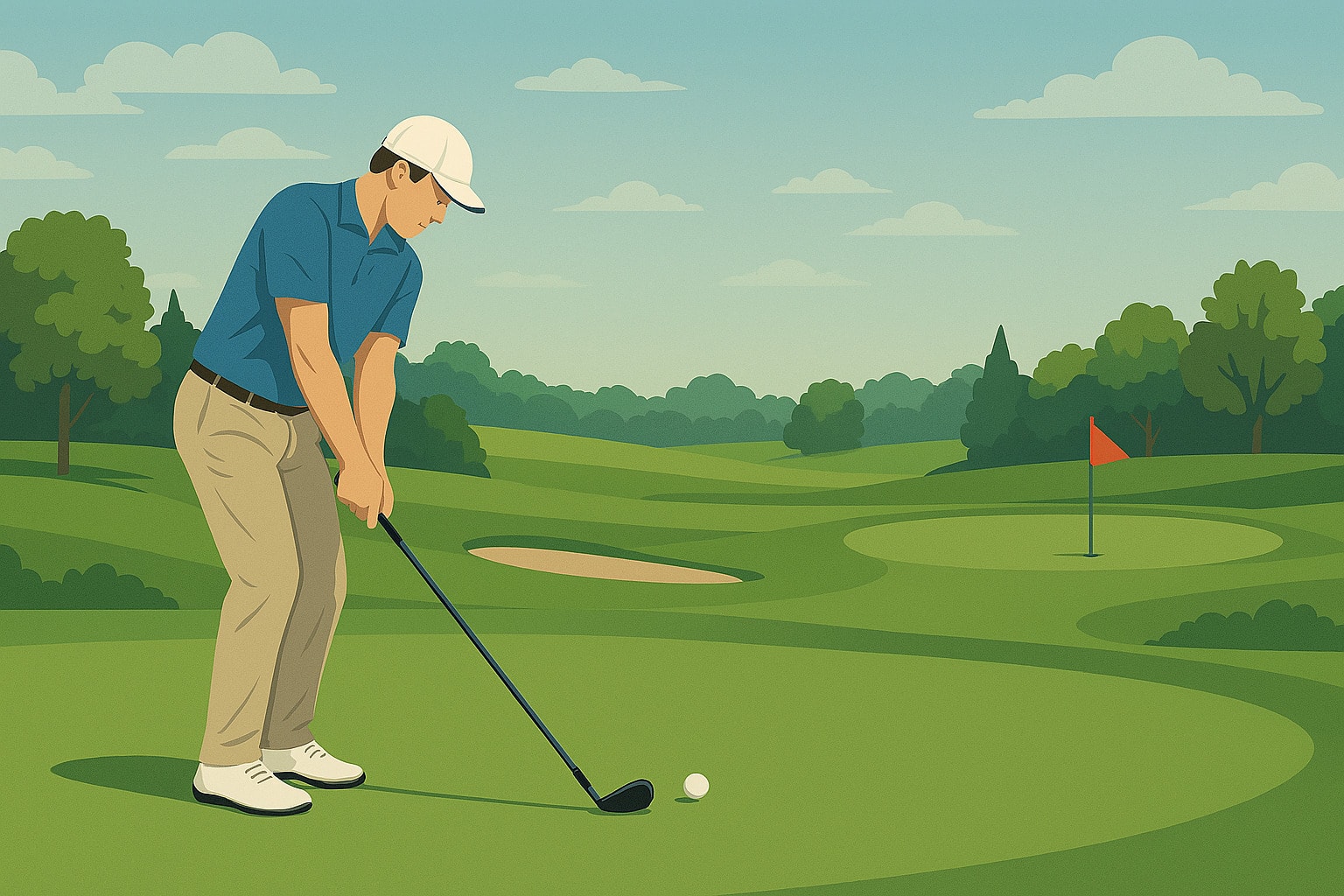
To fix a push shot, focus on correcting your alignment, swing path, clubface angle, ball position, weight transfer, and grip or release.
Alignment: Make sure your feet, hips, and shoulders are square to the target. Misalignment often causes unintentional push shots.
Swing Path: Avoid swinging too far inside-out. Try to keep your path more neutral or slightly left (for right-handers).
Clubface Angle: Ensure the clubface is square to the target, not just to the path. This requires proper hand position and release timing.
Ball Position: Don’t play the ball too far forward. Move it slightly back in your stance to help square the face and path at impact.
Weight Transfer: Shift your weight onto the lead foot during the downswing. Staying back can push the path too far right.
Grip and Release: A weak grip or delayed release can keep the face open. Try a neutral-to-strong grip and release naturally through the ball.
Fixing all six areas: alignment, swing path, clubface angle, ball position, weight transfer, and grip or release will help you eliminate push shots and hit straighter, more accurate shots.
Quick Drills to Cure a Push
Quick drills to cure a push target alignment, swing path, clubface control, ball position, weight transfer, and grip or release timing.
Alignment Stick Drill: Lay two sticks on the ground: one at your feet and one down your target line. This trains proper body and clubface alignment.
Impact Gate Drill: Place two tees slightly wider than your clubhead in front of the ball. This helps you square the face and swing down the target line.
Towel Under Arm Drill: Tuck a towel under your trail arm and make swings without dropping it. Promotes connected swing path and consistent release.
Step-Through Drill: Make a swing and step toward the target with your trail foot after impact. This improves weight transfer and balance.
Wall Path Drill: Stand near a wall and practice takeaway without the club hitting it. Helps prevent too much inside takeaway, which leads to pushes.
Repeat these drills consistently to fix a push by retraining your body to deliver the club square to the target with a neutral path.
Common Mistakes When Fixing a Push
Common mistakes when fixing a push include over-closing the clubface, compensating with alignment, moving the ball too far back, neglecting weight transfer, and rushing the release.
- Over-Closing the Clubface: Trying to square the face too much can lead to hooks or pull-hooks.
- Aiming Left Instead of Fixing Path: Compensating by aiming left doesn’t fix the real problem, it just masks it.
- Ball Too Far Back in Stance: Overcorrecting ball position can cause fat shots or a steep angle of attack.
- Ignoring Weight Transfer: Failing to shift weight forward leads to the same inside-out path and push.
- Rushing the Release: Trying to force the release too early can mess up timing and cause inconsistent strikes.
Avoiding these mistakes helps ensure your corrections are effective, not overcompensations that lead to new problems.
Pro Tips & Real-World Examples
Even professional golfers deal with push shots, and they fix them by dialing in the same fundamentals: alignment, swing path, clubface control, weight transfer, and posture.
- Rory McIlroy uses an intermediate target, a small spot just a few feet in front of the ball, to align his clubface, shoulders, and feet before every shot. This ensures he’s truly aimed at the target, not subtly set up to the right.
- Hideki Matsuyama is known for his signature pause at the top of the backswing. That pause helps him start the downswing with his lower body, not his hands. This smooth transition promotes proper weight shift and prevents the club from dropping too far inside, which often leads to push shots.
- Adam Scott maintains a consistent forward-tilted posture, pointing his belt buckle toward the ball at address. This helps him stay centered, rotate efficiently, and keep the swing path neutral, reducing the chances of the clubface and path pointing right at impact.
Real-World Example (Amateur Scenario)
Imagine you’re hitting your driver solidly, but every shot is flying straight to the right. You film your swing and realize your shoulders are aimed slightly open, and your club is coming too far from the inside.
By applying Rory’s intermediate target method, you fix your setup. Then, you add a short pause at the top like Hideki to improve your weight transfer.
Finally, adjusting your posture to match Adam Scott’s forward tilt gives you a more neutral path. Within a few practice sessions, your ball flight straightens out, and the push is gone.
FAQs
Why do I keep pushing my driver but not my irons?
Because the driver has a longer shaft and flatter lie angle, it exaggerates any swing path or alignment errors. If your setup or clubface is slightly off, it shows more with the driver than shorter clubs.
Is a push shot caused by an open clubface?
Not exactly. A push happens when the clubface is square to the swing path but the entire path is aimed right of the target. That’s different from a slice, where the clubface is open relative to the path, causing a curve.
Can poor alignment alone cause a push?
Yes. If your shoulders, feet, or hips are aligned right of the target, your swing path often follows, and you push the ball even if the face feels square.
Should I aim left to compensate for a push?
No. Aiming left treats the symptom, not the cause. Instead, fix your swing path, alignment, and clubface control to hit straight shots properly.
Can a weak grip cause push shots?
Yes. A grip that’s too weak can delay or restrict clubface rotation, leaving the face slightly open and aimed right at impact, especially with an inside-out path.
Get instant access to the PDF version of this article with additional resources and insights.