
TL;DR
A pull hook starts left and curves even farther left, caused by a closed clubface plus an inside-out swing path.
Key Takeaways
- Pull hook = starts left, curves left (for right-handers)
- Caused by closed clubface + inside-out swing
- Common with overactive hands or poor alignment
- Different from a pull (straight left) or hook (starts right, curves left)
- Fixable with setup, grip, and swing path adjustments
What Is a Pull Hook in Golf?
A pull hook is a golf shot that starts left of the target (for right-handed golfers) and curves even further left due to a combination of a closed clubface and an inside-to-out swing path.
It typically flies low and fast, often resulting in a severe miss that ends up deep in the rough or out of bounds. This shot differs from a standard hook (which starts right and curves left) and from a pull (which goes straight left with no curve).
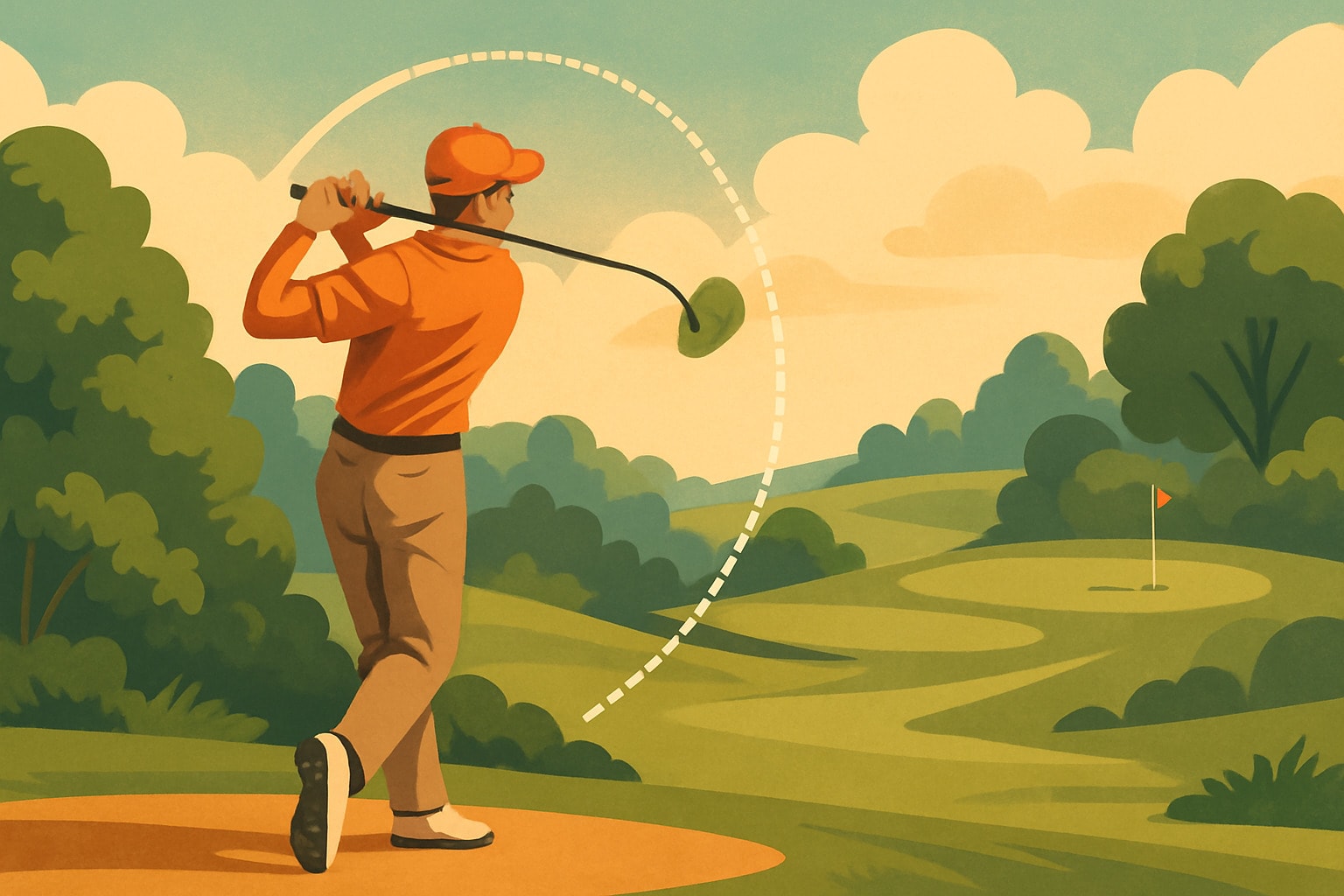
Pull Hook vs Hook vs Pull
Here’s how a pull hook compares to a hook and a pull, three common shots that miss left (for right-handed golfers), but for different reasons.
| Shot Type | Start Direction | Curve Direction | Typical Cause | Ball Flight |
|---|---|---|---|---|
| Pull Hook | Left | Left | Closed clubface + inside-out swing path | Hard, low, sharp left |
| Hook | Right | Left | Closed clubface + inside-out swing path | Sweeping curve left |
| Pull | Left | Straight | Closed or square clubface + straight swing path | Straight left, no curve |
For right-handed golfers (reverse directions for left-handed players).
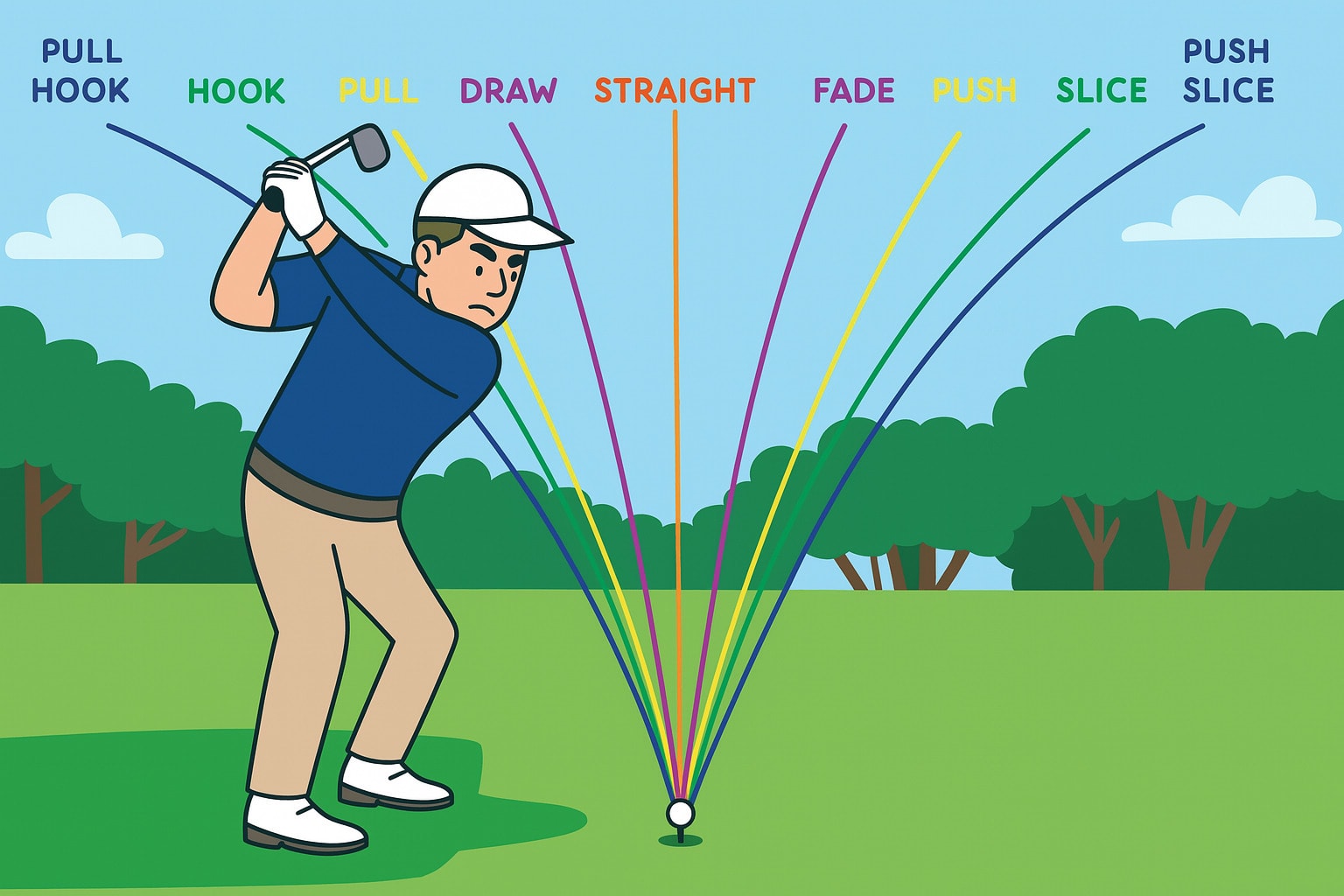
Common Causes of a Pull Hook
A pull hook happens when both your clubface is closed at impact and your swing path moves inside-to-out, creating a shot that starts left and curves further left. Here are the most common reasons this occurs:
- Overactive hands or wrists at impact, closing the clubface too early
- Strong grip (too much right hand under the club for right-handers), promoting a shut face
- Closed stance or poor alignment, aiming left without realizing it
- Ball too far forward in stance, making it harder to square the face
- Swinging too hard or too fast, causing a breakdown in form
- Inside-to-out swing path, common when trying to hit a draw but overdoing it
- Incorrect equipment setup, such as an upright lie angle that promotes leftward flight
Fixing a pull hook requires identifying which of these elements is causing the issue and making targeted adjustments.
How to Fix a Pull Hook
To fix a pull hook, you need to address both the closed clubface and the inside-out swing path. Here are the most effective adjustments:
Use a neutral grip: Avoid gripping too strong; adjust so both hands point slightly to your trail shoulder.
Square the clubface: At setup, make sure the face points at the target, not left.
Check ball position: Don’t play the ball too far forward, especially with irons.
Fix your swing path: Avoid an inside-out path; aim for a more neutral, on-plane motion.
Control your tempo: Rushing the downswing can close the face. Stay smooth and balanced.
Use alignment aids: Practice with sticks or foot spray to monitor path and face direction.
Consistent practice with feedback tools (mirror, video, impact tape) will help you build awareness and correct your pull hook over time.
When Pull Hooks Happen Most
Pull hooks happen most often with drivers, long irons, rushed swings, overdraw attempts, poor alignment, or under pressure.
Off the tee with a driver or long iron, where swing speed exaggerates mistakes
Under pressure, when players tense up or rush the downswing
After trying to swing too hard, causing loss of control and clubface rotation
When aiming too far right, leading to over-correction with hands
Trying to hit a draw, but overdoing the inside-out path and closing the face too much
FAQs About Pull Hook in Golf
What’s the difference between a pull hook and a hook?
A pull hook starts left and curves further left; a hook starts right (or at the target) and curves left. Both are caused by a closed clubface, but pull hooks also involve a poor swing path.
Is a pull hook caused by grip or swing?
Both. A strong grip can close the clubface, while an inside-out swing path sends the ball left, together, they produce a pull hook.
Can I fix a pull hook by changing my stance?
Yes. A square stance with proper alignment helps prevent compensations that lead to closed face and inside-out path.
Why do I only pull hook with my driver?
The longer shaft and lower loft of the driver magnify swing flaws, making pull hooks more common with that club.
Do left-handed golfers experience pull hooks too?
Yes, but for them, the ball starts right and curves further right, same mechanics, just mirrored.
Get instant access to the PDF version of this article with additional resources and insights.