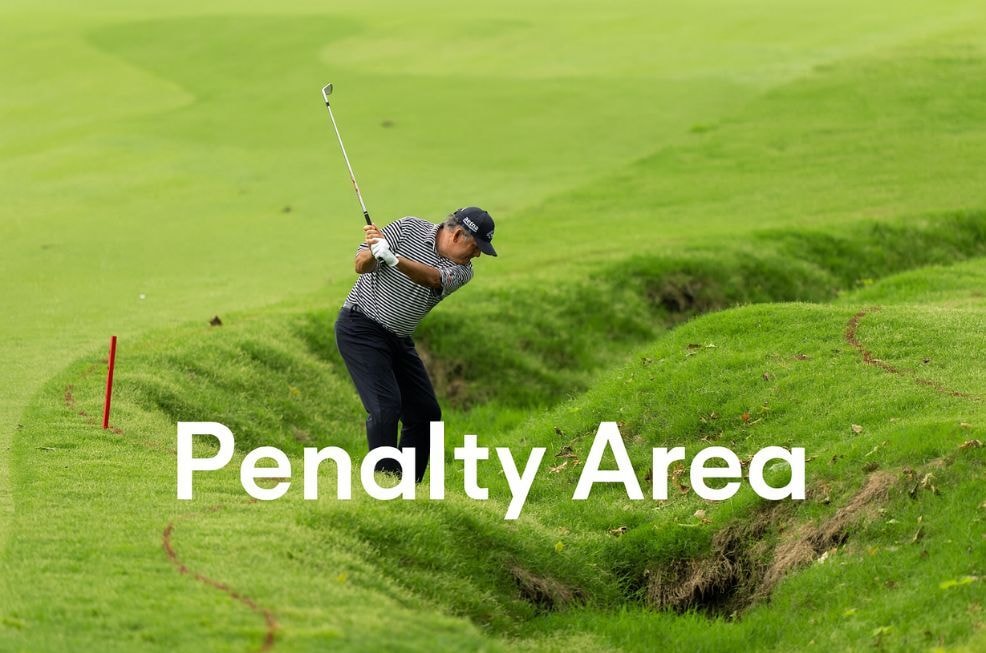
TL;DR – Penalty Area in One Line
A penalty area is any red or yellow-marked zone (water, brush, sand) where you may take one-stroke relief.
Key Takeaways
- Penalty areas are marked red or yellow
- Red allows lateral relief, yellow does not
- You can play the ball as it lies or take relief
- Relief comes with a one-stroke penalty
- Rule 17 replaced the old “water hazard” rule
- Smart decisions in penalty areas can save strokes
What Is a Penalty Area in Golf?
A penalty area in golf is any part of the course that’s marked with red or yellow stakes or lines, usually representing water, thick rough, or other challenging terrain. It’s a designated area where relief is allowed, but usually with a one-stroke penalty.
Unlike out of bounds, you’re allowed to play your ball from a penalty area if it’s playable. But if you can’t, or choose not to, you have specific options for taking relief, depending on whether the area is red or yellow.
Penalty areas replaced the old term “water hazards” in 2019 to cover more than just water, making the rules more flexible and modern.
Types of Penalty Areas
Penalty areas come in two types, marked by different colors on the course: red and yellow. Both are treated similarly, but the relief options they allow are different.
| Feature | 🔴 Red Penalty Area | 🟡 Yellow Penalty Area |
|---|---|---|
| Commonness | Most common | Less common |
| Markings | Red stakes or red lines | Yellow stakes or yellow lines |
| Relief Options | Stroke-and-distance
Back-on-the-line Lateral relief (2 club-lengths) |
Stroke-and-distance
Back-on-the-line |
| Lateral Relief Allowed | Yes | No |
| Flexibility | More relief options, good for side entry | Stricter, typically used where lateral relief is unfair |
In short: Red penalty areas give you more relief options, especially lateral relief, while yellow areas are more restrictive and demand careful shot planning.

Relief Options from a Penalty Area (Under Rule 17)
When your ball enters a penalty area, you can either play it as it lies or take relief with a one-stroke penalty. The options depend on whether the area is red or yellow.
| Relief Option | Available For | Description |
|---|---|---|
| Play the ball as it lies | Red & Yellow | No penalty, but you must follow Rule 17.1 (grounding and loose impediments now allowed) |
| Stroke-and-distance | Red & Yellow | Replay from the original spot with a 1-stroke penalty. |
| Back-on-the-line | Red & Yellow | Drop a ball behind the penalty area, keeping the entry point on the line. |
| Lateral relief | Red only | Drop within 2 club-lengths from where the ball last crossed the red line. |
Note: Relief must be taken using proper drop techniques, and the ball must stay within the defined relief area.
Rules of Penalty Areas (Rule 17 – USGA)
Rule 17 of the Rules of Golf outlines how you should handle your ball when it lands in a penalty area. Here’s what you need to know:
1. When Is Your Ball in a Penalty Area?
Your ball is considered in the penalty area when any part of it touches or is above the area marked by red or yellow lines or stakes.
2. What Are Your Options?
- Play it as it lies: no penalty, if it’s playable
- Take penalty relief: one-stroke penalty with options based on red or yellow marking
3. If the Ball Isn’t Found, But You’re Sure It’s in the Penalty Area
If it’s “known or virtually certain” that your ball went into the penalty area, you can still take relief.
If not, it’s treated as lost, and you must use stroke-and-distance relief.
4. No Play Zones in Penalty Areas
If the area is marked as a No Play Zone, you must not hit the ball, you’re required to take relief (even without penalty-free options).
Below are four official diagrams from the USGA showing how to take relief when your ball is in a yellow or red penalty area, and what happens if you play from inside the area.


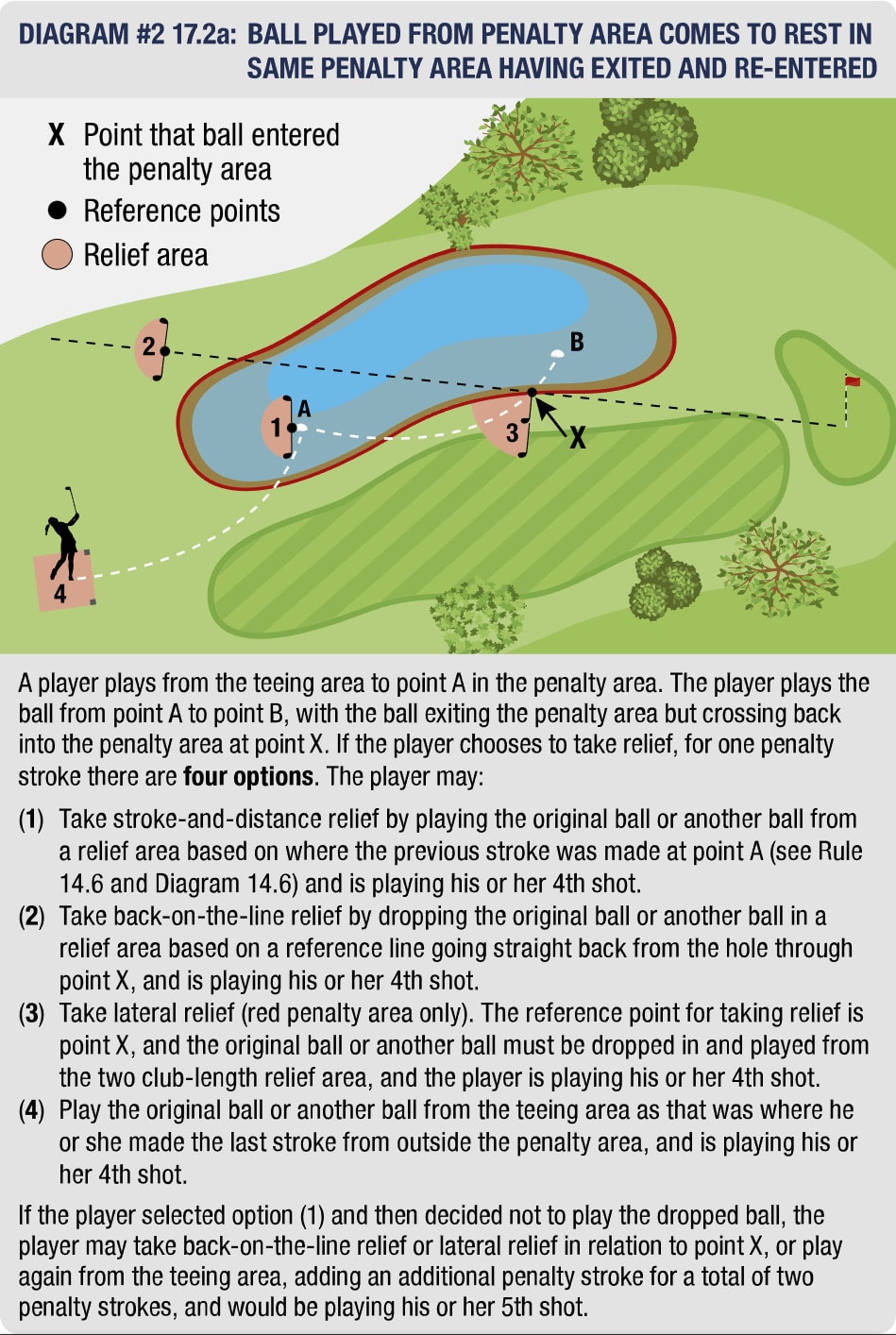
For official details, visit the USGA Rule 17 page.
Strategy Tips: How to Play It Smart
Learn the colors, take smart relief, think ahead, practice drops, and use course tools, these are the keys to handling penalty areas wisely.
1. Learn the colors
Red areas give you more relief options than yellow ones. Know which you’re dealing with before deciding your shot.
2. Take smart relief
Don’t try a risky shot if it’s not worth it. Dropping with a one-stroke penalty can save you strokes overall.
3. Think ahead
Plan your shots to avoid penalty areas altogether. Aim for safe zones when possible.
4. Practice drops
Understand where and how to drop the ball correctly. It prevents rule violations and speeds up play.
5. Use course tools
Check GPS, maps, or apps to see where the penalty areas are before your shot. Plan accordingly.
Mastering these strategies helps you stay calm, make smart choices, and turn tough situations into scoring opportunities.
Common Mistakes to Avoid
Confusing red and yellow areas, dropping incorrectly, forgetting the penalty stroke, and forcing risky shots are common errors around penalty areas.
1. Confusing red and yellow
Each color offers different relief options. Know which one you’re dealing with before making a decision.
2. Dropping outside the relief zone
If you drop in the wrong spot or outside the allowed area, it can lead to extra penalty strokes.
3. Forgetting to count the penalty
Always add one stroke when you take relief, it’s easy to forget, but important for accurate scoring.
4. Forcing a tough shot
Trying to hit from a bad lie in the penalty area can lead to even worse outcomes. Sometimes, the smart play is to take the drop.
Avoiding these simple mistakes can keep your round on track and protect your scorecard from unnecessary damage.
FAQ About Penalty Areas
Can you play from a penalty area, what if the ball isn’t found, how are colors different, and where can you find the official rules? Let’s clear it up:
1. Can I play the ball from a penalty area?
Yes, if the ball is playable, you’re allowed to hit it without taking a penalty.
2. What if I can’t find the ball?
If it’s known or virtually certain that the ball is in the penalty area, you can still take relief with a one-stroke penalty. If not, treat it as a lost ball and go back to the last shot.
3. What’s the difference between red and yellow areas?
Red areas allow lateral relief (2 club-lengths), yellow areas don’t. That makes red areas more flexible.
4. Where can I read the official rules?
You can find full details in Rule 17 – Penalty Areas (USGA).
Get instant access to the PDF version of this article with additional resources and insights.