
TL;DR – Green in One Line
Green: the ultra-short, smooth area around the cup where putts roll fast and true.
Key Takeaways
- The green is the final target area where golfers putt the ball into the hole.
- It features short, smooth grass for a true roll.
- Slopes, contours, and speed affect how putts break.
- You can repair damage, clean your ball, and leave the flagstick in.
- Different green types (flat, sloped, tiered, undulating) require different strategies.
- Mastering the green improves your putting accuracy and lowers your score.
What Is the Green in Golf?
The green is the final, closely mowed area on a golf hole where the hole (or cup) is located. It’s designed for putting, meaning golfers use a putter to roll the ball across the smooth surface and into the hole.
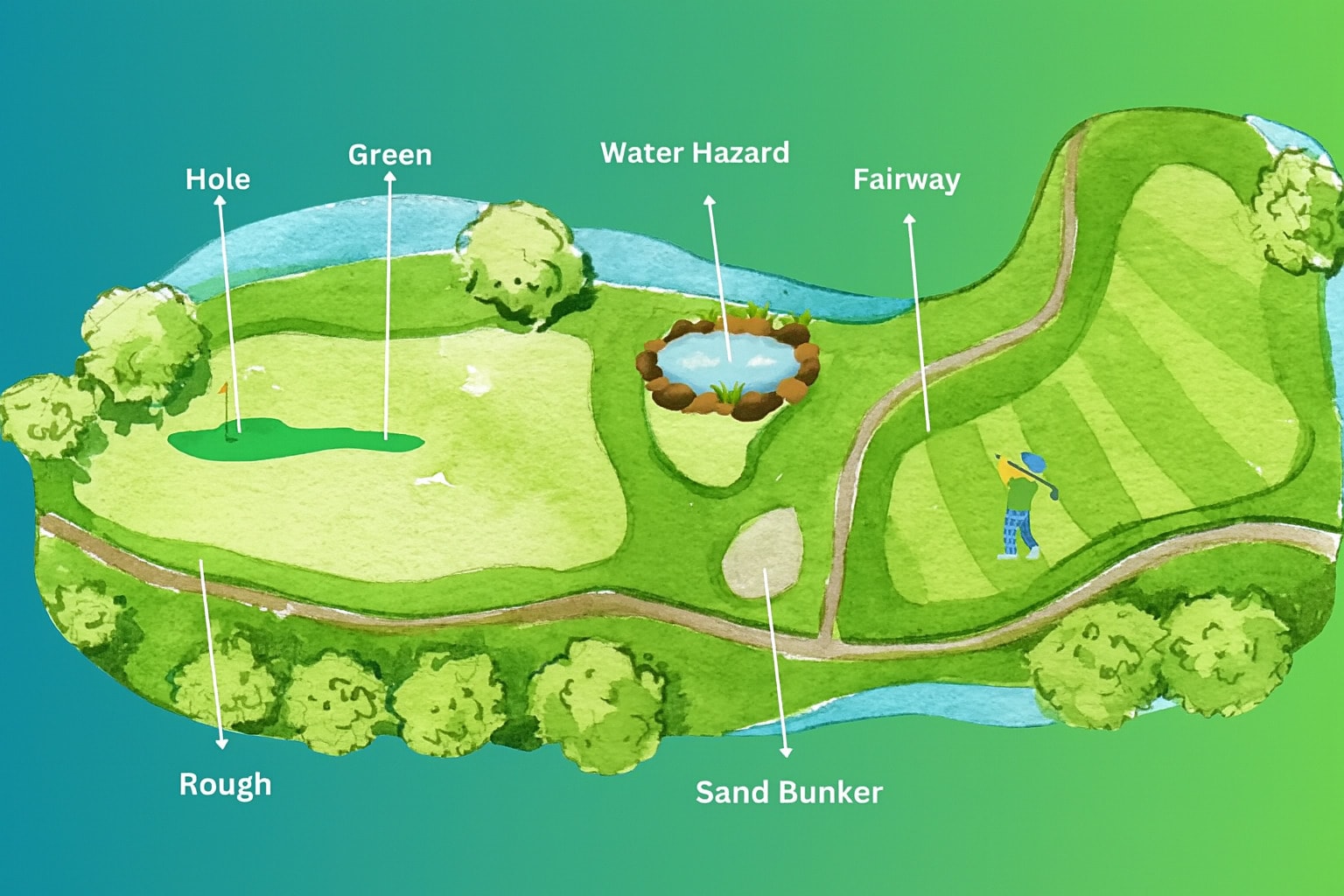
Greens are often sloped or contoured to add challenge, and their speed (how fast the ball rolls) can vary from course to course. Once you reach the green, the goal is simple: get the ball in the hole using as few strokes as possible, ideally just one putt.
A well-maintained green is firm, smooth, and fast, allowing for precision putting and strategic play.
What Makes a Green Unique?
The green is defined by its short grass, smooth surface, hole location, contours, speed, and high maintenance:
- Short grass: cut extremely low for a true and consistent roll
- Smooth surface: free of bumps or imperfections for accurate putting
- Hole location: the cup is set into the green and marked with a flagstick
- Contours and slopes: designed to add break and challenge to putts
- Speed: measured by a Stimpmeter, indicating how fast the ball rolls (typically 8 for slow public courses, 13+ for tour-level greens)
- High maintenance: greens are mowed, rolled, and watered daily
Each green is unique in feel and difficulty, and mastering its details is essential for sinking putts.
Types of Greens
Greens come in different shapes, sizes, and designs. Common types include flat greens, sloped greens, multi-tiered greens, and undulating greens.
Flat Greens
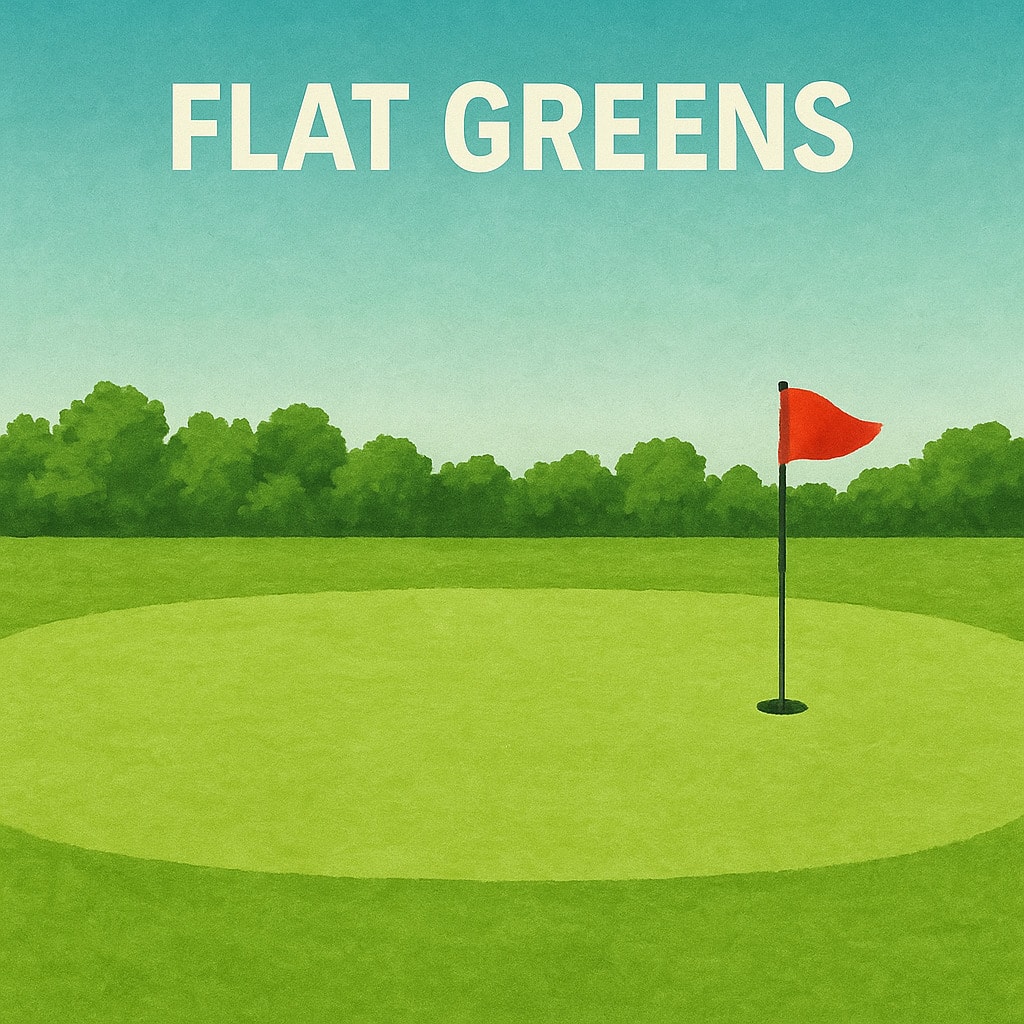
A flat green is the most straightforward type. It has little to no slope, making it easier to read and putt on. These greens are often found on beginner-friendly courses or shorter holes, where simplicity and speed of play are prioritized.
Sloped Greens
A sloped green features a consistent tilt in one direction. This slope causes the ball to break, requiring players to aim away from the hole to account for the curve. Sloped greens are very common and demand good judgment of line and speed.

Multi-Tiered Greens
Multi-tiered greens have two or more distinct levels or tiers separated by a rise or ridge. If your ball ends up on the wrong tier, you may face a difficult uphill or downhill putt. These greens reward precise approach shots and careful distance control.

Undulating Greens
An undulating green has multiple subtle curves, dips, and swells throughout its surface. Unlike a single slope or tier, the undulations create complex breaks and unpredictable rolls. Reading these greens takes experience, a good eye, and confidence in your stroke.

The table below compares the most common types of golf greens, highlighting their features, difficulty, and the main challenge they present.
| Type of Green | Description | Difficulty | Key Challenge |
|---|---|---|---|
| Flat Green | Smooth and level surface, minimal slope | Very Easy | Straight putting line |
| Sloped Green | Tilted in one direction | Easy – Moderate | Judging single-direction break |
| Multi-Tiered Green | Divided into distinct raised or lowered sections | Hard | Controlling distance between tiers |
| Undulating Green | Full of subtle curves, dips, and mounds | Hard | Reading complex, multi-break lines |
Rules on the Green
Rule 13 of the Rules of Golf covers everything you can and cannot do on the putting green, including what actions are allowed, what’s prohibited, special situations like overhanging balls, and when you must take free relief from a wrong green:
Key Things You Can Do on the Green:
- Mark, lift, and clean your ball at any time
- Repair ball marks, spike marks, old hole plugs, and more
- Remove sand and loose soil (only allowed on the green)
- Leave the flagstick in or take it out while putting
- No penalty if you accidentally move your ball or ball-marker
Things You Must Not Do:
- No practice strokes or rubbing the surface to test the green
- No unreasonable actions to “improve” the surface beyond normal repair
- No playing from a wrong green, you must take free relief
- Don’t manipulate the flagstick to gain an advantage
Special Situations:
- Ball overhanging the hole? Wait up to 10 seconds to see if it drops
- Ball resting against the flagstick? It’s holed if any part is below surface
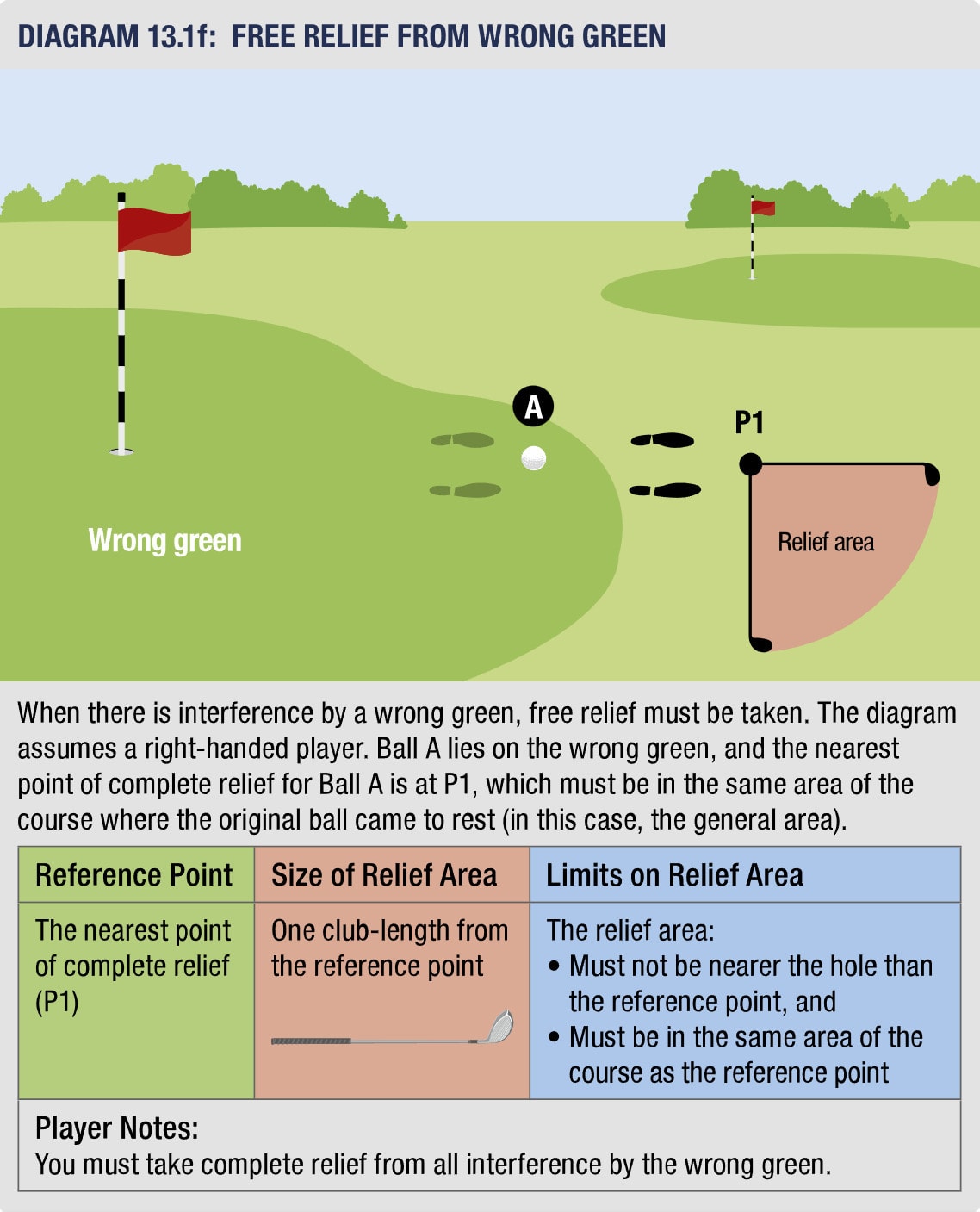
Free Relief from a Wrong Green (Rule 13.1f)
If your ball lies on a wrong green or your stance/swing is interfered with by it, you must take free relief:
- Find the nearest point of complete relief
- Drop your ball within one club-length
- Must not be closer to the hole and must stay in the same area of the course
You can read the full version of Rule 13 on the USGA website here.
Other Rules Related to the Green That Golfers Should Know
While Rule 13 is the main rule for putting greens, a few other rules also apply when you’re on or around the green. Here’s a quick overview:
Rule 10.2b: Caddie Positioning
Your caddie is not allowed to stand directly behind you when you’re taking your stance or making a stroke on the green. Doing so results in a two-stroke penalty in stroke play.
Rule 11.1a: Ball Hits You or Equipment
If your ball accidentally hits you, your equipment, or your caddie on the green, there is no penalty, just play the ball from where it comes to rest.
Rule 14.1c: Cleaning the Ball
You’re allowed to lift and clean your ball on the green anytime, but you must mark its position first.
Rule 14.1b: Marking the Ball
Before lifting your ball on the green, you must place a ball-marker directly behind it to ensure correct replacement.
Rule 21 Formats: Still Follow Green Rules
In formats like Stableford, Match Play, or Four-Ball, you still follow the same rules on the green as in regular stroke play.
How to Read the Green
Reading the green involves six key steps: Survey the Green from a Distance, Walk Around Your Line, Check the Slope and Break, Read the Grain, Feel the Speed, and Choose Your Line and Commit.
1. Survey the Green from a Distance
As you walk up to the green, observe the general slope and shape. Is it uphill or downhill? Does it tilt left or right?
2. Walk Around Your Line
Look at your putt from behind the ball and also behind the hole. This helps you spot breaks from both angles.
3. Check the Slope and Break
Feel with your feet if you’re unsure. Subtle slopes can cause your ball to curve, called the “break.”
- Downhill putts roll faster and break more
- Uphill putts are slower and break less
4. Read the Grain (if applicable)
On some greens (like Bermuda grass), the grain affects speed and direction.
- Shiny side = with the grain (faster)
- Darker side = against the grain (slower)
5. Feel the Speed
Use practice putts or watch others to sense the green’s speed. Faster greens require softer strokes and more break.
6. Choose Your Line and Commit
Pick a spot or point where you want to aim, called your target line. Visualize the curve and trust your read.
Tip: With practice, you’ll start to see patterns and read greens faster. Stay patient, observant, and consistent with your routine.
Green Maintenance and Etiquette
Green etiquette involves five key practices: Repair Your Ball Marks, Be Mindful of Your Footwork, Place Your Equipment Off the Green, Handle the Flagstick Properly, and Avoid Causing Damage.
1. Repair Your Ball Marks
Always fix your pitch marks (ball marks) as soon as you reach the green. Use a repair tool to gently restore the surface.
2. Be Mindful of Your Footwork
Walk carefully to avoid dragging your feet or damaging the turf. Never step in another player’s putting line.
3. Place Your Equipment Off the Green
Keep your bag, clubs, and towels off the putting surface. Lay the flagstick down gently on the fringe or nearby rough.
4. Handle the Flagstick Properly
You can putt with the flagstick in or out, but avoid tossing or dropping it onto the green. Always return it gently to the hole.
5. Avoid Causing Damage
Don’t lean on your putter or dig into the green with shoes or equipment. Also avoid practice strokes that could scuff the surface.
Common Mistakes on the Green
Golfers often lose strokes by making simple putting errors. Common mistakes include Misreading the Break, Hitting with the Wrong Speed, Poor Alignment, Rushing the Putt, and Ignoring Etiquette.
1. Misreading the Break
Not properly judging the slope causes the ball to miss left or right. Always take time to read the green from multiple angles.
2. Hitting with the Wrong Speed
Too soft and the ball dies short; too firm and it blows past. Speed is just as important as direction when putting.
3. Poor Alignment
Lining up incorrectly leads to missed putts—even with a good stroke. Use a line on your ball or a consistent routine to aim accurately.
4. Rushing the Putt
Quick, careless strokes increase errors. Take a breath, commit to your line, and stay focused on execution.
5. Ignoring Etiquette
Stepping in putting lines, not repairing ball marks, or dropping equipment carelessly can damage the green and affect others’ play.
FAQ about the Green
1. Can I fix a ball mark or spike mark on the green?
Yes. Under Rule 13.1c, you’re allowed to repair ball marks, spike marks, and other damage on the green without penalty.
2. Can I clean my ball on the green?
Yes. You may lift and clean your ball at any time on the green, but you must mark its spot first (Rule 14.1c).
3. Can I leave the flagstick in while putting?
Yes. Since 2019, the rules allow you to putt with the flagstick in or out, it’s your choice (Rule 13.2a).
4. What happens if my ball moves on the green?
If it’s moved accidentally by you or anyone else, there’s no penalty, and you must replace it. If it moves by natural forces, the ruling depends on whether it was already marked and replaced (Rule 13.1d).
5. Do I have to take relief from a wrong green?
Yes. You must take free relief if your ball is on a wrong green or if it interferes with your stance or swing (Rule 13.1f). Playing from it is not allowed.
Get instant access to the PDF version of this article with additional resources and insights.