
TL;DR
Beginners should learn the basics: tee box setup, playing the ball as it lies, penalty areas, lost or unplayable balls, scoring, order of play, and etiquette.
Key Takeaways
- Tee Box (Rule 6.2b): Ball must be teed between and behind markers.
- Ball in Play (Rule 9.1): Always play it as it lies, no improving position.
- Penalty Areas (Rule 17): Marked red/yellow; play it or take one-stroke relief.
- Putting Green (Rule 13): You can mark, lift, clean, and repair, flagstick optional.
- Scoring (Rule 3.3b): Count every stroke plus penalties, know par/birdie/bogey.
- Lost Ball / Out of Bounds (Rule 18): Stroke-and-distance relief; use provisional ball.
- Unplayable Ball (Rule 19): Declare unplayable, take one-stroke penalty with 3 options.
- Etiquette (Rule 1.2): Respect safety, pace of play, and the course.
Basic Structure of a Golf Hole
A golf hole is made up of tee box, fairway, rough, hazards, green, and the hole.
The objective is simple: start from the tee and hit the ball into the hole in the fewest strokes possible. Each part of the hole has its own challenge, fairways give you the best path, rough makes shots harder, hazards add risk, and the green tests your putting skills.
Starting the Game: Tee Box Rules
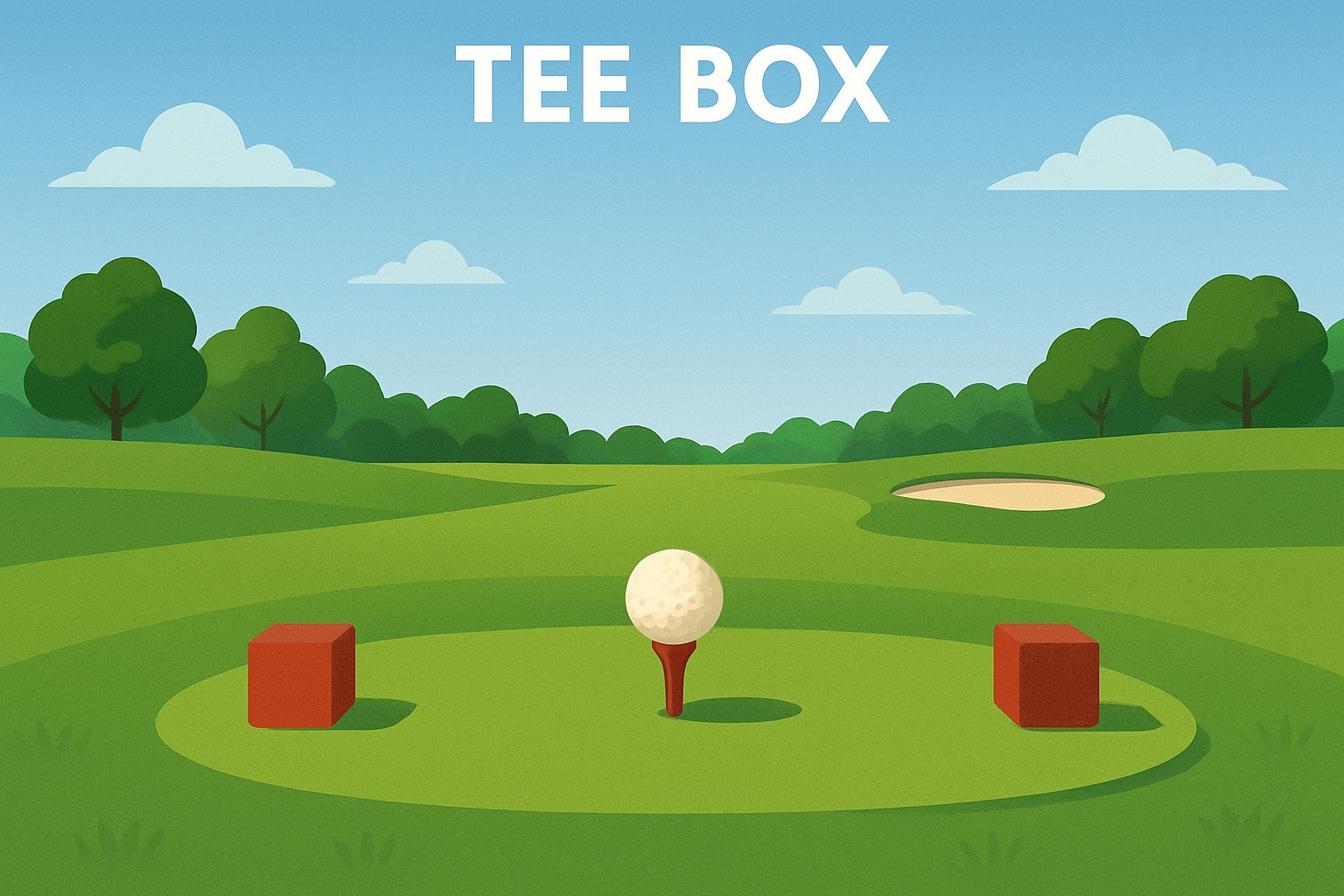
When teeing off, you must place your ball between and behind the tee markers, not in front of them. You’re allowed to stand outside the markers, but the ball itself must be inside the area. Always hit from the correct set of tees for your round, and if you play from outside the teeing area, it’s a penalty.
Official Reference: Rule 6.2b (USGA & R&A Rules of Golf): The ball must be played from inside the teeing area, defined by the front and outside edges of the tee markers.
For more detail, see our New Golf Rules: Tee Box Guide.
Playing the Ball as It Lies
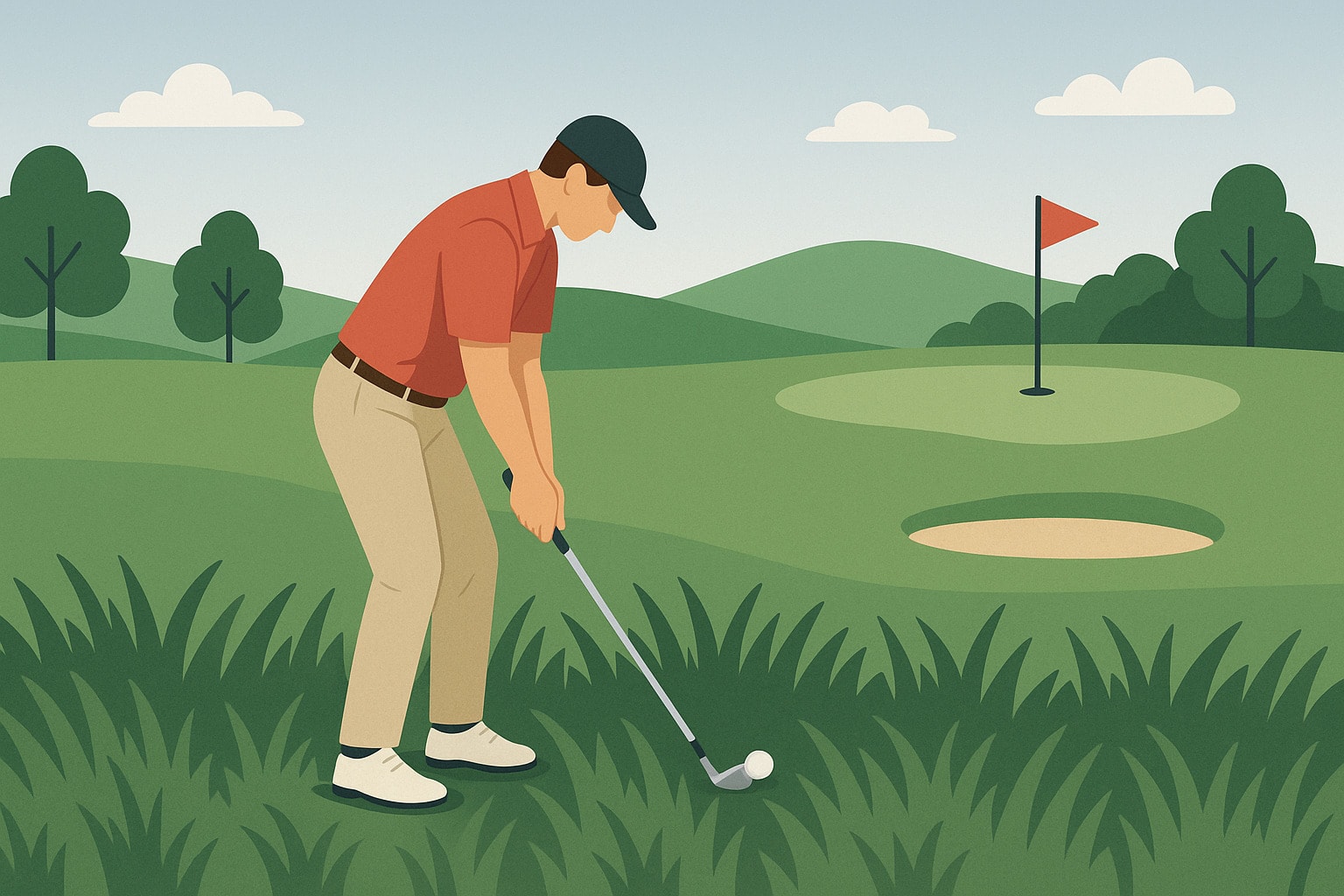
The golden rule of golf is simple: play the ball as it lies. That means you cannot move the ball, improve its position, or alter the area of your swing, stance, or line of play.
If your ball ends up in the rough, a bunker, or under a tree: you have to deal with it as it is, unless you take a relief option with a penalty.
Official Reference: Rule 9.1 (USGA & R&A Rules of Golf): The ball must be played as it lies, and the course must be played as you find it.
Penalty Areas and Hazards
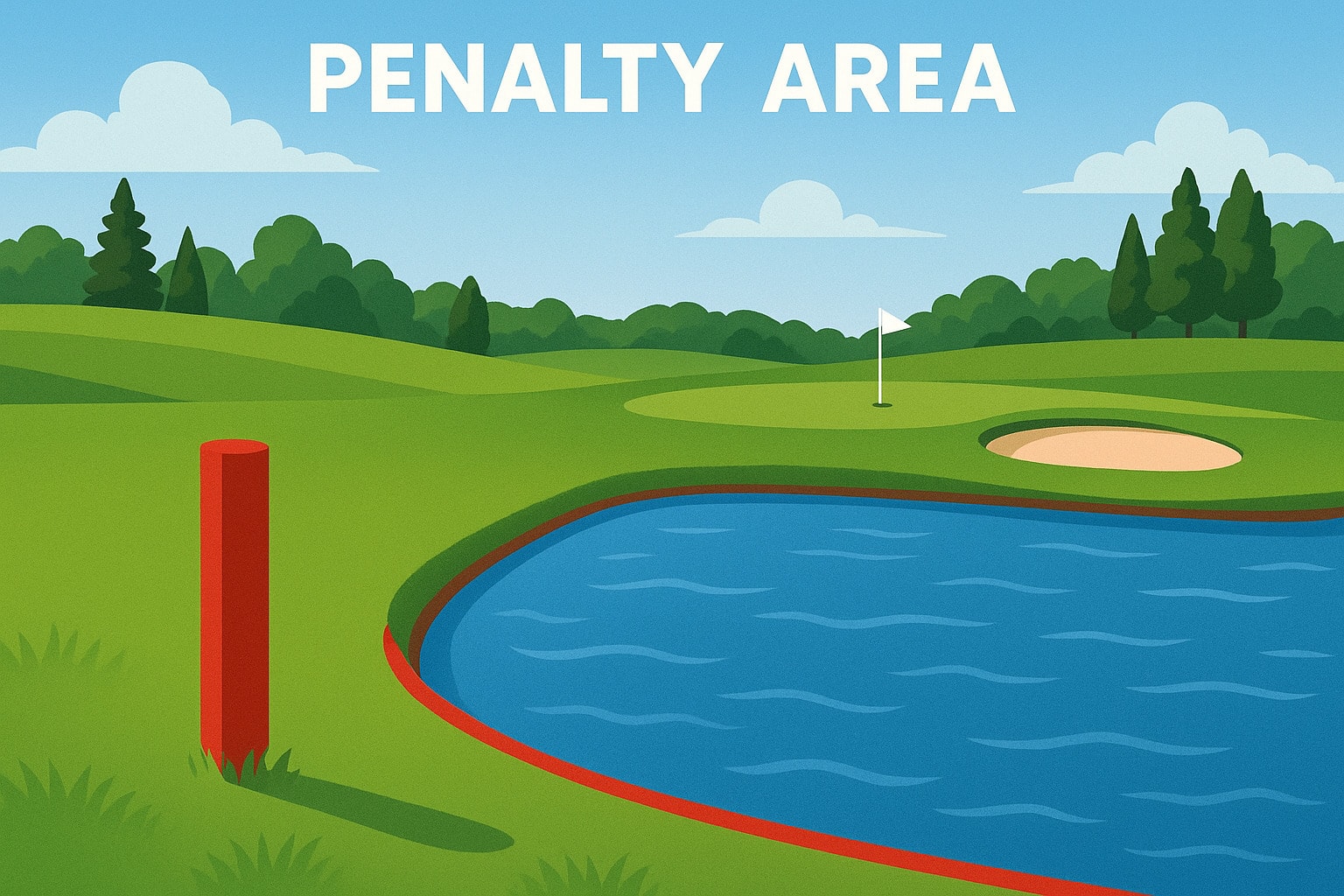
Penalty areas are marked by red or yellow stakes or lines. If your ball lands there, you can either play it as it lies (if possible) or take a one-stroke penalty and drop outside the area. Red penalty areas usually give you more relief options than yellow (typically water).
Bunkers (sand traps) are also considered a type of hazard, but they are governed by their own rule. You must play the ball as it lies, and you cannot ground your club in the sand before making your stroke. Relief is allowed with a penalty stroke if the ball is unplayable.
Official References:
- Rule 17: Penalty Areas (red/yellow).
- Rule 12: Bunkers (specific restrictions and relief).
Putting Green Rules
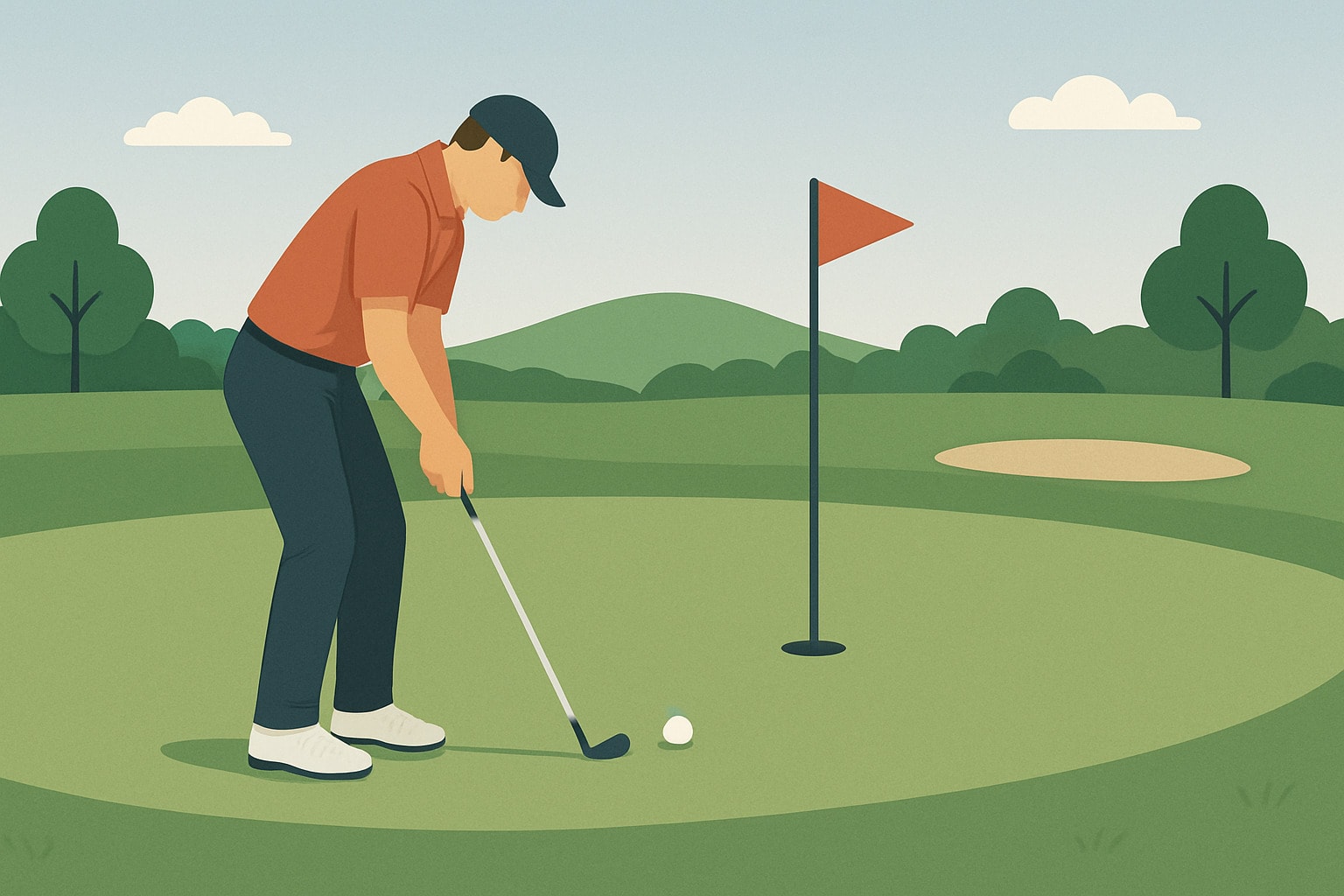
On the green, you can mark, lift, and clean your ball before putting. Always replace it on the exact spot. You’re allowed to repair ball marks or damage on the green, and you can putt with the flagstick in or out. Just remember not to step on another player’s putting line.
Official Reference: Rule 13 (USGA & R&A Rules of Golf): The putting green has special rules for ball marking, cleaning, repairing, and putting.
Scoring Basics
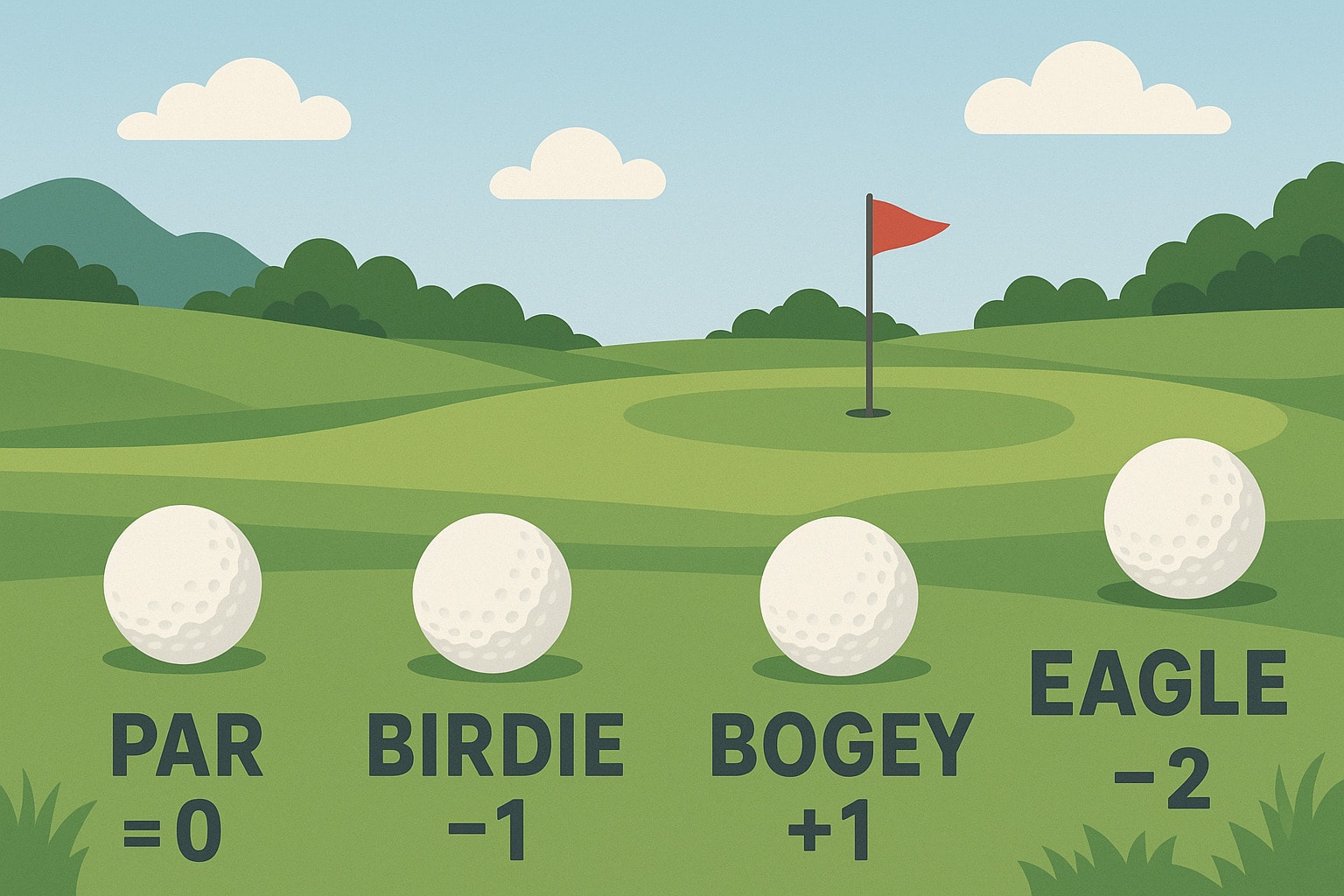
In golf, you count every stroke you make, plus any penalty strokes, to get your score for each hole. Add up all hole scores for your total round score. The standard terms are:
- Par: the expected number of strokes for the hole.
- Birdie: one stroke under par.
- Bogey: one stroke over par.
- Eagle: two strokes under par.
Official Reference: Rule 3.3b (USGA & R&A Rules of Golf): A player must report the correct number of strokes taken, including penalties, for each hole.
Lost Ball and Out of Bounds
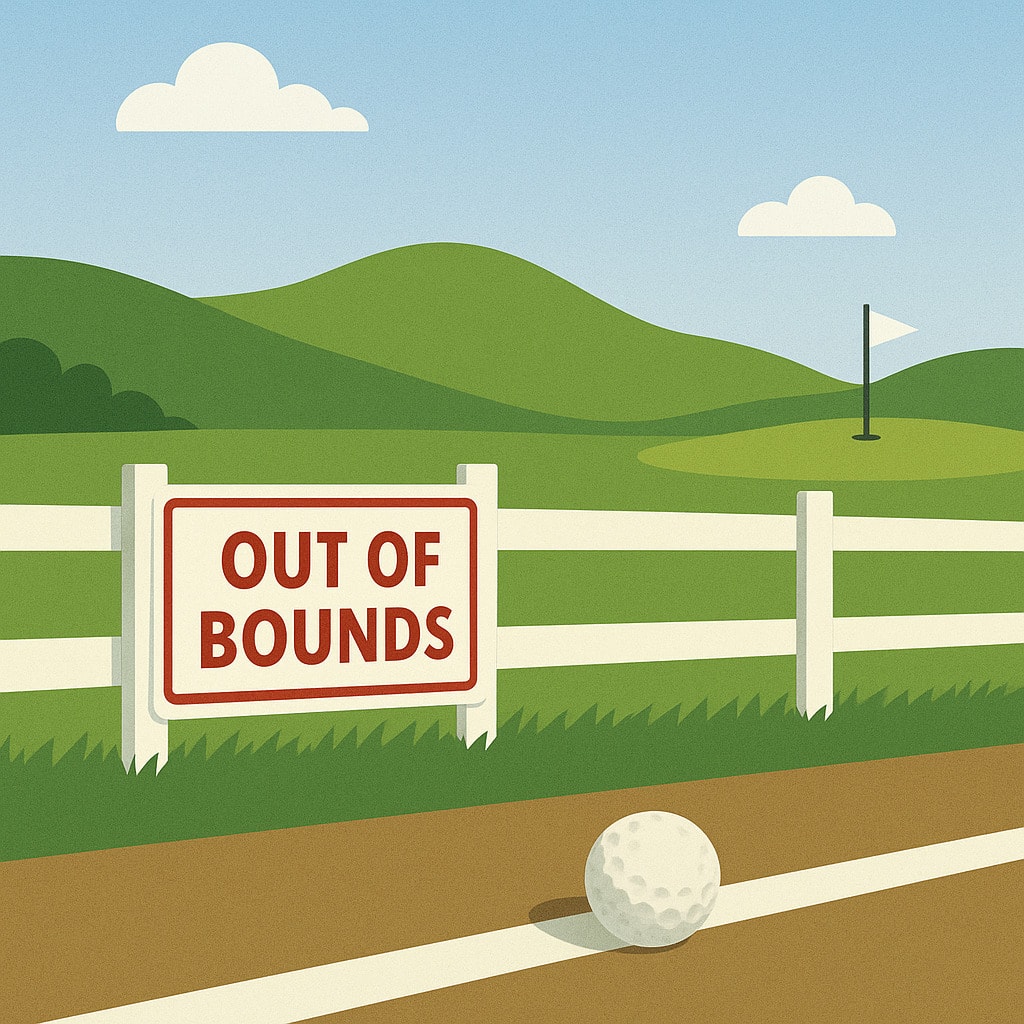
If you lose your ball or hit it out of bounds, you must take stroke-and-distance relief. That means adding one penalty stroke and replaying from the spot of your previous shot.
- A ball is lost if it’s not found within three minutes of searching (Rule 18.2a).
- A ball is out of bounds if it lies beyond the course boundary, usually marked by white stakes or lines (Rule 18.2b).
- To save time, you can play a provisional ball before searching (Rule 18.3).
Official Reference: Rule 18 (USGA & R&A Rules of Golf): A ball lost or out of bounds must be replayed from the previous spot with a one-stroke penalty.
Unplayable Ball
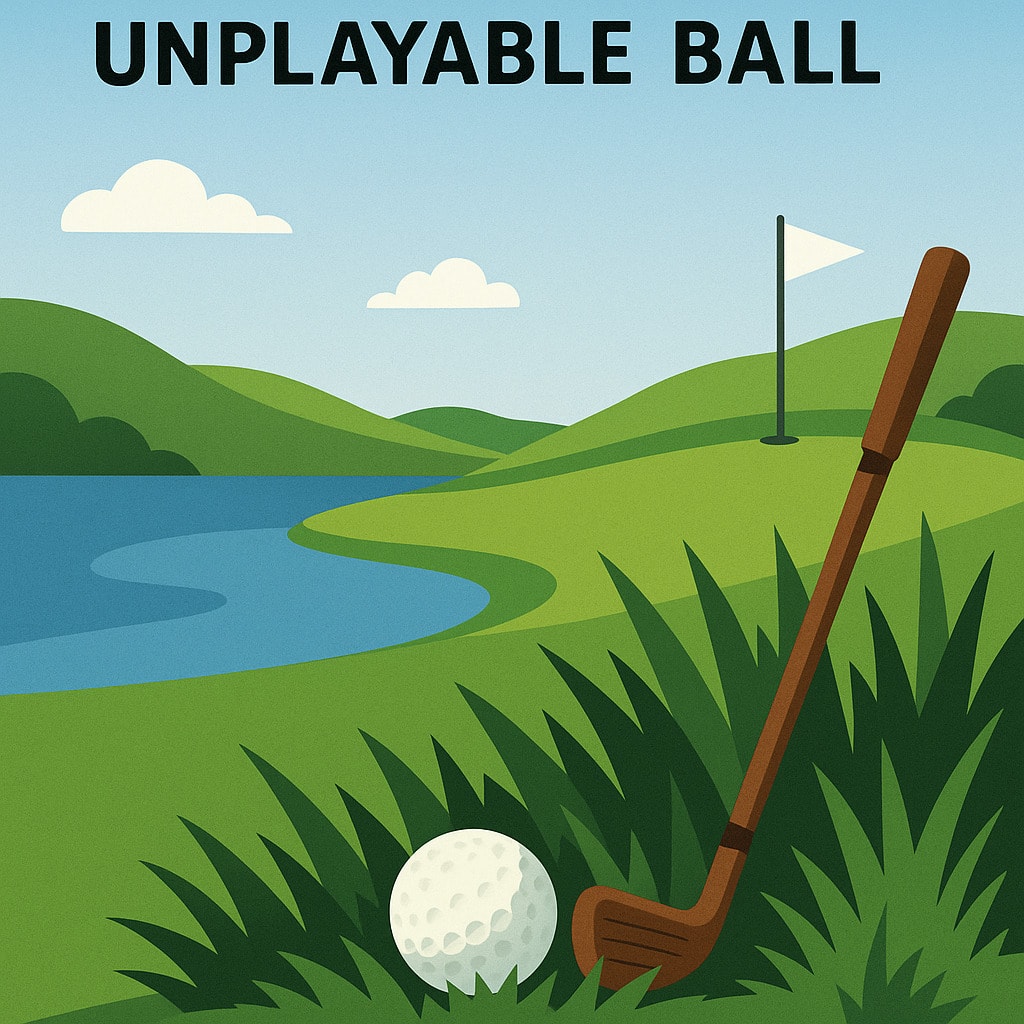
At any time, you may declare your ball unplayable if you can’t or don’t want to hit it (for example, stuck under a tree, in bushes, or against a fence). This costs one penalty stroke, and you have three relief options:
- Stroke and distance: replay from where you last hit.
- Back-on-the-line relief: drop a ball behind the spot, keeping it in line with the hole.
- Lateral relief: drop a ball within two club-lengths of where it lies (not nearer the hole).
Official Reference: Rule 19 (USGA & R&A Rules of Golf): A player may declare a ball unplayable anywhere on the course (except in a penalty area), with one-stroke penalty and three relief options.
Common Beginner Mistakes
Beginners often lose strokes (and time) by breaking simple rules:
- Teeing in front of the markers: must tee up within the teeing area (Rule 6.2b).
- Forgetting penalty strokes: always add strokes for lost balls, out of bounds, or penalty areas (Rules 17 & 18).
- Not playing a provisional ball: saves time if you think your ball may be lost or out of bounds (Rule 18.3).
- Hitting out of turn: in stroke play it’s okay (Ready Golf), but in match play it can matter (Rule 6.4).
- Picking up on the green without marking: always mark first (Rule 14.1a).
Golf Etiquette
Beyond the written rules, golf relies on etiquette to keep the game fair, safe, and enjoyable. Beginners should focus on three main areas:
- Safety: Never swing when someone is close, and yell “Fore!” if your ball may hit another player.
- Pace of Play: Be ready when it’s your turn, play “Ready Golf” in stroke play, and keep up with the group ahead.
- Respect for the Course and Others: Repair ball marks, rake bunkers, replace divots, and avoid distracting fellow players.
While not part of the formal Rules of Golf, etiquette is emphasized throughout the USGA & R&A rule book as essential to the spirit of the game.
Pro Tips for Learning the Rules
You don’t need to memorize the entire rulebook on day one, just start with the basics and build as you play. A few smart tips:
- Carry a quick rules card in your bag for common situations (tee box, penalty areas, lost ball).
- Play with experienced golfers and watch how they handle tricky spots.
- Use official resources like the USGA and R&A’s free Rules of Golf app or short video guides.
- Learn from mistakes, each penalty is a lesson for next time.
Tip: Focus on rules that come up most often for beginners: tee shots, lost balls, penalty areas, and putting greens.

FAQs
Do I need to memorize all the golf rules as a beginner?
No, start with the basics (tee box, ball in play, penalty areas, putting, scoring). You’ll learn the rest as you gain experience.
What happens if I accidentally break a rule?
Most rule breaches carry a one- or two-stroke penalty. Just be honest, add the penalty, and keep playing.
Can beginners use Ready Golf?
Yes. In stroke play, Ready Golf is encouraged to keep pace moving. In match play, order of play matters unless both players agree.
How many clubs am I allowed to carry?
The maximum is 14 clubs (Rule 4.1b). Carrying more results in penalty strokes.
What if I can’t find my ball?
If your ball is lost or out of bounds, you must take stroke-and-distance relief (Rule 18.2). To save time, play a provisional ball (Rule 18.3).
Get instant access to the PDF version of this article with additional resources and insights.