TL;DR
A gimme is a short putt conceded by an opponent, counted as holed without being played.
Key Takeaways
- Gimme = conceded putt — opponent agrees it’s good without you putting it.
- Allowed only in match play, not in stroke play under official rules.
- Speeds up play and avoids unnecessary short putts.
- Etiquette: only accept gimmes when clearly makeable.
- In casual rounds, often given within 2–3 feet.
What Is a Gimme in Golf?
A gimme in golf is a short putt conceded by your opponent, counted as holed without being played. The term comes from “give me that one,” meaning the opponent agrees the ball would almost certainly go in.
Gimmes are only allowed in match play under the Rules of Golf, where an opponent can concede a stroke, a hole, or even the entire match at any time. Once given, the concession is final, the player does not need to take the stroke.
In casual rounds, golfers often use gimmes to speed up play and avoid wasting time on obvious tap-ins, usually within 2–3 feet of the hole. However, in stroke play (including most tournaments), gimmes are not allowed, every putt must be holed.

When Gimmes Are Allowed
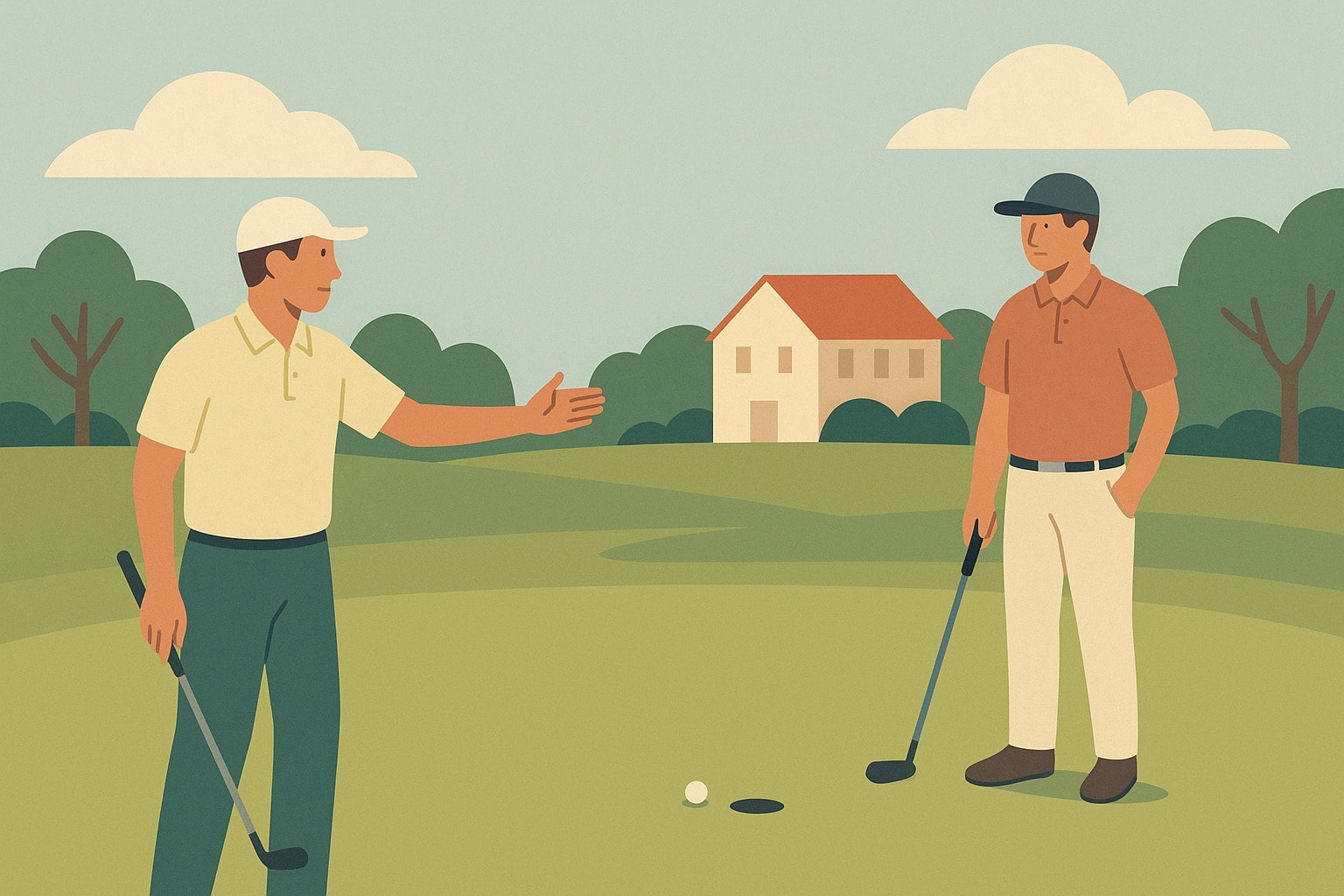
Gimmes are only legal in match play, where an opponent can concede a stroke, hole, or match at any time. Your opponent can concede:
- A single stroke (often a short putt)
- An entire hole
- The whole match
A concession can be made at any time before the stroke is played and cannot be withdrawn once given. This means if your opponent says “that’s good,” the ball is considered holed and you do not play it.
In stroke play, including most professional and amateur tournaments, gimmes are not allowed. Every player must hole out on each green, no matter the distance.
In casual rounds, golfers often agree to give gimmes, usually within 2–3 feet, to speed up play and avoid needless short putts. While common among friends, these concessions are unofficial and do not apply in formal competition.
Gimme Distance Guidelines
Gimme distances vary, but most fall inside the leather, within 2–3 feet, or as obvious tap-ins.
In match play, it’s simply a matter of agreement, but most golfers follow these informal benchmarks:
- Inside the leather: The ball is closer to the hole than the length from the putter head to the bottom of the grip.
- 2–3 feet: A common casual-play range where missing is highly unlikely.
- Obvious tap-ins: Putts so short they’re almost certain to drop.
Key point: The shorter the distance, the less room for dispute. In competitive match play, players tend to be more conservative with gimmes to avoid controversy.
Gimme Etiquette
Gimme etiquette includes offering only on obvious makes, never asking for one, accepting graciously, using gimmes to speed play (not for advantage), and being consistent for all players.
- Only offer on obvious makes: Give gimmes only when the putt is virtually certain to drop.
- Never ask for one: Wait for your opponent to offer; requesting a gimme is considered poor form.
- Accept graciously: If given, pick up your ball, thank your opponent, and move on.
- Use to speed play, not gain advantage: Don’t offer or take gimmes to manipulate match strategy unfairly.
- Be consistent: Apply the same gimme distance to both players to avoid disputes.
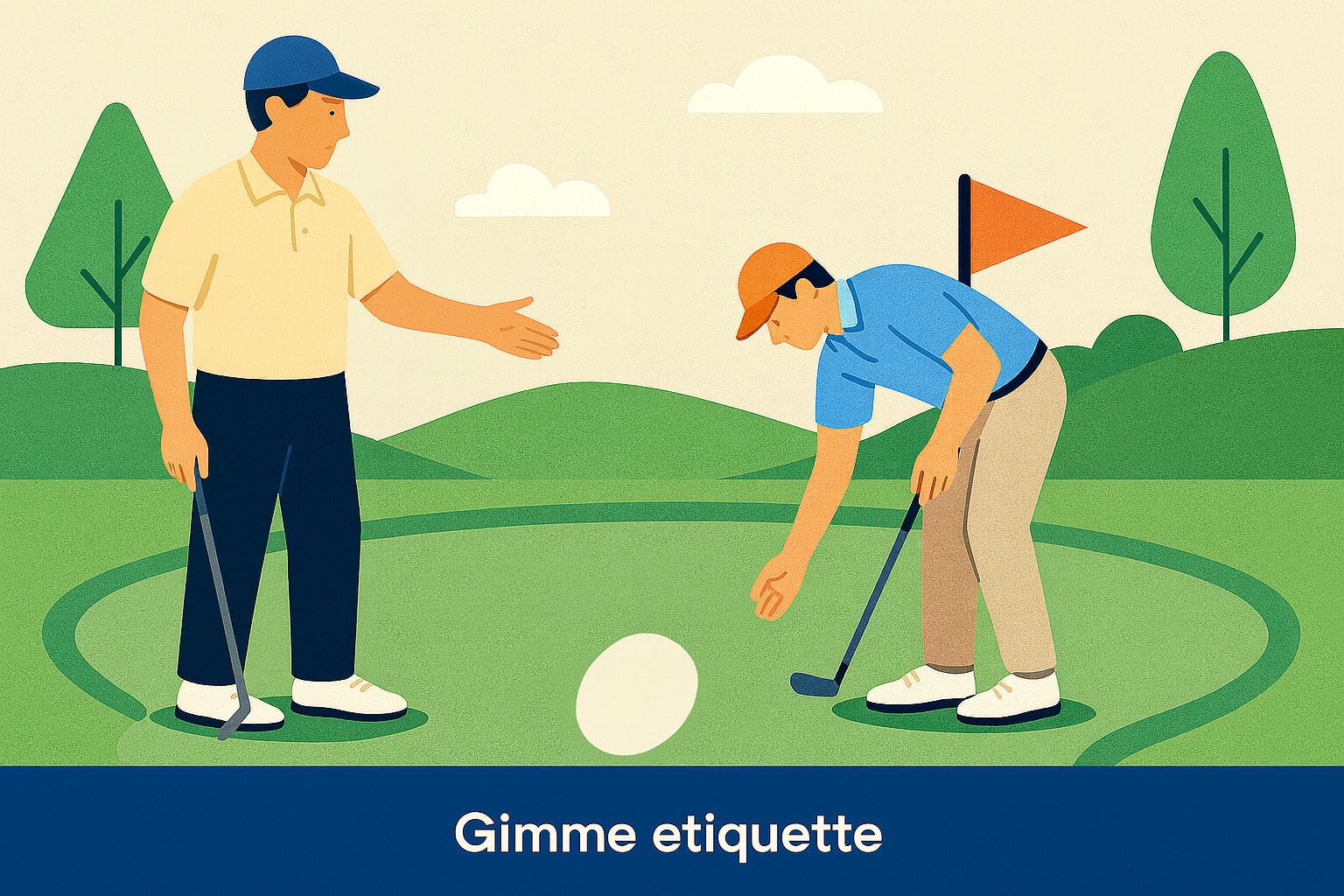
Bottom line: Gimmes are a courtesy, not a right. Handle them with the same respect you’d expect from your opponent.
Pros and Cons of Gimmes
Gimmes can speed up play, reduce short-putt stress, and keep matches friendly, but they can also make scoring less realistic, lead to disputes over borderline putts, and take away valuable pressure-putt practice.
Pros:
- Speeds up play: Keeps the round moving, especially in casual matches.
- Reduces short-putt stress: Avoids unnecessary tension over easy putts.
- Maintains friendly atmosphere: Supports sportsmanship and enjoyment.
Cons:
- Less realistic scoring: Scores may not reflect actual putting performance.
- Potential disputes: Disagreements can occur over borderline distances.
- No pressure-putt practice: Missed opportunity to hone skills under stress.
Gimmes in Casual vs Competitive Golf
In casual rounds, gimmes are common for pace and fun, but in competitive play, they are only legal in match play and never allowed in stroke play events.
Casual Golf:
- Often used to speed up play and keep the mood light.
- Usually given within an agreed distance (2–3 feet).
- Based on mutual trust and sportsmanship.
Competitive Golf:
- Match Play: Legal, an opponent can concede a stroke, hole, or match at any time.
- Stroke Play: Not allowed, every ball must be holed.
- Professional match play events (e.g., Ryder Cup) may feature gimmes, but always within the rules.
Summary Table: Gimme Rules
This table shows when gimmes are legal in different golf formats, the usual distances, who decides, and important notes for each situation.
| Format | Legal? | Typical Distance | Decision By | Notes |
|---|---|---|---|---|
| Match Play | Yes | No fixed rule; often 2–3 feet or “inside the leather” | Opponent | Concession can be for a stroke, hole, or match; final once given. |
| Stroke Play | No | N/A | N/A | Every ball must be holed; no concessions allowed. |
| Casual Play | Yes* | Usually 2-3 feet | Mutual agreement | Speeds play; unofficial and not for tournament scoring. |
*Allowed only when agreed upon before the round, not recognized in official stroke play scoring.
FAQs About Gimmes in Golf
1. What does “gimme” mean in golf?
A gimme is a short putt conceded by your opponent, counted as holed without being played.
2. Are gimmes allowed in stroke play?
No. In stroke play, every ball must be holed, and concessions are not permitted under the Rules of Golf.
3. How far is a typical gimme?
There is no official distance, but most gimmes are within 2–3 feet or “inside the leather” of a putter.
4. Can you refuse a gimme?
Yes. You may choose to putt out even if your opponent offers a gimme, though once accepted, you cannot change your mind.
5. Can a gimme be taken back after it’s given?
No. Once a gimme is offered in match play, it is final and cannot be withdrawn.
6. Do professional golfers use gimmes?
Yes, but only in match play events such as the Ryder Cup or Presidents Cup, and always within the rules.
Get instant access to the PDF version of this article with additional resources and insights.