
TL;DR
A duff or chunk in golf is when you hit the ground before the ball, causing a short, weak shot. Fix it by improving balance, ball position, and low-point control.
Key Takeaways
- Duff and chunk in golf mean the same mishit, hitting the ground before the ball.
- Usually caused by poor weight shift, steep swing path, or incorrect ball position.
- Leads to short, weak shots and loss of distance and accuracy.
- Fix by improving stance, balance, and low-point control.
- Practice drills like the tee drill and line drill for consistent contact.
What Is a Duff (or Chunk) in Golf?
A duff or chunk in golf is when you hit the ground before the ball, causing a weak, short shot.
Both terms mean the same thing, golfers use “duff” or “chunk” depending on regional slang. These mishits usually happen when your swing’s low point is too far behind the ball. Common causes include poor weight transfer, an overly steep swing, or having the ball too far forward in your stance.
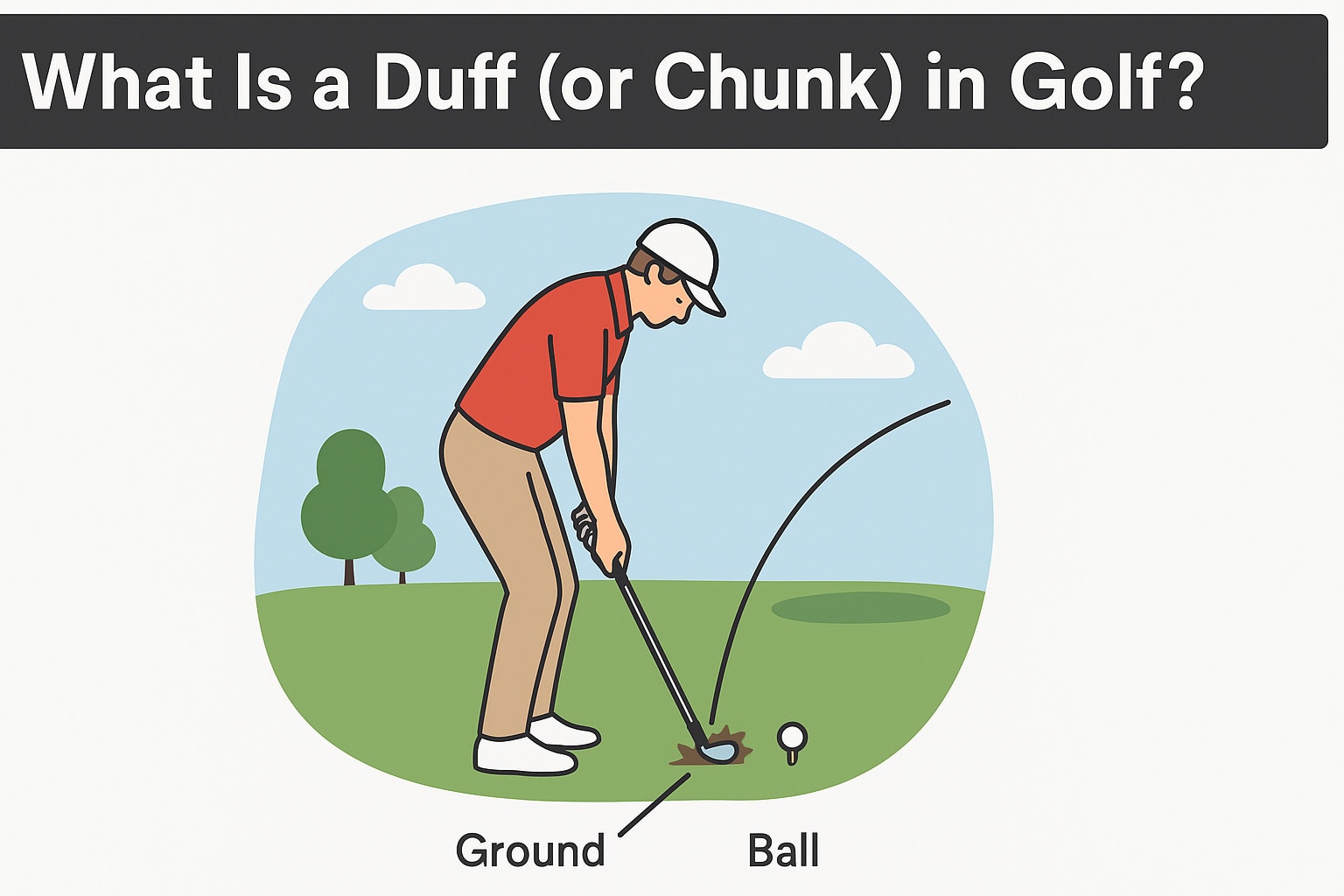
Duff vs. Chunk, Are They the Same?
Yes. A duff and a chunk are the same mishit in golf, the club strikes the turf before the ball, producing a fat shot. The only difference is in slang: “duff” is more common in the UK and parts of Asia, while “chunk” is used widely in North America.
Common Causes of a Duff or Chunk in Golf
Common causes of a duff or chunk in golf include poor weight distribution, early wrist release, a steep swing path, the ball being too far forward, lack of body rotation, and excessive tension in the arms or grip.
These issues lead the club to hit the turf before the ball, wasting energy and producing a weak, short shot:
- Poor weight distribution: keeping too much weight on the back foot during impact.
- Early wrist release: unhinging the wrists too soon, lowering the clubhead early.
- Steep swing path: coming down too vertically into the ball.
- Ball too far forward: forcing the club to bottom out before contact.
- Lack of body rotation: stalling your turn, causing the club to drop behind.
- Excessive tension in arms or grip: reducing natural swing flow and timing.
Fixing these issues takes practice, but with better balance, timing, and relaxed control, you can turn duffs and chunks into clean, solid strikes.

How to Avoid a Duff or Chunk in Golf
To avoid duffing or chunking the ball, focus on checking your stance and posture, maintaining balanced weight transfer, positioning the ball correctly, brushing the grass after the ball, keeping your hands ahead at impact, and rotating through the shot.
- Check stance and posture: Stand with your feet shoulder-width apart, knees slightly flexed, and spine tilted forward from the hips. A stable setup sets the foundation for clean ball-first contact.
- Maintain balanced weight transfer: Start with a slight lean toward your lead foot and let your weight shift forward through impact. This prevents the club from bottoming out too early.
- Position the ball correctly: Place the ball just ahead of center for irons and slightly forward for fairway woods. This helps the club strike the ball first before the turf.
- Brush the grass after the ball: Imagine the club sweeping the grass just past the ball’s position. This ensures the low point of your swing is in the right place.
- Keep hands ahead at impact: Lead with your hands to create a downward strike, compressing the ball against the turf for solid contact.
- Rotate through the shot: Keep your body turning through impact instead of stopping or sliding. A full, smooth rotation helps deliver the club on a consistent path.
With these fundamentals in place, you’ll make cleaner strikes and leave duffs and chunks behind
Drills to Fix a Duff/Chunk
Drills to fix a duff or chunk include the tee drill, one-foot drill, impact tape or spray, and the line drill.
- Tee Drill: Place a tee just ahead of the ball’s position and practice striking the ball cleanly without touching the tee. This trains you to bottom out your swing after the ball.
- One-Foot Drill: Hit short shots while balancing on your lead foot. This forces proper weight shift and stops your swing from bottoming out too soon.
- Impact Tape or Spray: Apply impact tape or foot spray to the clubface to see exactly where you’re striking the ball. Adjust until contact is centered and consistent.
- Line Drill: Draw a straight line on the turf or mat and position the ball slightly ahead of it. Practice hitting the ground only on or after the line to build proper low-point control.

Practicing these drills regularly will help you groove a cleaner strike and eliminate fat shots.
When a Duff/Chunk Might Happen
A duff or chunk might happen in wet or soft turf conditions, from uneven lies, or during high-pressure shots when tension creeps in.
- Wet or soft turf: The club digs in more easily, making it harder to strike the ball first.
- Uneven lies: Slopes can shift your balance and change where the club bottoms out.
- High-pressure shots: Nervous tension in your hands and arms can disrupt timing and cause early contact with the ground.
Being aware of these conditions lets you adjust your setup and swing to avoid a mishit.
Related Terms
In golf, related terms for a duff or chunk include fat shot, hitting it heavy, thin shot, top shot, and skulled shot, each describing a different type of mishit that affects ball contact and flight.
- Fat Shot: A more technical term for hitting the ground before the ball, resulting in a short, weak shot.
- Hitting It Heavy: Informal phrase meaning the same as a duff, chunk, or fat shot.
- Thin Shot: The opposite of a duff; striking the ball too high on the clubface, often with no divot.
- Top Shot: Another opposite miss; hitting only the top half of the ball so it rolls along the ground.
- Skulled Shot: A hard, low shot caused by striking the ball near its equator with the leading edge of the club.
Knowing these related terms helps golfers recognize different mishits, understand their causes, and work on targeted fixes.
FAQs About Duffing or Chunking in Golf
Is a duff the same as a chunk in golf?
Yes. Both terms describe hitting the ground before the ball, resulting in a weak, short shot. “Duff” is more common in some countries, while “chunk” is used in others.
What’s the difference between a duff and a fat shot?
They’re essentially the same thing. “Fat shot” is a more technical term, while “duff” or “chunk” are casual golf slang.
Why do I keep chunking my wedges?
Wedges have more loft and bounce, so any small error in weight shift or ball position can make you hit the turf too early. Keeping weight slightly forward helps.
Can wet conditions cause more duffs?
Yes. Softer turf allows the club to dig in faster, increasing the chance of hitting the ground before the ball.
How do I stop duffing chips and pitches?
Maintain light grip pressure, keep your weight forward, and focus on brushing the grass just after the ball.
Do pros ever duff the ball?
Absolutely. Even professionals mishit shots sometimes, the difference is they recover quickly and minimize mistakes.
Get instant access to the PDF version of this article with additional resources and insights.