
TL;DR
A chip is a short golf shot near the green that flies briefly and rolls toward the hole.
Key Takeaways
- Chip = short, low shot near the green with more roll than flight.
- Best used when no major obstacles and distance is short.
- Played with wedges or short irons for control and consistency.
- Keep hands ahead, weight forward, wrists quiet.
- More loft = less roll; less loft = more roll.
What Is a Chip in Golf?
A chip in golf is a short, controlled shot played from close to the green that spends minimal time in the air and rolls most of the way to the hole.
It’s typically used when there are no major obstacles between the ball and the target, and the goal is to get the ball close enough for an easy putt. Chipping is usually done with a wedge or a short iron (like a pitching wedge, gap wedge, sand wedge, 9-iron, or even 8-iron), and the technique emphasizes a compact swing, weight forward, and minimal wrist action to ensure clean contact and predictable roll-out.
A chip differs from:
- Pitch: higher trajectory, more air time, less roll.
- Putt: struck on the green with the putter, rolling the entire distance.

When to Use a Chip
You should use a chip shot when you’re close to the green and want the ball to spend little time in the air and roll most of the way to the hole. Ideal situations include:
- Fringe or fairway lies just off the green.
- Minimal obstacles between the ball and the hole.
- Short distances where a putt isn’t practical.
- When you want predictable roll-out instead of relying on carry distance.
- Tight lies where clean contact is easier with a chip than a pitch.
How to Play a Chip Shot
A good chip shot comes from a solid setup, a controlled swing, smart distance control, and a clear focus on your landing spot.

Setup
Stand with a narrow stance (feet close together).
Place most of your weight on your lead foot (about 60–70%).
Position the ball slightly back of center in your stance.
Keep your hands slightly ahead of the ball.
Swing
Use a short backswing and smooth follow-through.
Control the motion with your shoulders and arms, keeping wrists quiet.
Brush the turf after striking the ball, ball first, then ground.
Control Distance
Vary club choice to adjust roll (more loft = less roll, less loft = more roll).
Shorter swing = shorter shot; longer swing = more distance.
Focus Points
Pick a landing spot on the green instead of aiming straight at the hole.
Read the green like a putt to account for break.
Clubs Commonly Used for Chipping
Golfers usually chip with wedges or short irons, depending on the shot’s roll and trajectory. The clubs below are the most common choices and their typical uses.
- Pitching Wedge (PW): Balanced loft and roll, great for standard chips.
- Gap Wedge (GW): Slightly more loft, useful for softer landings.
- Sand Wedge (SW): High loft, best for chips that need to stop quickly.
- Lob Wedge (LW): Maximum loft, minimal roll; for short chips over trouble.
- 9-Iron / 8-Iron: Lower loft, more roll; ideal for long chip-and-runs.
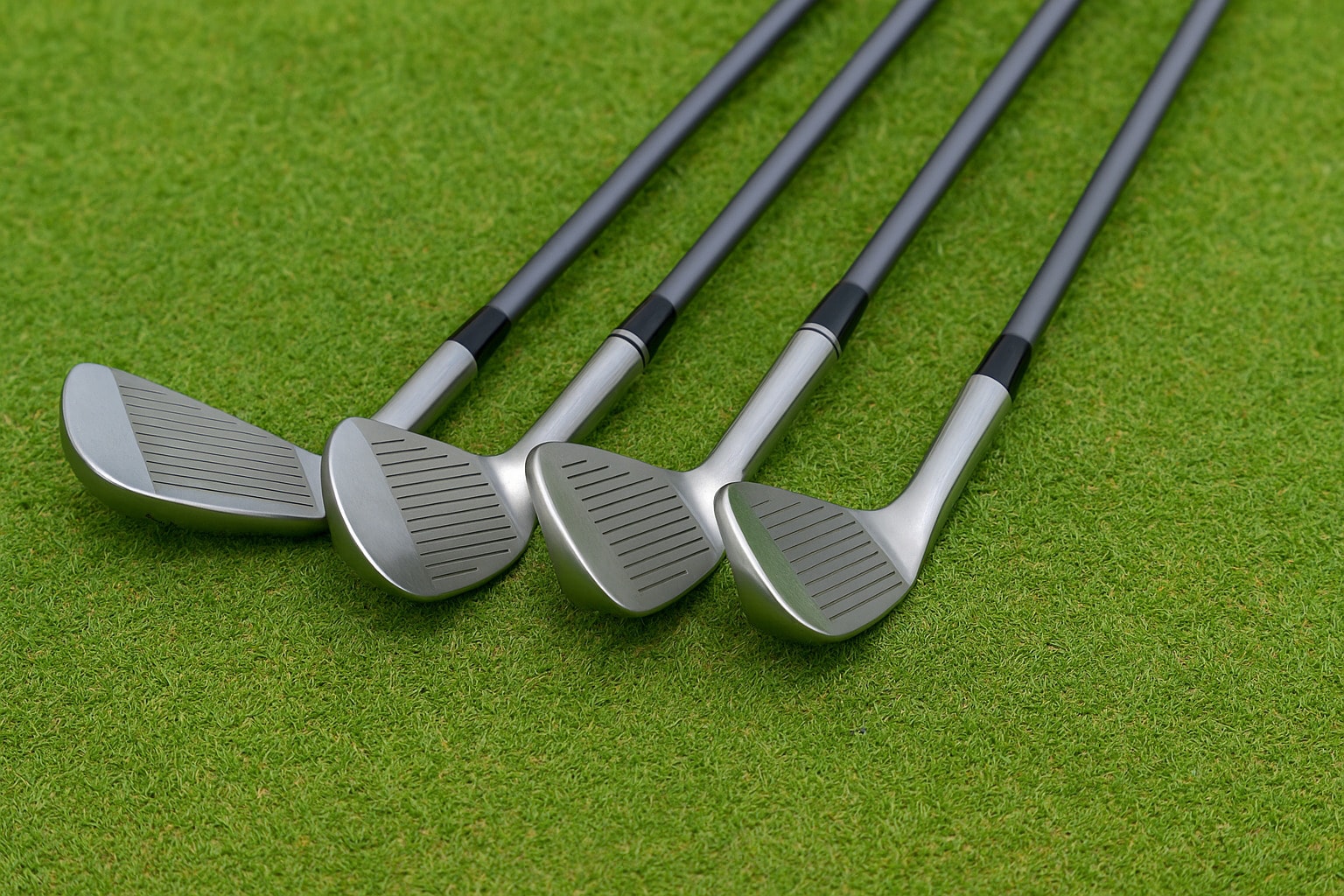
A simple rule: more loft = less roll, less loft = more roll. Choose your club based on the distance to the hole and how much green you have to work with.
Common Chipping Mistakes
The most common chipping mistakes are decelerating at impact, using too much wrist, leaning back, trying to lift the ball, and poor weight distribution.
Decelerating at impact: slows the club and causes fat or thin shots.
Using too much wrist: reduces consistency and control.
Leaning back during the swing: leads to hitting behind the ball.
Trying to scoop or lift the ball: often results in chunked or bladed shots.
Poor weight distribution: not keeping weight forward limits clean contact.
The good news is that with a few small adjustments, you can quickly make your chips more consistent and accurate.
Pro Tips for Better Chipping
The best chipping tips are reading the green, picking a landing spot, practicing with multiple clubs, and keeping your wrists quiet.
These small habits can dramatically improve your touch, control, and confidence around the greens.
- Read the green like a putt: account for slope and speed before choosing your line.
- Pick a landing spot: focus on where you want the ball to land, not just the hole.
- Practice with different clubs: learn how loft affects roll and stopping power.
- Keep your wrists quiet: use shoulders and arms for a more consistent strike.
Chip vs Pitch
A chip is a short, low shot that rolls most of the way, while a pitch is a higher shot that carries farther and stops quickly.
| Feature | Chip | Pitch |
|---|---|---|
| Trajectory | Low | High |
| Air Time | Short | Long |
| Roll | More | Minimal |
| Typical Distance | Very short (just off the green) | Short to medium (up to ~50 yards) |
| Club Choice | Short irons, wedges | Wedges, lob wedge |
| Best For | Predictable roll-out | Carrying over obstacles, stopping quickly |
Famous Chip Shots in Golf History
Some chip shots by Tiger Woods, Tom Watson, Chip Beck, and Sergio García have become iconic moments in golf, remembered for their skill, pressure, and importance.
Tiger Woods: 2005 Masters (16th hole, Augusta National)
From the fringe, Woods played a delicate chip with his Nike pitching wedge that climbed the slope, paused briefly on the lip, and dropped for birdie. It helped him win his fourth Masters.
Tom Watson: 1982 U.S. Open (17th hole, Pebble Beach)
Watson chipped in from deep rough beside the green for birdie, famously telling his caddie, “I’m going to sink it.” The shot gave him the lead over Jack Nicklaus and secured the championship.
Chip Beck: 1993 Ryder Cup (9th hole, The Belfry)
Beck holed a crucial chip from off the green during foursomes, swinging momentum for the U.S. team in a tightly contested match.
Sergio García: 2017 Masters (15th hole, Augusta National)
Chipped in for eagle from just off the green during the final round, keeping pace with Justin Rose before winning in a playoff.
FAQs: Chip in Golf
1. What is the difference between a chip and a pitch?
A chip is a low shot with more roll than air time, while a pitch flies higher, carries farther, and stops quickly.
2. Which club should I use for chipping?
Most golfers use wedges or short irons, more loft for less roll, less loft for more roll.
3. How far should a chip shot go?
Chips are typically played from just off the green, traveling only a few yards in the air before rolling to the hole.
4. Can I chip with a putter?
Yes, some golfers “putt” from the fringe with a putter for maximum control if the ground is smooth.
5. What’s the biggest mistake golfers make when chipping?
Decelerating through impact or trying to lift the ball, both of which cause inconsistent contact.
Get instant access to the PDF version of this article with additional resources and insights.