
TL;DR
Chin position in golf means keeping your chin slightly up and relaxed, giving your shoulders room to turn for a smoother, more consistent swing.
Key Takeaways
- Chin slightly up to allow free shoulder turn.
- Neutral, relaxed angle prevents tension.
- Avoid too low or too high chin placement.
- Better posture and consistency with correct chin position.
What Is Chin Position in Golf?
Chin position in golf is the way you hold and angle your chin in relation to your chest and shoulders during setup and the swing. It’s usually described as keeping the chin slightly up and away from the chest so your shoulders have room to turn freely on the backswing.
A good chin position creates space for rotation, maintains balance, and reduces neck tension. If your chin is tucked too low, your left shoulder (for right-handed golfers) can’t turn under smoothly, which restricts the swing. If your chin is lifted too high, you risk losing posture or topping the ball.
Why Is Chin Position Important?
Chin position is important in golf because it directly affects your shoulder rotation, swing plane, balance, and overall consistency. A slightly raised, relaxed chin creates enough space for the lead shoulder to turn under smoothly, helping you generate power without tension.
If your chin is tucked too low, your backswing feels restricted and tight; if it’s too high, you risk losing posture or making off-center contact. Keeping a neutral chin angle not only improves ball striking but also reduces neck and back strain, making your swing more repeatable and comfortable.

How Should You Position Your Chin Correctly?
You should position your chin correctly in golf by keeping it slightly raised and relaxed, leaving space between your chin and chest so your shoulders can turn freely. The goal is to create room for rotation while keeping your eyes steady on the ball.
Here’s a simple step-by-step setup:
- Stand tall with relaxed shoulders and spine angle set.
- Lift your chin just enough so a fist could fit between your chin and chest.
- Keep your eyes down on the ball without craning your neck.
- Maintain this neutral position throughout the swing, allowing your shoulders to rotate under naturally.
A good checkpoint is to think “chin up, eyes down.” Practicing in front of a mirror or filming your setup makes it easier to see whether your chin is giving your swing enough room.
Common Mistakes With Chin Position
The most common mistakes with chin position in golf are tucking it too low, lifting it too high, or moving it excessively during the swing. Each of these errors interferes with posture, shoulder rotation, and consistent ball striking.
- Chin tucked too close to chest: restricts shoulder turn, causing a stiff and shortened backswing.
- Chin lifted too high: leads to loss of balance, poor posture, and topped shots.
- Over-rotating the head/chin: disrupts eye focus on the ball and throws off alignment.
- Forcing the chin down unnaturally: creates tension in the neck and upper back, reducing fluidity.
Avoiding these mistakes helps keep your swing smooth, powerful, and repeatable.
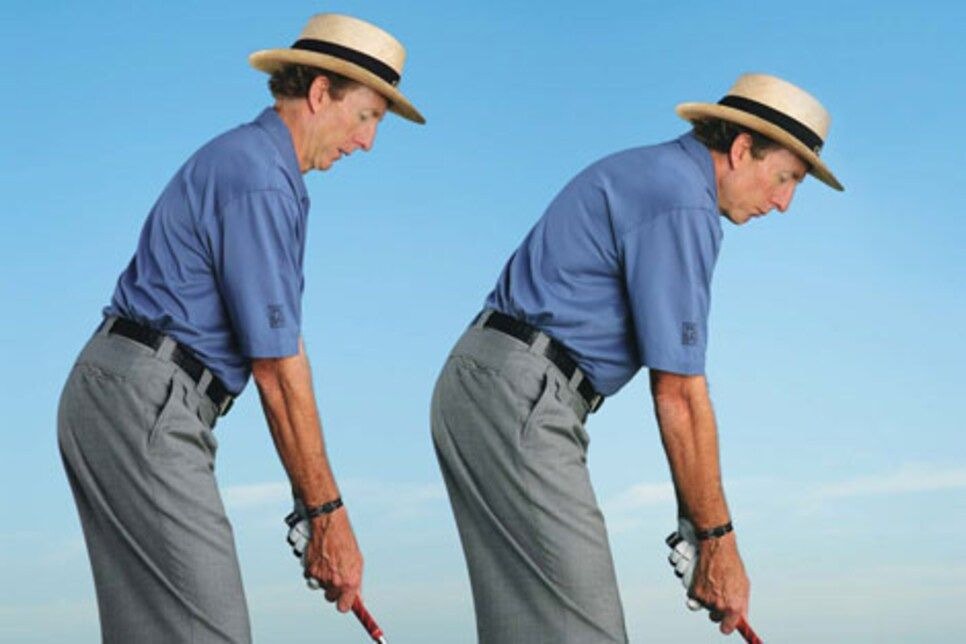
Once you understand the common mistakes golfers make with chin position, the next step is learning practical tips to correct them and build a more consistent swing.
Pro Tips to Improve Your Chin Position
The best pro tips to improve your chin position in golf are to think “chin up, eyes down,” use feedback tools, and pair chin angle with solid posture. Small adjustments here can unlock a smoother, more powerful swing.
- Think “chin up, eyes down”: this mental cue helps you keep your eyes on the ball without collapsing your shoulders.
- Check in the mirror or on video: a quick glance at your setup shows whether your chin leaves space for the shoulder turn.
- Pair chin with spine angle: proper posture supports a natural chin position and reduces tension.
- Practice with alignment sticks or tees: place a stick lightly under your chin to feel how much space you need.
- Study tour pros: watching slow-motion swings highlights how their chin stays neutral yet allows full rotation.

Chin Position vs. Head Position – What’s the Difference?
Chin position in golf refers to the angle of your chin relative to your chest, while head position describes the overall tilt, direction, and stability of your head during setup and swing. The two are related, but they influence different aspects of posture and swing mechanics.
- Chin Position: focuses on creating space for the shoulders to rotate (slightly raised, relaxed, not tucked).
- Head Position: involves where your head is pointing (level, steady, not swaying), which controls balance, alignment, and eye focus.
- Key Difference: chin position is about freedom of movement, while head position is about stability and consistency.
Getting both right ensures your swing is powerful yet controlled: the chin gives room for rotation, and the head keeps your eyes locked on the ball.
FAQs About Chin Position in Golf
Should my chin move during the swing?
Your chin can move slightly as your body rotates, but it should stay relaxed and not forcefully pulled down or lifted. The movement should be natural, not exaggerated.
How high should I raise my chin at setup?
Raise your chin just enough to leave about a fist-sized gap between chin and chest. This creates space for the lead shoulder to turn under without restriction.
Does chin position change with driver vs. irons?
The fundamentals stay the same, neutral and slightly raised. With the driver, maintaining an even chin angle helps you stay behind the ball, while with irons it promotes a downward strike.
Can poor chin position cause back or neck pain?
Yes. Tucking your chin too tightly or forcing it into an unnatural angle creates tension in the neck and upper back, leading to discomfort and inconsistency.
Is chin position the same as head position?
No. Chin position refers specifically to how far your chin is from your chest, while head position covers the overall tilt and direction of your head during the swing.
Get instant access to the PDF version of this article with additional resources and insights.