
TL;DR – Eagle in One Line
An eagle in golf means scoring two strokes under par on a hole. It’s an impressive sign of skill, power, and smart course management.
Key Takeaways
- An eagle means scoring two strokes under par on a hole.
- Most eagles happen on par 5s and short par 4s.
- Eagles require long, accurate shots and smart decisions.
- Only go for eagle when the risk-to-reward makes sense.
- Avoid common mistakes like overreaching or rushing putts.
- Use targeted drills to improve distance, putting, and strategy.
- Eagles are rare but game-changing, especially in competitive play.
What Is Eagle in Golf?
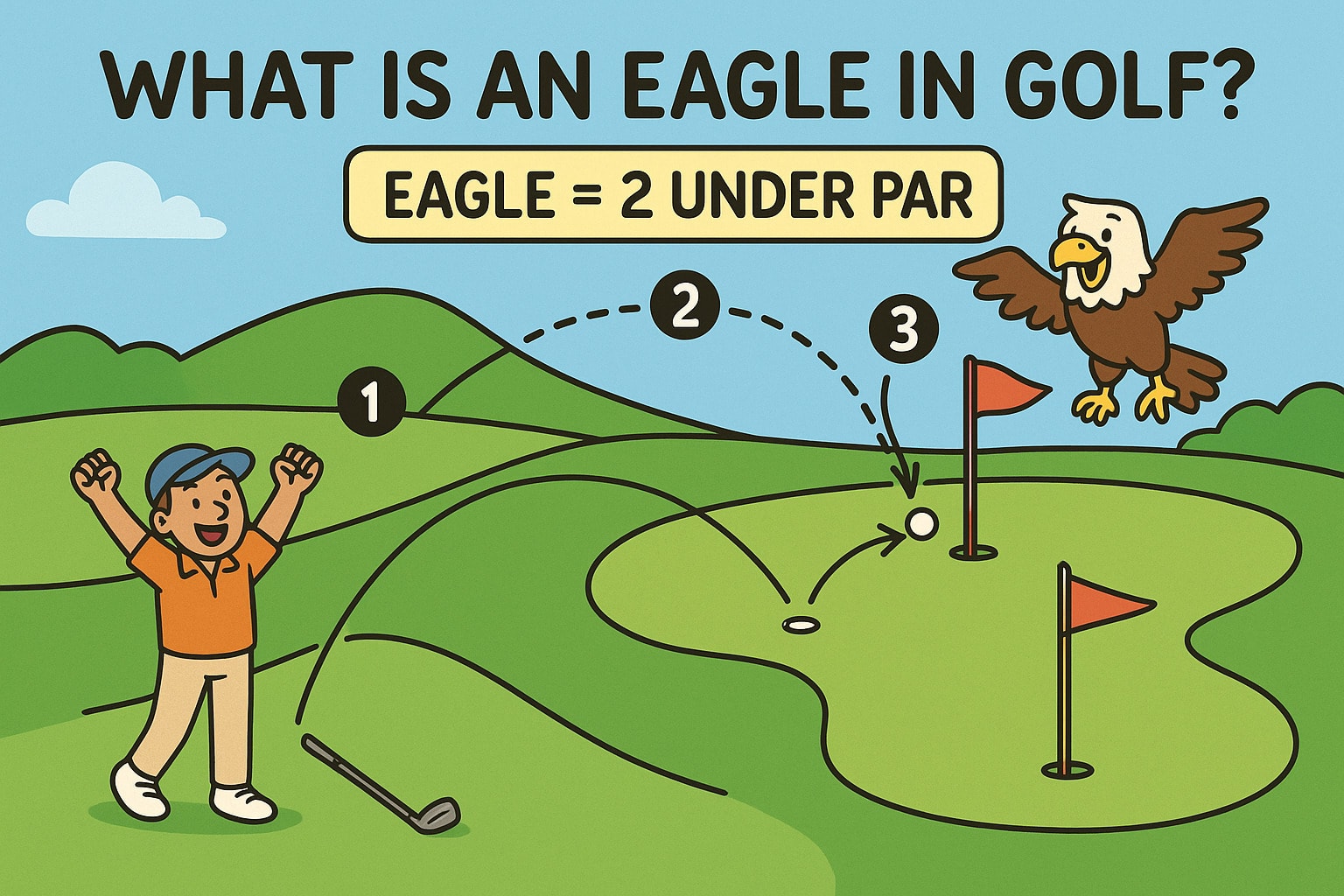
An eagle in golf means completing a hole in two strokes fewer than par.
Here’s how it breaks down by hole type:
- Par 5: You score an eagle by finishing the hole in 3 strokes.
- Par 4: You score an eagle by finishing the hole in 2 strokes.
- Par 3: Technically, scoring 1 on a par 3 is called a hole-in-one, not an eagle—even though it’s 2 under par.
Eagles are rare and usually involve a combination of long drives, accurate second shots, and sometimes luck, making them one of the most exciting moments in a round. While professionals may make them more often, most amateur golfers see them as a major highlight.
Why Eagle Matters
Scoring an eagle in golf delivers a big score advantage, builds momentum, showcases skill, and creates a rare, rewarding highlight that can dramatically impact your game.
- Big Score Advantage: An eagle instantly cuts two strokes off par, helping you lower your score significantly—especially useful in close competitions.
- Momentum Builder: Making an eagle boosts confidence and focus, often leading to better performance on the following holes.
- Skill Indicator: Eagles require a mix of distance, accuracy, and smart decision-making—making them a sign of high-level play.
- Rare and Rewarding: Because eagles are uncommon, especially for amateur golfers, they stand out as memorable highlights in any round.
- Tactical Edge: In formats like stroke play or Stableford, eagles can change leaderboard positions fast, giving players a huge edge over the field.
An eagle is not just a great score, it’s a game-changing achievement that boosts confidence, shifts momentum, and clearly demonstrates a golfer’s power, precision, and course strategy.
How to Score an Eagle
Scoring an eagle takes a combination of distance, accuracy, and smart decision-making. While rare, especially for amateur golfers, it’s achievable with the right approach. Follow these three key steps to give yourself the best chance at scoring an eagle:
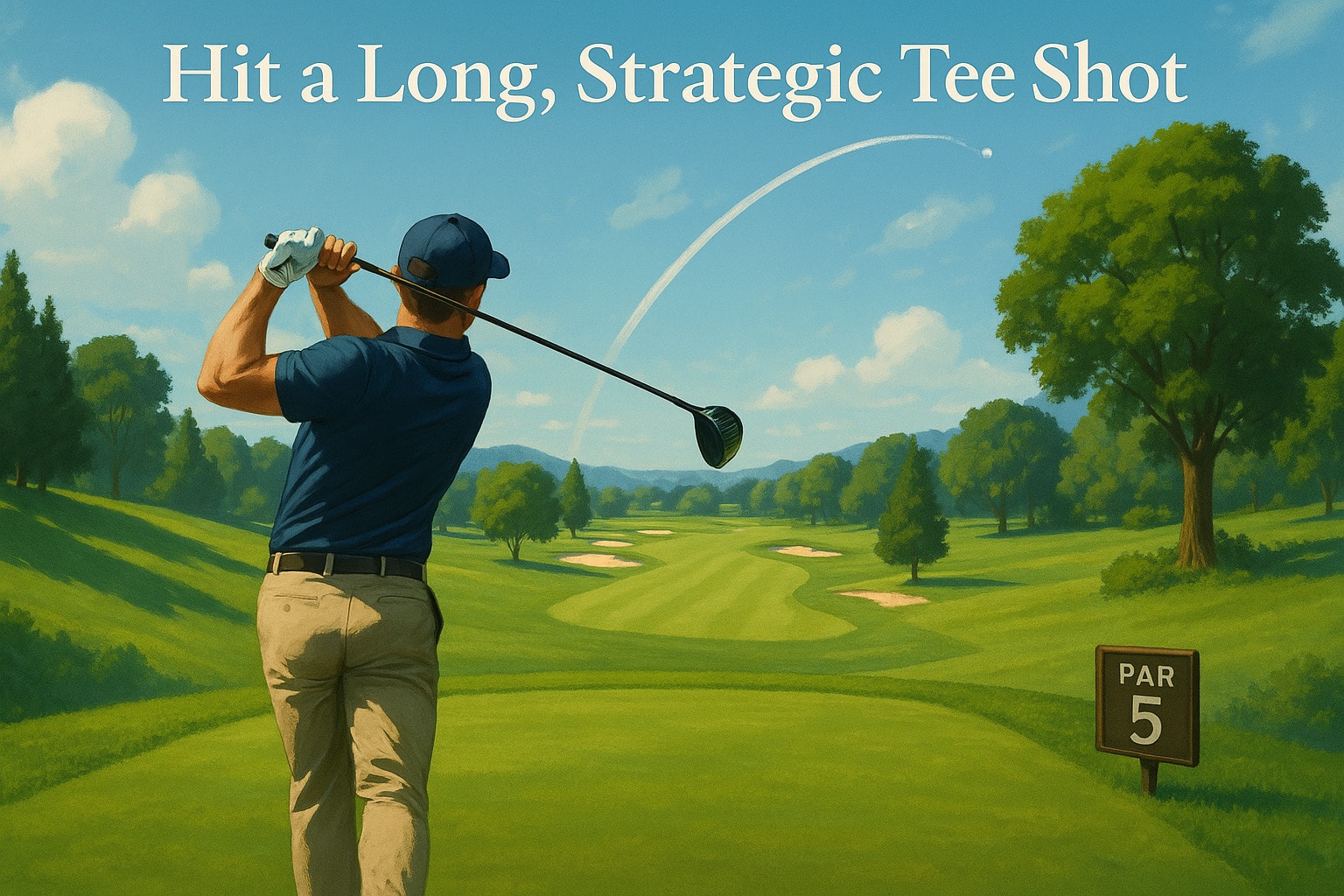
Step 1 – Hit a Long, Strategic Tee Shot
Start with a powerful and accurate drive to position yourself well for a shorter approach. On a par 5, aim to cover enough distance to make reaching the green in two shots realistic. On a par 4, an aggressive drive might reach the green or leave a short wedge shot.
Step 2 – Go for the Green in Fewer Strokes
Your second shot is critical.
- On par 5s, go for the green in two if the distance and conditions are manageable.
- On par 4s, a strong approach, or even driving the green, can set up a two-putt or one-putt finish.
Use fairway woods, hybrids, or long irons depending on distance, lie, and your confidence with each club.
Step 3 – Execute the Eagle Putt (or Hole Out)
Once on the green (or close to it), focus on speed control and read. Long eagle putts should be treated with care to avoid three-putting. If chipping or pitching from just off the green, aim to hole out—but leave a tap-in at worst.
Bonus Tip – Play Smart, Not Reckless
Only attempt an eagle when the risk-to-reward ratio makes sense. Avoid hazards, trouble areas, or risky carries unless you’re confident in the shot.
Summary:
To score an eagle:
- Set up with a great drive
- Position for an aggressive but smart second shot
- Convert the eagle with putting or a sharp short game
Consistency, not luck, is what makes eagles possible over time.
Common Mistakes to Avoid
Even skilled players can miss eagle opportunities by forcing risky shots, misreading the course, overestimating distance, neglecting their short game, rushing putts, or using clubs they’re not confident with:
- Forcing risky shots – Going for the green when it’s not a smart play can lead to hazards or lost strokes.Misreading the course – Overlooking wind, elevation, or hazards results in poor decision-making.
- Overestimating distance – Believing you can hit farther than you actually do often leads to bad club choices.
- Neglecting the short game – Skipping practice on chipping and putting makes converting eagle chances harder.
- Rushing putts – Fast, careless strokes can turn an eagle chance into a disappointing three-putt.
- Using unfamiliar clubs – Taking high-stakes shots with clubs you’re not confident in increases error risk.
Avoiding these pitfalls helps you turn potential eagle chances into actual low scores, or at the very least, easy birdies.
Pro Tips & Drills
Want to turn more eagle opportunities into reality? These practical tips and focused drills will help you build the distance, accuracy, and strategy needed to make it happen.
Pro Tips to Score More Eagles
Scoring more eagles comes down to knowing your distances, thinking strategically, picking the right moments, staying composed under pressure, and leaning on your strengths.
Know Your Distances
Track how far you hit each club, especially driver, hybrids, and fairway woods, to plan accurate eagle setups, particularly on par 5s.
Think Strategically
Visualize your eagle path before teeing off. Plan the hole backward: Where do you want your second shot to land? What’s the best angle to attack?
Pick the Right Moments
Not every hole is an eagle chance. Be selective, go for it only when the conditions, lie, and course layout offer a smart opportunity.
Stay Composed Under Pressure
Whether you’re hitting into the green or standing over an eagle putt, stay calm and stick to your routine. Confidence matters more than aggression.
Lean on Your Strengths
Play what you do best. Use the clubs, distances, and shot shapes you’re most comfortable with when going for eagle, don’t force risky moves.
Drills to Improve Eagle Chances
Building eagle chances requires solid distance control, reliable long-range accuracy, confident putting, a sharp short game, and smart decision-making. These focused drills target each of those areas:
Distance Control Drill
Hit 10 shots each with your driver, 3-wood, and hybrid. Record average distance and dispersion to build confidence in your eagle-range clubs.
180-220 Yard Target Practice
Place targets in the 180-220 yard range and hit 10 balls with different clubs. Track how often you hit the target to improve long-range accuracy.
Lag Putting Ladder Drill
Putt from 30, 40, and 50 feet and try to stop the ball within a 3-foot circle. This sharpens your ability to two-putt for eagle or leave stress-free birdies.
Greenside Chip-and-Putt
Practice chipping from various lies around the green and finish with short putts. This simulates eagle chances on short par 4s or long par 5s where you’re near the green in two.
Two-Ball Strategy Drill
Play two balls during a practice round: one aggressive, one conservative. Compare the outcomes to learn when to go for eagle and when to play smart.
FAQs About Eagle in Golf
Is an eagle better than a birdie?
Yes. A birdie is 1 under par, while an eagle is 2 under par, making it a more impressive and less common achievement.
How rare is it to score an eagle?
For amateur golfers, eagles are quite rare. Most occur on par 5s and require a long, accurate drive followed by an aggressive second shot or a holed approach.
Can you score an eagle on a par 3?
Technically yes, scoring 1 on a par 3 is 2 under par, but it’s called a hole-in-one, not an eagle. Eagles are most commonly made on par 4s and par 5s.
What are the best holes to target for eagle opportunities?
Focus on reachable par 5s or short par 4s where you can get close to the green in two shots. Look for holes with wide fairways, minimal hazards, and favorable wind. These give you the best chance to safely go for eagle without risking a big number.
Get instant access to the PDF version of this article with additional resources and insights.