
TL;DR – Posture in One Line
Golf posture is your body’s setup at address. A proper stance, with a straight spine, hip tilt, and balanced weight, improves swing consistency, power, accuracy, and prevents injury.
Key Takeaways
- Posture is your body position at address.
- Good posture = straight back, hip tilt, soft knees, balanced weight.
- It improves consistency, power, accuracy, and prevents injury.
- Common mistakes: hunching, locked knees, poor balance, reaching.
- Practice with mirrors or drills to build proper posture habits.
What Is Posture?
In golf, posture refers to how your body is positioned at address – right before you start your swing. It’s one of the most important fundamentals because it sets the stage for a solid, repeatable swing.
A proper golf posture includes:
- Feet shoulder-width apart – for balance and stability
- Knees slightly bent – relaxed but athletic stance
- Spine tilted forward from the hips – not hunched from the shoulders
- Back straight and chest out – keeps the upper body in a strong position
- Arms hanging naturally – hands below shoulders, no reaching
- Eyes focused on the ball
Posture affects your balance, swing path, and power. A poor posture can lead to inconsistent shots, reduced distance, and even injury over time. Think of it as your swing’s foundation- get it right, and everything else becomes easier.
Why Posture Matters in Golf
Your posture is the foundation of every swing. Good posture is the key to consistency, balance, power, accuracy, and injury prevention in your golf swing.
Here’s why posture matters:
- Consistency: A solid stance sets you up to repeat the same swing motion over and over.
- Balance: Proper posture keeps you centered, so you don’t sway or fall off your line.
- Power: When your spine and hips are aligned, you can rotate more efficiently and hit the ball farther.
- Accuracy: Better control of your body leads to better control of the clubface and direction.
- Injury prevention: Poor posture strains your back, neck, and shoulders. Good form protects your body.
Even small posture flaws can lead to big misses. That’s why even pro golfers constantly check and refine their setup before every round.
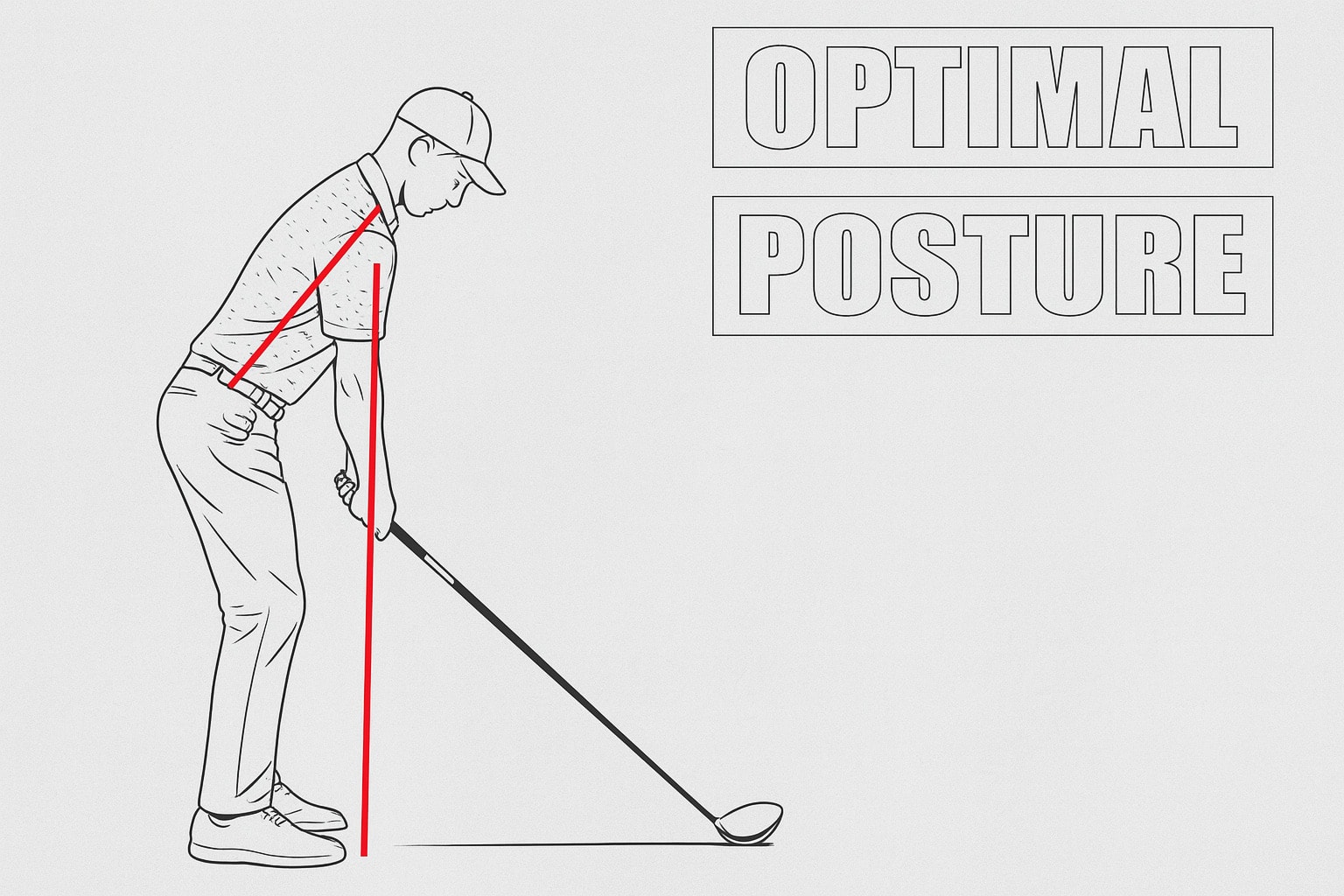
How to Do Posture Correctly
These 7 simple steps will help you set up with proper golf posture every time, giving you the foundation for a consistent and powerful swing:
Step 1: Stand tall
Start by standing upright with your feet shoulder-width apart. Let your arms hang naturally by your sides.
Step 2: Tilt from your hips
Bend forward from your hips- not your waist- while keeping your back straight. Your upper body should lean slightly over the ball.
Step 3: Flex your knees
Add a slight knee bend to feel athletic and balanced. Avoid locking your knees or crouching too low.
Step 4: Let your arms hang
Your arms should drop straight down from your shoulders. The club should rest naturally under your chest without reaching.
Step 5: Keep your back flat
Maintain a neutral spine- not rounded or overly arched. A flat back supports a smooth shoulder turn.
Step 6: Balance your weight
Distribute your weight evenly across the balls of your feet. Don’t lean too far forward or backward.
Step 7: Raise your chin slightly
Lift your chin just enough to allow your shoulders to turn freely. Tucking it too much can restrict rotation.
Bonus Tip:
Use a mirror or ask a coach to check your posture regularly, what feels right isn’t always correct.
Common Mistakes to Avoid
Even small posture errors can cause big problems in your swing. The most common mistakes include standing too upright or too bent over, hunching your back, locking your knees, shifting your weight to your heels or toes, reaching for the ball, and tucking your chin too much.
1. Standing too upright or too bent over
If you’re too straight, you lose balance and power. If you’re too hunched, your swing path suffers.
Fix: Find the right forward tilt- just enough to lean over the ball comfortably while staying athletic.
2. Hunching your back
Rounding your shoulders or slouching limits your rotation and can lead to inconsistent contact.
Fix: Keep your spine straight and tilt from the hips, not the waist.
3. Locked knees
Stiff, straight legs make it hard to stay balanced during the swing.
Fix: Add a slight, natural knee flex like you’re ready to move.
4. Weight on heels or toes
Shifting too far forward or backward can throw off your balance.
Fix: Distribute your weight evenly over the balls of your feet.
5. Reaching for the ball
Overextending your arms pulls you out of position.
Fix: Let your arms hang naturally from your shoulders, with a slight bend at the elbows.
6. Tucking the chin too much
While keeping your head down is common advice, overdoing it restricts your shoulder turn.
Fix: Keep your chin up just enough so your lead shoulder can move under it smoothly.
Pro Tips & Drills
Want to fine-tune your posture like the pros? Try these expert tips and simple drills to build muscle memory and confidence at address.
Pro Tips
These quick tips can help you check and improve your posture with minimal effort- on or off the course.
Check your spine angle in a mirror
Practice in front of a side mirror to see if you’re bending from your hips with a straight back – not rounding your shoulders.
Feel “athletic, not rigid”
You should feel ready to move – not stiff. Think of a shortstop in baseball: balanced, relaxed, and alert.
Set up with alignment sticks
Lay one stick under your feet (for alignment) and another upright behind your back to help maintain a straight spine.
Record your setup
Use your phone to film your address position from face-on and down-the-line angles. Compare it to pros or use it to track improvements.
Simple Drills
These easy drills can be done at home or on the range to help you build better posture habits.
Wall Drill (Spine Check)
Stand with your back against a wall. Step slightly forward and hinge at your hips until your rear lightly touches the wall. This helps train proper tilt without rounding your back.
Club Down the Back Drill
Place a club along your spine, holding one end at your head and the other near your tailbone. Bend into posture while keeping the club touching your head, upper back, and lower back. If one of those points lifts off, you’re not keeping a neutral spine.
Balance Drill
Address the ball and gently rock your weight from heels to toes. Find the middle- the balls of your feet – where you feel most balanced. This builds awareness of weight distribution.
Hanging Arms Drill
Stand up straight, tilt from your hips, and let your arms hang naturally. Where they fall is where your hands should be – no reaching or pulling in.
Practicing posture regularly, even without hitting balls, can make a big difference in your swing. Just 5 minutes a day can lead to more solid shots on the course. Let me know if you want a printable drill card or video suggestions!
FAQs About Posture
1. How do I know if my posture is correct?
Check in a mirror or record yourself from the side. Your back should be straight, hips tilted forward, arms hanging naturally, and weight balanced on the balls of your feet. If it feels athletic and balanced- not stiff- you’re on the right track.
2. Should my knees be bent a lot in golf posture?
No, just a slight flex. Your knees should be relaxed, not locked or squatting. Think “ready to move,” not “sitting down.”
3. How far should I bend over in posture?
Bend from your hips until your upper body leans slightly over the ball, about 25–35 degrees forward. It should feel natural- not like you’re reaching or collapsing.
4. Can bad posture really affect my swing?
Absolutely. Poor posture affects balance, rotation, and power. It’s one of the biggest causes of inconsistency and off-center strikes.
5. How often should I check my posture?
Every practice session- and ideally before every round. Even pros reset their posture habits regularly to stay sharp.
6. Do I need to be flexible to have good posture?
Not necessarily. Good posture is about proper angles and balance, not extreme flexibility. But stretching and mobility work can definitely help with rotation and comfort.
Get instant access to the PDF version of this article with additional resources and insights.