
TL;DR: What Is Greensomes in Golf?
Two-player team format: both tee off, pick the best drive, then hit alternate shots. Faster than Fourball, more forgiving than Foursomes, perfect for casual or charity games.
Key Takeaways
- Both tee off, one ball, alternate shots.
- Works best for pairs with complementary skills.
- Faster pace and team-centric decision-making.
- Common in club, charity, and mixed-gender events; not on pro tours.
- Avoid mistakes: plan tees, communicate, honour alternate order.
What Is Greensomes in Golf?
Greensomes is a two-player format where both golfers tee off, the team chooses the better drive, and alternate shots are played until the hole is finished.
Also known as Scotch Foursomes, it combines features of Fourball and Foursomes:
- Team size: 2 players per team
- Tee shots: Both players tee off
- Ball in play: Team selects the better tee shot
- From there: Alternate shots until the hole is completed
- Used in: Casual events, club tournaments, and mixed-format competitions
It’s faster than Fourball and more forgiving than Foursomes, making it a fun and strategic team format.

How Does Greensomes Work?
In Greensomes, both teammates hit tee shots, then the team picks the best one and plays alternate shots from there.
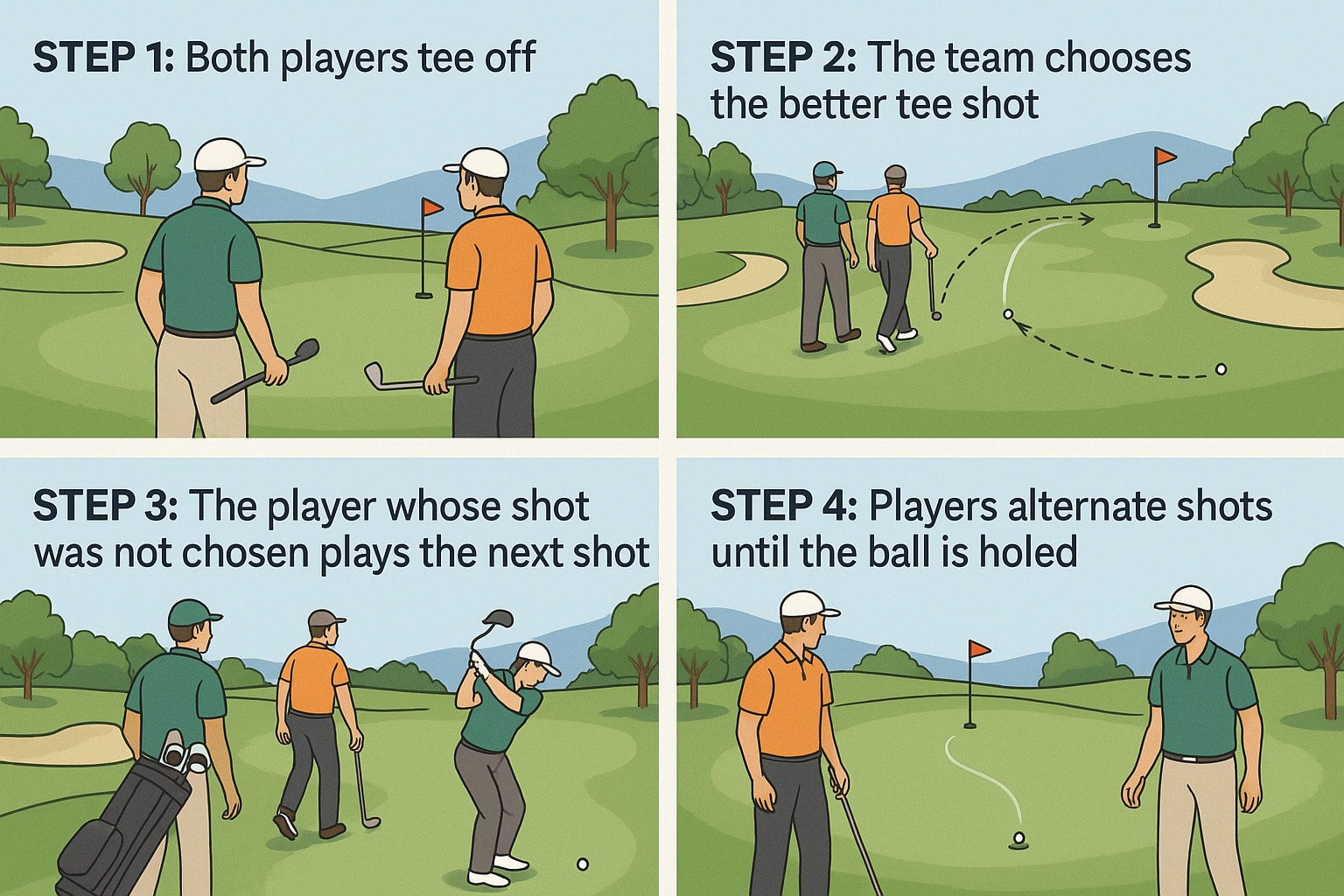
Here are the 4 steps of a typical hole:
Step 1: Both players tee off on every hole
Step 2: The team chooses the better tee shot
Step 3: The player whose shot was not chosen plays the next shot
Step 4: Players alternate shots until the ball is holed
Scoring Formats:
- Usually played as stroke play or match play
- Can be used in tournaments or casual rounds
Handicap Use:
- Handicaps can be adjusted using common rules (e.g., 60% of lower + 40% of higher handicap), depending on the event
This format rewards teamwork, communication, and smart tee shot planning.
Greensomes vs Other Golf Formats
Greensomes is most often compared with Foursomes, Fourball, and Scramble, all popular team formats with different rules for tee shots and shot order.
| Format | Team Size | Tee Shots Taken | Ball in Play | Shot Order |
|---|---|---|---|---|
| Greensomes | 2 | Both players | Best tee shot | Alternate shots |
| Foursomes | 2 | One player per hole | One ball | Alternate shots |
| Fourball | 2 | Both players | Two balls | Each plays own ball |
| Scramble | 2+ | All players | Best shot each time | All hit again |
Key Differences:
- Greensomes vs Foursomes: Both tee off in Greensomes, only one in Foursomes
- Greensomes vs Fourball: Fourball is individual play, Greensomes shares one ball after tee
- Greensomes vs Scramble: Scramble uses best shot each time, Greensomes switches to alternate shots
Greensomes blends skill, strategy, and teamwork while offering a quicker pace than Fourball and more structure than Scramble.
Where Is Greensomes Played?
Greensomes is often played in casual rounds, club competitions, charity events, mixed-gender formats, corporate outings, and international team matches.
- Casual rounds: Fun and fast-paced for weekend or social golf
- Club competitions: Used in member events and seasonal tournaments
- Charity events: Easy to organize and inclusive for all skill levels
- Mixed-gender formats: Encourages balance and teamwork
- Corporate outings: Engaging and team-friendly without being too competitive
- International team matches: Occasionally used in friendly country vs. country formats

While not part of professional tours, Greensomes thrives in recreational and amateur play due to its balance of strategy, pace, and participation.
Strategy Tips for Playing Greensomes
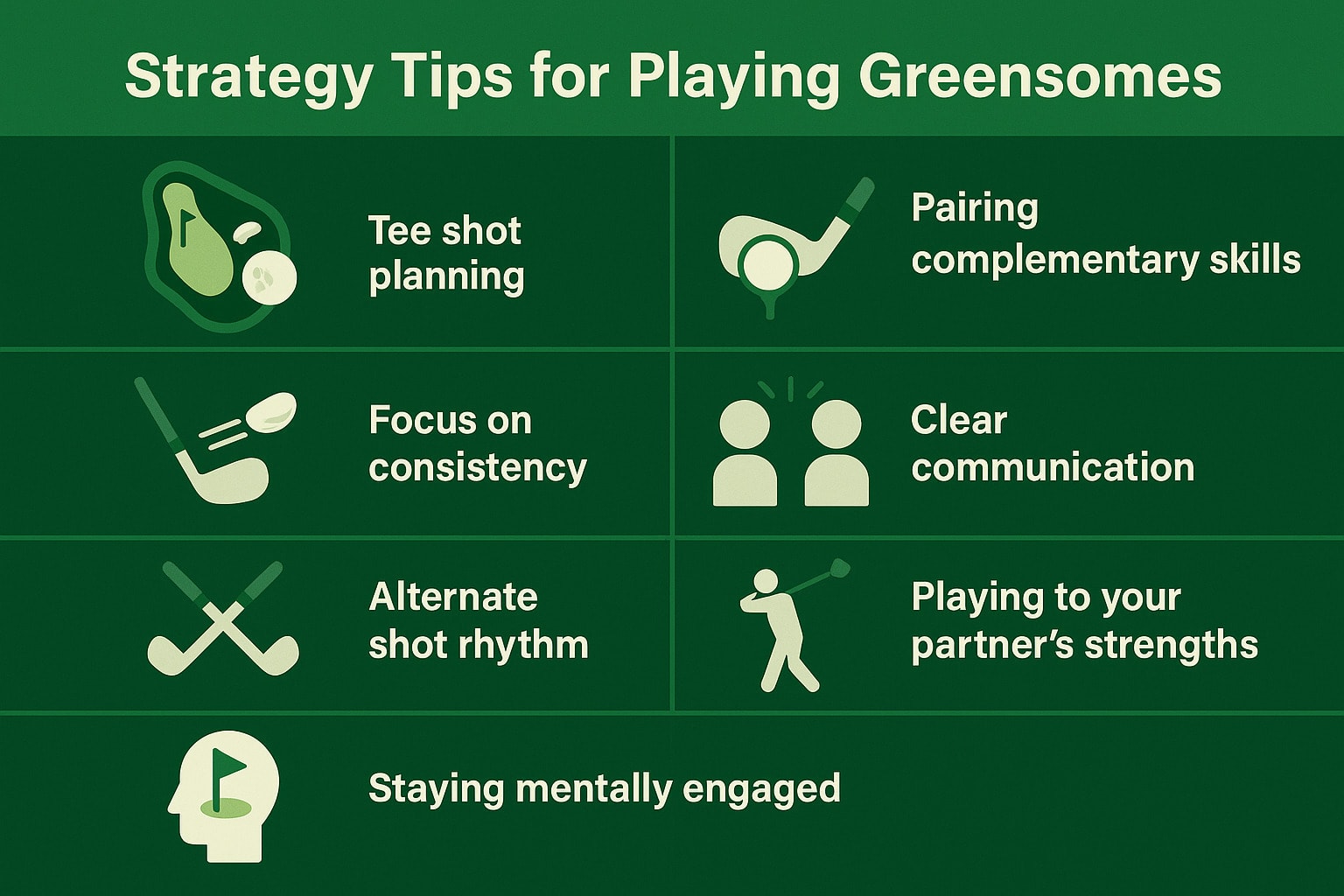
Key strategy tips for playing Greensomes include tee shot planning, pairing complementary skills, focusing on consistency, clear communication, alternate shot rhythm, playing to your partner’s strengths, and staying mentally engaged.
- Tee shot planning: Assign odd/even holes based on who drives better on certain layouts
- Pairing complementary skills: Combine a long hitter with a precise iron player or confident putter
- Focus on consistency: Reliable tee shots are more valuable than risky long drives
- Clear communication: Discuss club choices, yardages, and green reads together
- Alternate shot rhythm: Practice switching roles smoothly and stay in sync
- Play to your partner’s strengths: Set them up for shots they handle best
- Stay mentally engaged: Even when you’re not hitting, stay focused on strategy and support
Successful Greensomes teams think ahead, trust each other, and manage risk smartly.
Pros and Cons of Greensomes
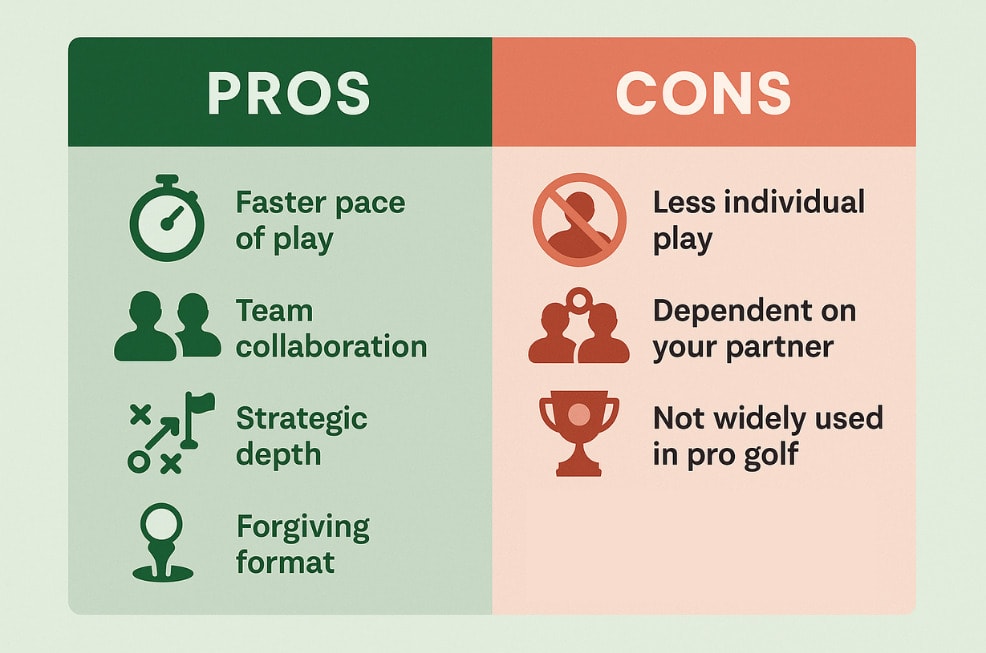
The main pros of Greensomes are faster pace, team collaboration, strategic depth, and forgiveness on poor drives, while the cons include less individual play, dependence on your partner, and limited use in professional events.
Pros:
- Faster pace of play: Only one ball is played after tee shots
- Team collaboration: Encourages communication and partnership
- Strategic depth: Tee shot planning and pairing matter
- Forgiving format: A poor drive can be saved by your partner’s tee shot
Cons:
- Less individual play: You hit fewer shots compared to formats like Fourball
- Dependent on your partner: One weak player can affect team performance
- Not widely used in pro golf: Mostly limited to amateur or casual settings
Greensomes is best for golfers who enjoy teamwork, quick rounds, and shared decision-making.
Common Mistakes in Greensomes
Common mistakes in Greensomes include poor tee shot strategy, weak pair selection, lack of communication, forgetting alternate shot rules, and not playing to your partner’s strengths.
- Poor tee shot strategy: Not planning who tees off on which holes can create disadvantageous setups
- Weak pair selection: Teams with similar weaknesses (e.g. both poor drivers) struggle more
- Lack of communication: Misunderstandings on club choice, distances, or putting reads hurt performance
- Forgetting alternate shot rules: Players sometimes hit out of turn after the selected tee shot
- Not playing to your partner’s strengths: Leaving difficult lies or pressure putts your teammate isn’t confident with

Avoiding these mistakes can make a huge difference in performance and overall enjoyment of the format.
FAQ: Greensomes Golf Format
Is Greensomes the same as Foursomes?
No. In Greensomes, both players tee off and select the best drive before playing alternate shots. In Foursomes, only one player tees off on each hole and players alternate shots from there.
Why is Greensomes also called Scotch Foursomes?
“Scotch Foursomes” is another name for Greensomes, especially in the UK and Ireland. The terms are often used interchangeably.
How do you decide which tee shot to use in Greensomes?
After both players tee off, the team selects the shot that gives the best position or scoring opportunity. The player whose shot was not selected hits the next shot.
How are handicaps applied in Greensomes?
A common method is 60% of the lower handicap + 40% of the higher handicap, though this may vary depending on event rules.
Is Greensomes used in professional golf?
No. Greensomes is mostly used in amateur, casual, or charity events, not in professional tournaments.
What happens if players forget to alternate shots?
It’s a rules violation. In competitive play, this usually results in a loss of hole (match play) or two-stroke penalty (stroke play).
Get instant access to the PDF version of this article with additional resources and insights.