
TL;DR
Foursomes is a golf format where two players play as a team, hitting alternate shots with one shared ball. It’s commonly used in match play events like the Ryder Cup and governed by Rule 22.
Key Takeaways
- One ball per team, players alternate shots
- Tee shots split between odd/even holes
- Popular in Ryder Cup and club team events
- Governed by Rule 22 of the Rules of Golf
- Strategy and communication are crucial
- Faster-paced than Fourball or Stroke Play
What Is Foursomes in Golf?
Foursomes is a golf format where two players form a team and play one ball alternately, taking turns to hit shots until the hole is completed. Also known as alternate shot, this format is commonly used in match play competitions like the Ryder Cup, but it can also be played in stroke play events.
In Foursomes:
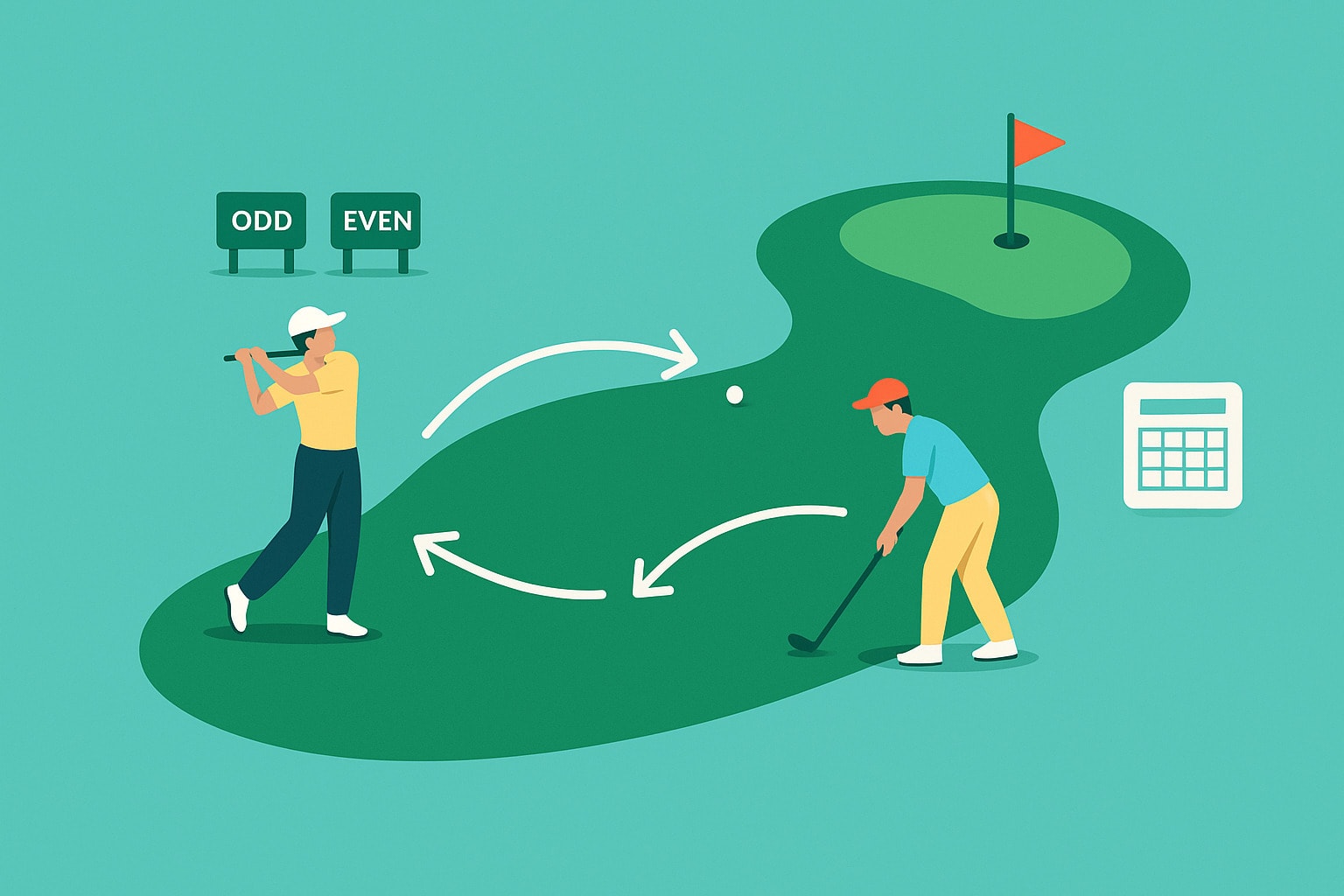
- One player tees off on odd-numbered holes, the other on even-numbered holes.
- After the tee shot, teammates alternate shots regardless of who holed out on the previous hole.
- The team records one score per hole, making it a fast-paced and strategic format.
This format tests not only individual skill but also teamwork, communication, and course management.
How Foursomes Works
In Foursomes, two players form a team and play one ball by taking alternate shots throughout the round. It’s a true test of teamwork, rhythm, and strategy. Here’s the basic flow and key rules you need to know to understand how Foursomes works.
Basic Flow
We’ll break down the core elements of Foursomes play: tee shots, alternate shots, and scoring format
Tee Shots:
One player tees off on odd-numbered holes (1, 3, 5…),The other on even-numbered holes (2, 4, 6…).This order is decided before the round and remains fixed.
Alternate Shots:
After the tee shot, players take turns hitting the same ball until the hole is completed.
Example: If Player A tees off, Player B hits the second shot, Player A hits the third, and so on.
Scoring:
Usually played in match play (hole-by-hole competition),But can also be played as stroke play (total strokes for the round).
Key Rules
- One ball in play per team.
- Order of play must be strictly followed—playing out of turn results in penalties.
- Penalty strokes do not change the shot order.
- Both players must contribute, but success relies on strategic tee assignments and solid communication.
Foursomes emphasizes efficiency and synergy, often leading to faster rounds and high-pressure decision-making.
Foursomes vs Fourball: What’s the Difference?
Foursomes and Fourball are both team formats in golf, but they differ in how the game is played, how many balls are used, and how scores are counted.
| Format | Players per Team | Balls in Play | Scoring Method | Key Feature |
|---|---|---|---|---|
| Foursomes | 2 | 1 per team | Alternate Shot | Players take turns hitting one ball |
| Fourball | 2 | 1 per player (2 total) | Best Ball (Lowest Score) | Each plays their own ball, best score counts |
In short:
- Foursomes = alternate shots with one ball per team.
- Fourball = each player plays their own ball, and the best score on each hole is used.
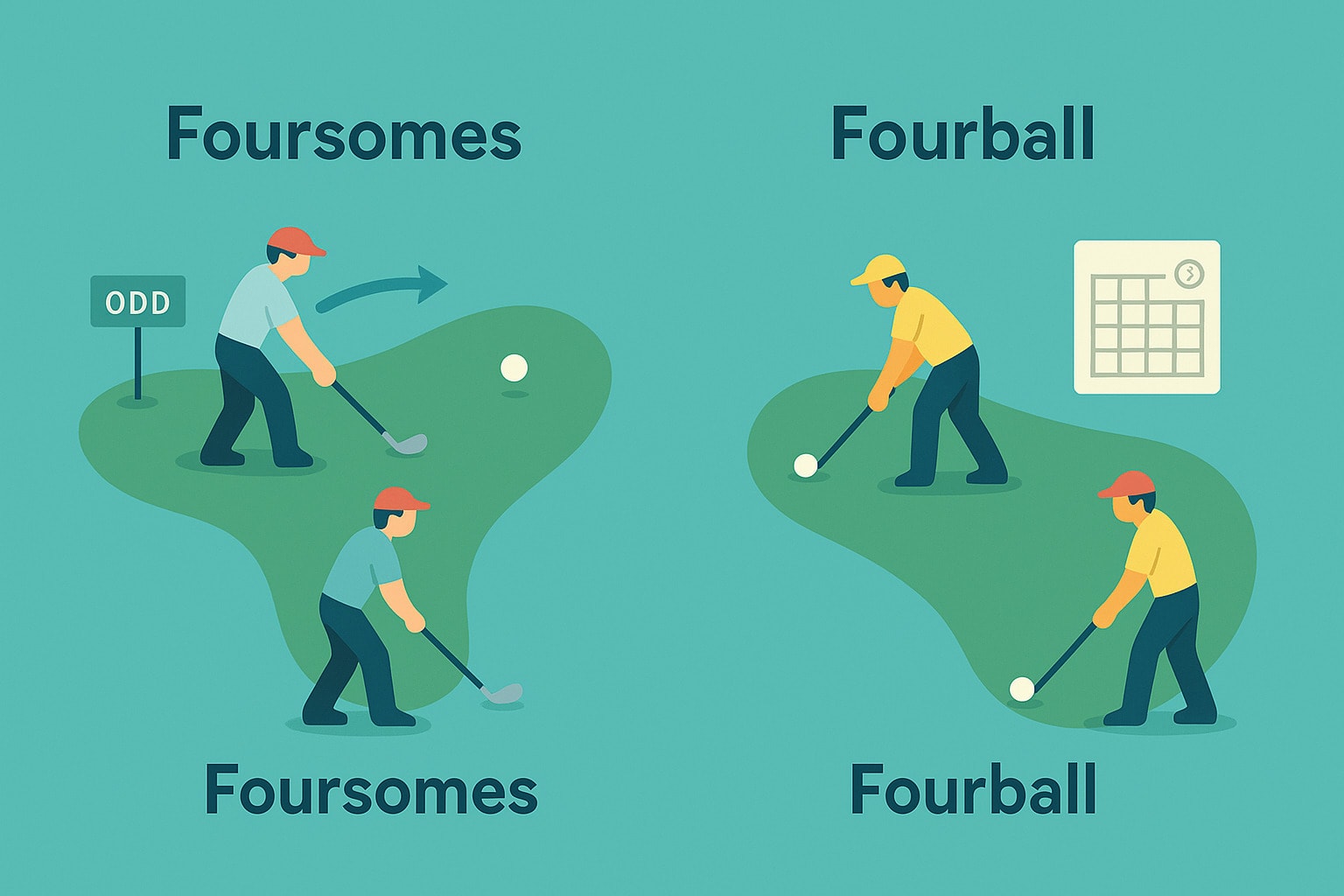
These formats are often used in tournaments like the Ryder Cup to test different aspects of team strategy and individual performance.
Rules Specific to Foursomes
Foursomes has specific rules covering alternate shots, tee shot rotation, penalty strokes, ball usage, advice between partners, and penalties for playing out of turn. These rules are essential for maintaining fairness and flow in this alternate-shot format.
Alternate Shots Must Be Followed
Players must strictly alternate strokes, regardless of who made the last putt or hit into a penalty.
Tee Shot Rotation Is Fixe
One player tees off on odd-numbered holes, the other on even-numbered holes. This order is set before the round and cannot change mid-round.
Penalty Strokes Do Not Affect Turn Order
If a team incurs a penalty (e.g. hitting out of bounds), the stroke is added, but the shot order remains the same.
Only One Ball in Play
Teams use one ball per hole, and must not switch mid-hole unless allowed under the rules (e.g. ball is damaged).
Advice Between Partners Is Allowed
Unlike in singles, teammates can give advice to each other throughout the round.
Wrong Player Hitting = Penalty
If a player plays out of turn (hits when their partner should have), the team loses the hole in match play or incurs a two-stroke penalty in stroke play.
Summary of Rule 22 – Foursomes (Alternate Shot)
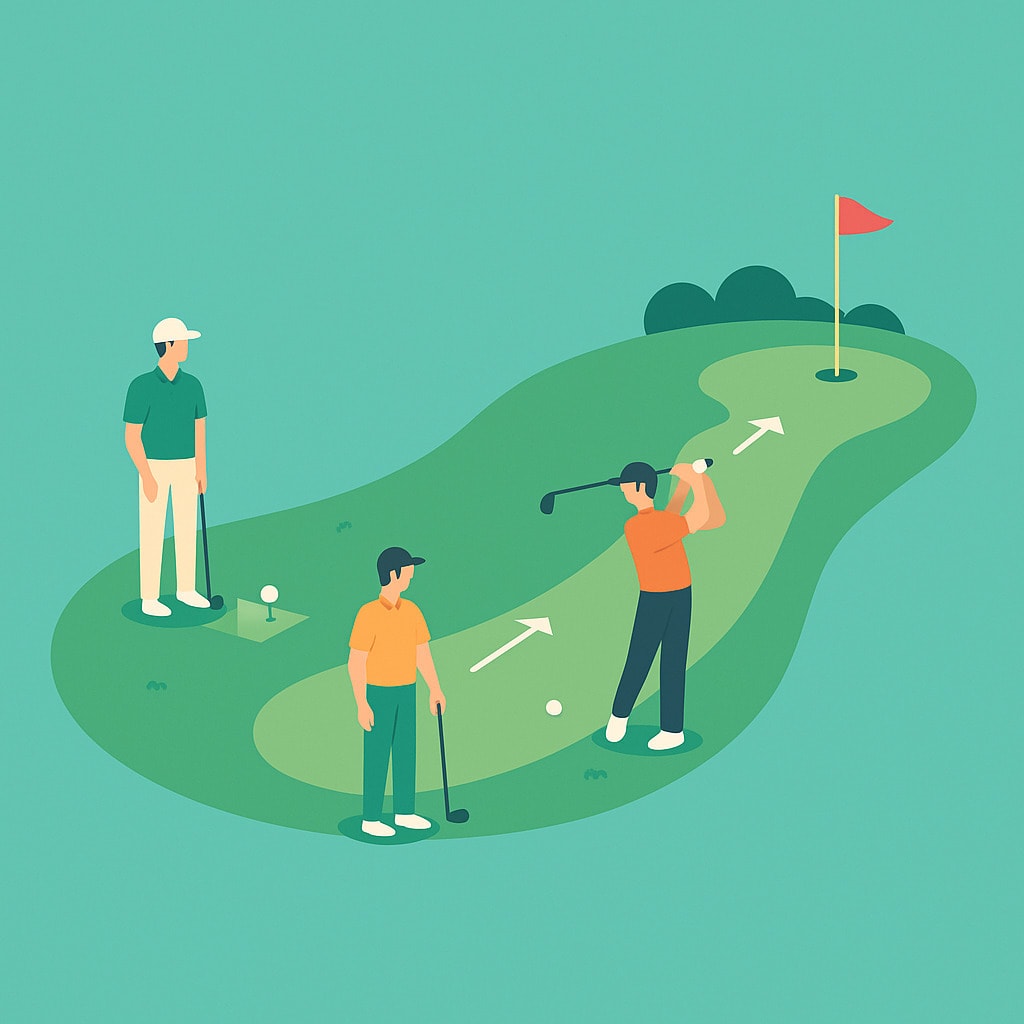
Rule 22 of the Rules of Golf governs the Foursomes format, where two players form a team and play one ball alternately. The rule adapts standard golf rules for this team-based structure and includes specific guidance on play order, responsibilities, and penalties.
22.1 Overview of Foursomes
- Also known as Alternate Shot.
- Played in match play or stroke play formats.
- Partners alternate shots on each hole.
- A variation, Threesomes, involves one player competing against a pair.
22.2 Either Partner May Act for the Side
- Either player may perform actions like marking, lifting, dropping, or placing the ball.
- Both players share responsibility for any rule breaches or penalties.
- In stroke play, only one partner needs to sign the scorecard.
22.3 Side Must Alternate in Making Strokes
- Players must alternate:
- Tee shots (decided before the round, odd/even holes).
- All strokes on each hole.
- If a mistake is made:
- It must be corrected in stroke play or the side is disqualified.
- Penalty strokes do not change the order of play.
22.4 Starting the Round
- Teams may choose who tees off first unless specified by the competition.
- The player teeing off must be ready at the starting time.
- The second player must also be present on or near the first hole.
22.5 Partners May Share Clubs
- Teams may share clubs, but the total must not exceed 14 clubs combined.
22.6 Restrictions on Standing Behind Partner
- A player must not stand behind their partner during a stroke to gain an advantage.
- Violation results in the general penalty (loss of hole in match play, two strokes in stroke play).
Read the complete official rule here: Rule 22 – Foursomes (USGA)
Strategy Tips for Playing Foursomes
Foursomes strategy revolves around choosing the right partner, assigning tee shots strategically, prioritizing positioning over power, establishing clear communication, practicing pre-round together, and staying mentally engaged when not hitting. Mastering these elements can significantly improve team performance and flow.
Choose the Right Partner
Pair with someone whose strengths complement yours, e.g. one strong off the tee, the other better with approach shots or putting.
Assign Tee Shots Strategically
Decide who tees off on odd vs. even holes based on the course layout and each player’s strengths (e.g. accuracy vs. distance).
Prioritize Positioning Over Power
Since you’re playing alternate shots, focus more on setting up your partner than hitting risky shots.
Establish Clear Communication
Discuss shot strategy, club selection, and target lines openly. Silent rounds lead to poor decisions.
Practice Pre-Round Together
Get familiar with each other’s routines, tempo, and decision-making styles.
Stay Mentally Engaged When Not Hitting
Even when not hitting, stay alert and supportive to maintain team rhythm and read the course together.
Common Mistakes in Foursomes
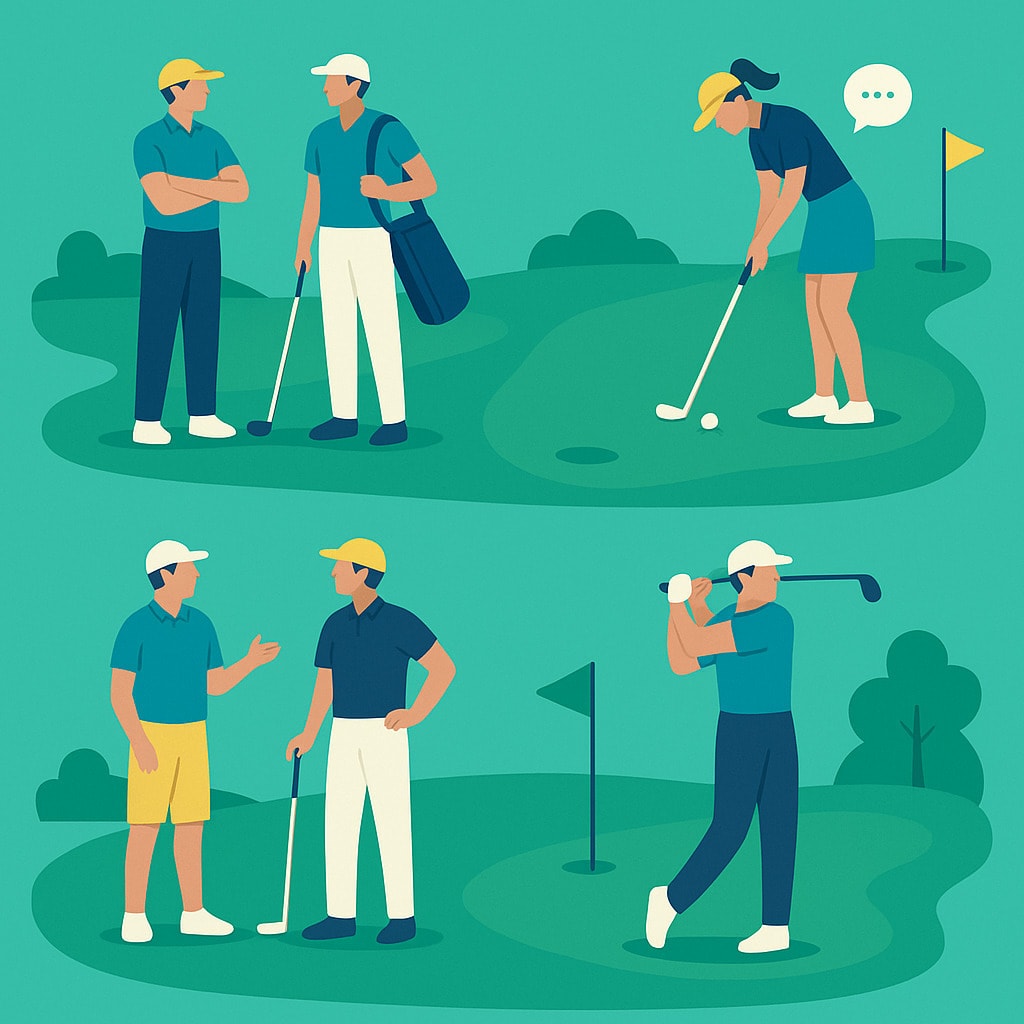
Many teams struggle in Foursomes due to mistakes like playing out of turn, poor tee shot assignment, mismatched playing styles, miscommunication, and over-aggressive play. Here are the most common errors to avoid:
Playing Out of Turn
Hitting when it’s your partner’s turn results in penalties, always double-check the order.
Poor Tee Shot Assignment
Choosing tee boxes without considering player strengths can lead to uncomfortable shots and lost holes.
Not Adjusting to Each Other’s Style
Ignoring differences in tempo, shot selection, or routines can disrupt rhythm and cause tension.
Lack of Communication
Failing to discuss strategies or club choices leads to confusion and mistakes on the course.
Over-Aggressive Play
Taking unnecessary risks instead of setting up your partner often backfires in this alternate-shot format.
Avoiding these mistakes requires preparation, teamwork, and a shared game plan—success in Foursomes depends as much on partnership as it does on skill.
When Is Foursomes Played?
Foursomes is commonly played in international team events, club tournaments, charity competitions, and as a faster-paced alternative to standard formats. Here are the main occasions where you’ll see it:
Ryder Cup & Presidents Cup
Foursomes is a featured format in these elite match play events, showcasing teamwork under pressure.
Club Championships & Team Events
Many golf clubs include Foursomes in their internal competitions or interclub matchups.
Charity and Invitational Tournaments
Foursomes adds variety and faster play, making it popular for fundraising and social events.
Alternate Format for Faster Rounds
Since only one ball is in play per team, Foursomes is often used when courses or organizers want to speed up pace of play.
You won’t find Foursomes often in casual rounds, but it shines in organized team competitions where strategy and cooperation are key.

Foursomes – FAQs
Can both players hit tee shots in Foursomes?
No. Only one player tees off on odd-numbered holes, and the other on even-numbered holes. This order must be set before the round and followed throughout.
What happens if the wrong player hits the shot?
That’s considered playing out of turn. In match play, the team loses the hole. In stroke play, it results in a two-stroke penalty.
Can we switch who tees off during the round?
No. Once you’ve decided who tees off on odd and even holes, that rotation must stay the same for the entire round.
Are both players allowed to give each other advice?
Yes. Unlike singles play, partners in Foursomes are allowed to give advice to one another.
Is Foursomes used in professional golf?
Yes. It’s a core format in major team events like the Ryder Cup, Solheim Cup, and Presidents Cup.
Is Foursomes faster than other formats?
Yes. Since only one ball is in play per team, Foursomes is generally faster than Fourball or Stroke Play.
Get instant access to the PDF version of this article with additional resources and insights.