
TL;DR – Ready Golf in One Line
Ready golf means playing your shot as soon as you’re ready, regardless of traditional order, to speed up pace of play.
Key Takeaways
- Ready golf means hitting when you’re ready, not waiting for honors.
- Encouraged in stroke play under Rule 6.4b for faster pace.
- Safe and respectful play is essential, never risk hitting others.
- Common in casual and amateur rounds to reduce delays.
- Still allowed in match play if agreed upon by both players.
- Helps improve flow, rhythm, and enjoyment for the entire group.
What Is Ready Golf?
Ready golf is a style of play where golfers take their shot as soon as they’re ready, rather than strictly following traditional order.
It is encouraged under Rule 6.4b in stroke play, and allowed by agreement in match play, as long as it’s done safely.
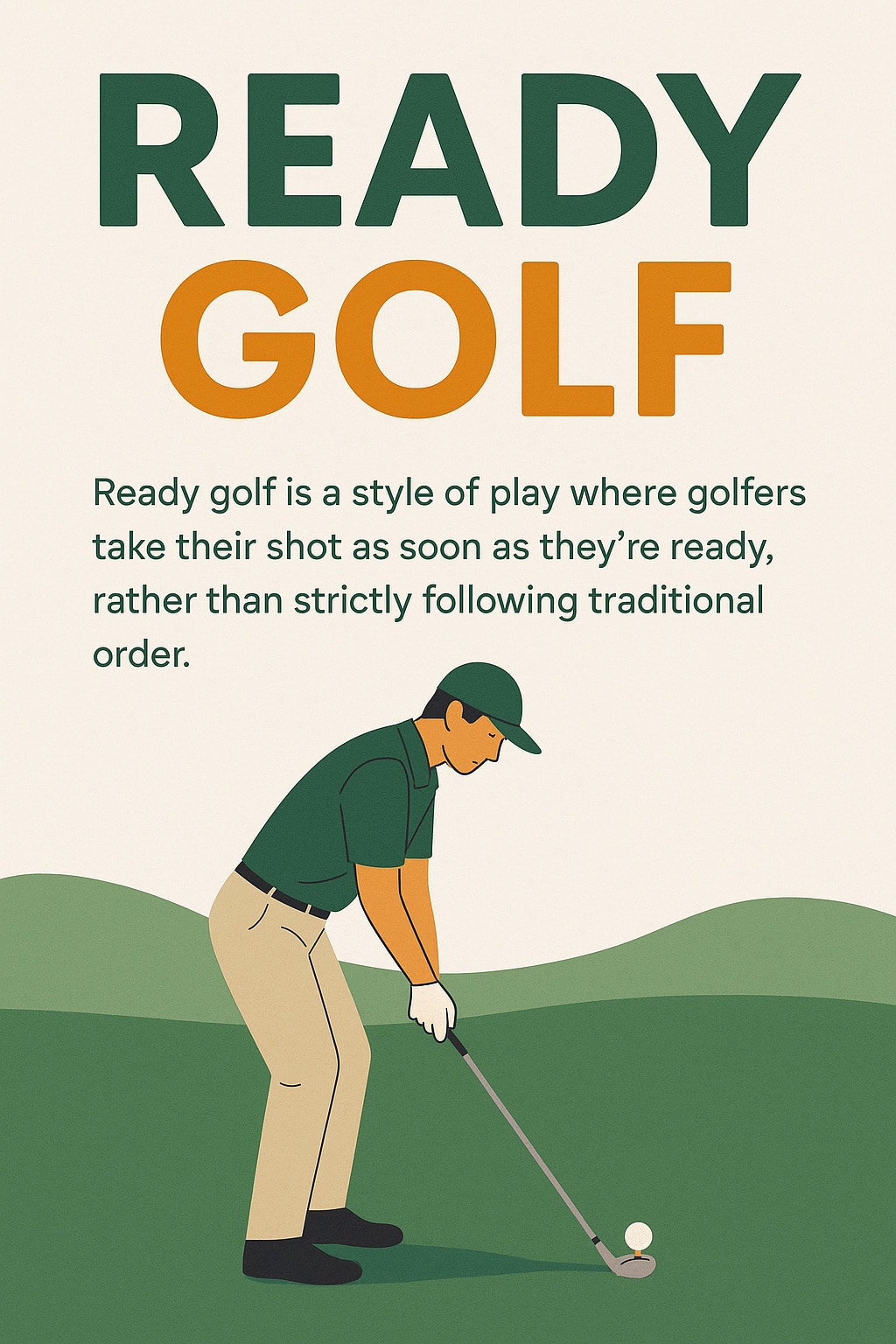
Specifically, ready golf means:
- Hitting when prepared, instead of waiting your turn based on honors or distance from the hole.
- Speeding up pace of play, reducing delays and downtime on the course.
- Commonly used in casual and amateur rounds to keep the game flowing.
- Still respecting safety and etiquette, ensuring no one is endangered by playing out of turn.
- Actively encouraged by golf organizations to improve overall player enjoyment and course efficiency.
When to Play Ready Golf (With Examples)
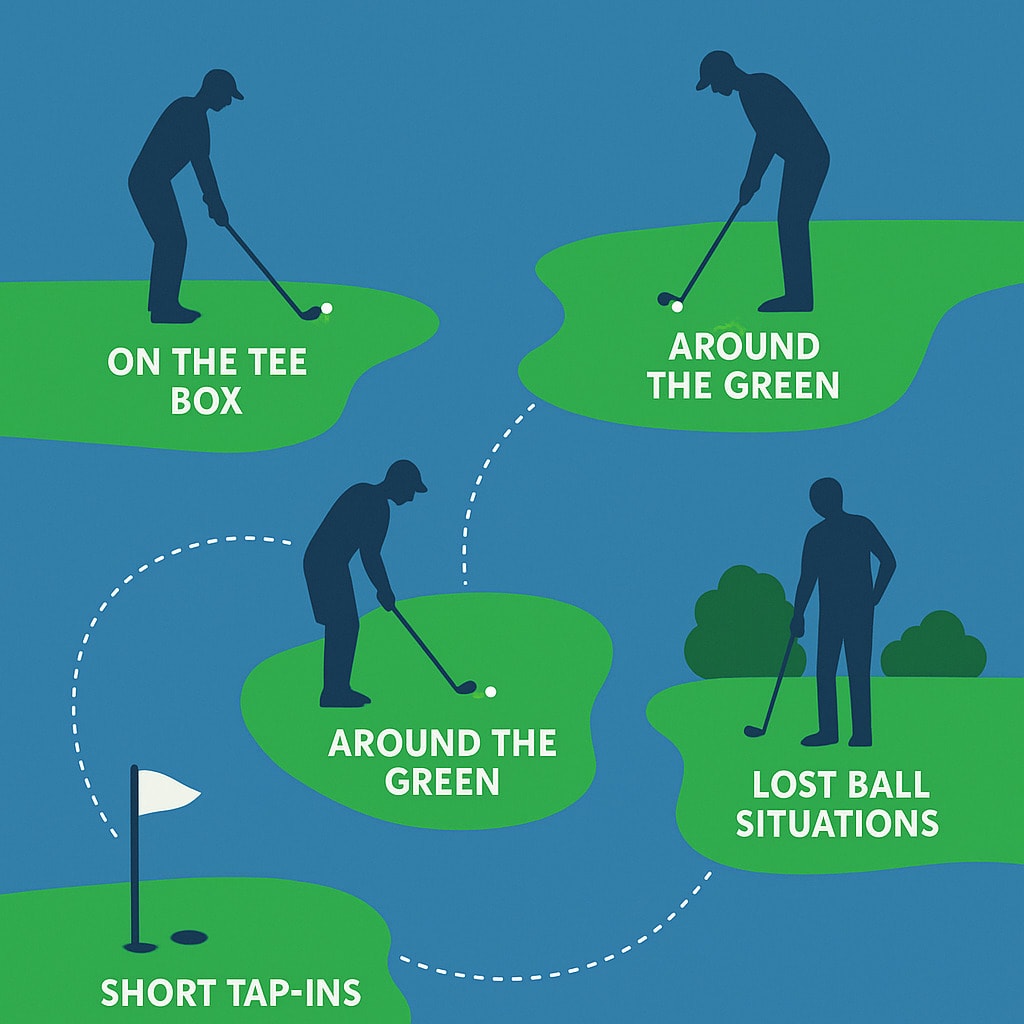
Play ready golf whenever possible, including on the tee box, fairway and approach shots, around the green, short tap-ins, and during lost ball situations.
- On the tee box: Hit your tee shot as soon as you’re ready, regardless of honors.
- Fairway and approach shots: Take your shot if you’re set before other players, even if you’re closer to the hole.
- Around the green: Chip or putt first if you’re ready, rather than waiting.
- Short tap-ins: Finish quickly instead of repeatedly marking your ball.
- Lost ball situations: Other players should play their shots first before helping search for the lost ball.
Why Ready Golf Matters
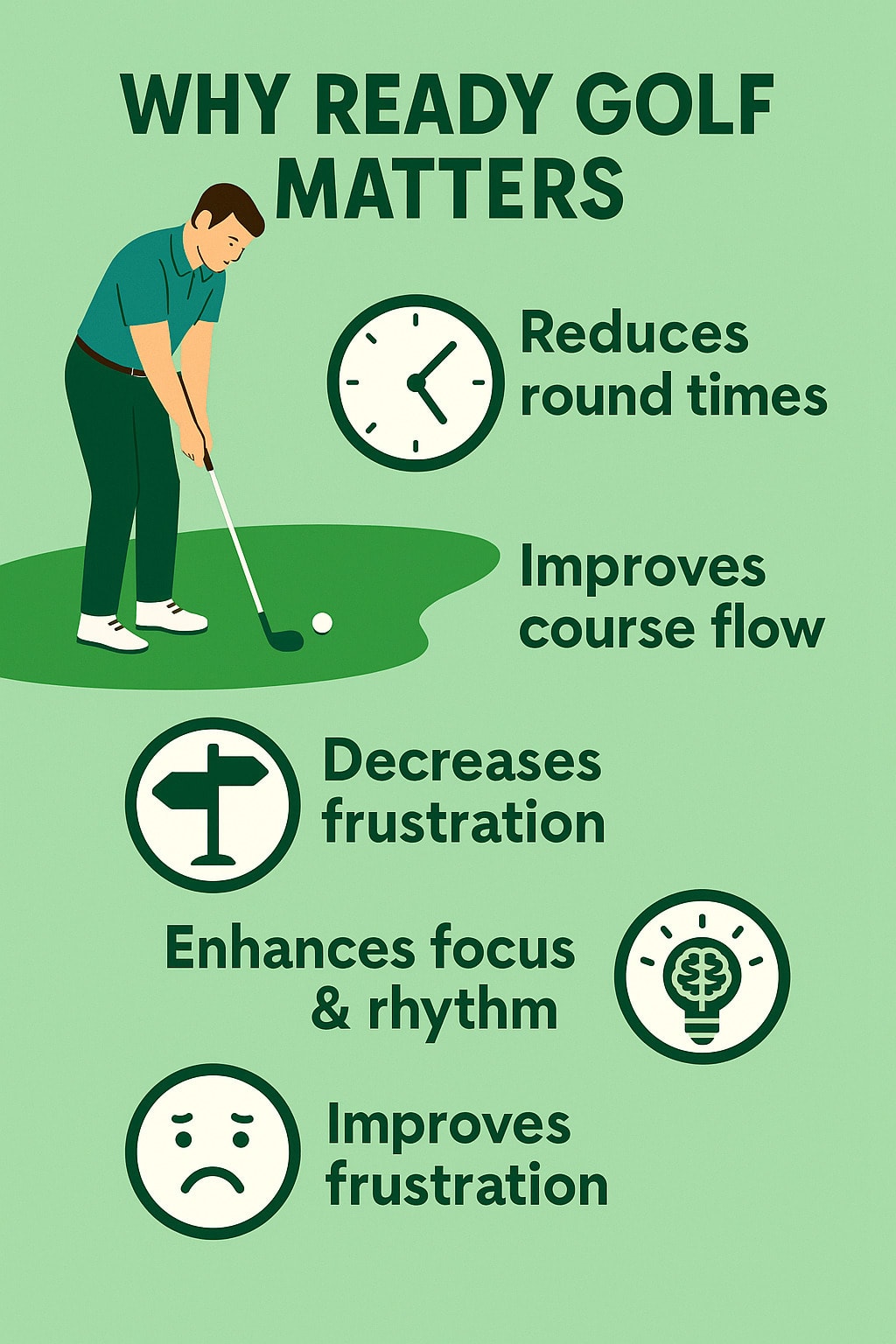
Ready golf matters because it reduces overall round times, improves course flow, decreases frustration, and enhances player focus and rhythm.
- Reduces round times, keeping the game enjoyable and efficient.
- Improves course flow, minimizing bottlenecks and delays.
- Decreases frustration caused by slow play and unnecessary waiting.
- Enhances focus and rhythm, allowing players to maintain momentum throughout the round.
Ready golf keeps the game moving, reduces delays, and makes the round more enjoyable for everyone.
Rules and Etiquette of Ready Golf
When playing ready golf, always prioritize safety, communicate clearly, be respectful, stay aware, and play efficiently, not hurriedly.
- Prioritize safety: Only play when no one is at risk.
- Communicate clearly: Let your group know when you’re playing out of turn.
- Be respectful: Avoid disturbing others as they line up or take their shot.
- Stay aware: Pay attention to where others are and who is ready.
- Play efficiently, not hurriedly: Be ready to hit, but don’t rush your routine.
Rules Reference: Ready Golf and Rule 6.4
Ready golf is supported by the Rules of Golf, specifically Rule 6.4, which covers the order of play during a hole.
Stroke Play: Rule 6.4b
Ready golf is allowed and encouraged in stroke play.
Players may play out of turn if it is done safely and responsibly.
Examples include:
- Playing while another player is not ready.
- Holing a short putt instead of marking.
- Agreeing with others to play out of turn to save time.
However, players should not play out of turn to gain an advantage or disrupt others.
Match Play: Rule 6.4a
In match play, order of play matters.
A player who plays out of turn risks their shot being canceled by the opponent.
Exception: Players may agree to play out of turn to speed up the game, in which case the shot counts and cannot be canceled.
Summary: Rule 6.4 encourages ready golf in stroke play and allows flexibility in match play if agreed upon and done safely.
For full details, you can read the official rule at the USGA website: Rule 6.4 – Order of Play.
Common Mistakes to Avoid with Ready Golf
Common ready golf mistakes include playing without ensuring safety, rushing shots, ignoring playing partners, and failing to communicate clearly.
- Playing without checking for safety: Never hit if someone could be in danger.
- Rushing shots: Being fast doesn’t mean sacrificing focus or shot quality.
- Ignoring others: Don’t disrupt your playing partners’ routine or rhythm.
- Not communicating: Let others know your intention to play out of turn.
- Overstepping boundaries: Avoid being overly aggressive or dominating the pace.
Ready Golf vs. Traditional Golf
Ready golf and traditional golf differ in key aspects: order of play, pace of play, environment, player experience, and etiquette focus.
| Aspect | Ready Golf | Traditional Golf |
|---|---|---|
| Order of Play | Hit when you’re ready | Follows strict order (farthest from hole or honors) |
| Pace of Play | Faster, keeps the game moving | Slower, more waiting between shots |
| Environment | Ideal for casual and amateur rounds | Common in formal events and professional play |
| Player Experience | Relaxed, efficient, encourages flow | Structured, traditional, can cause slowdowns |
| Etiquette Focus | Emphasizes readiness and safety | Emphasizes hierarchy and formality |
In short, ready golf promotes speed, flexibility, and efficiency, ideal for everyday play.
Traditional golf emphasizes formality, structure, and tradition, making it more suitable for competitive or professional settings.
Tips for Playing Ready Golf Effectively
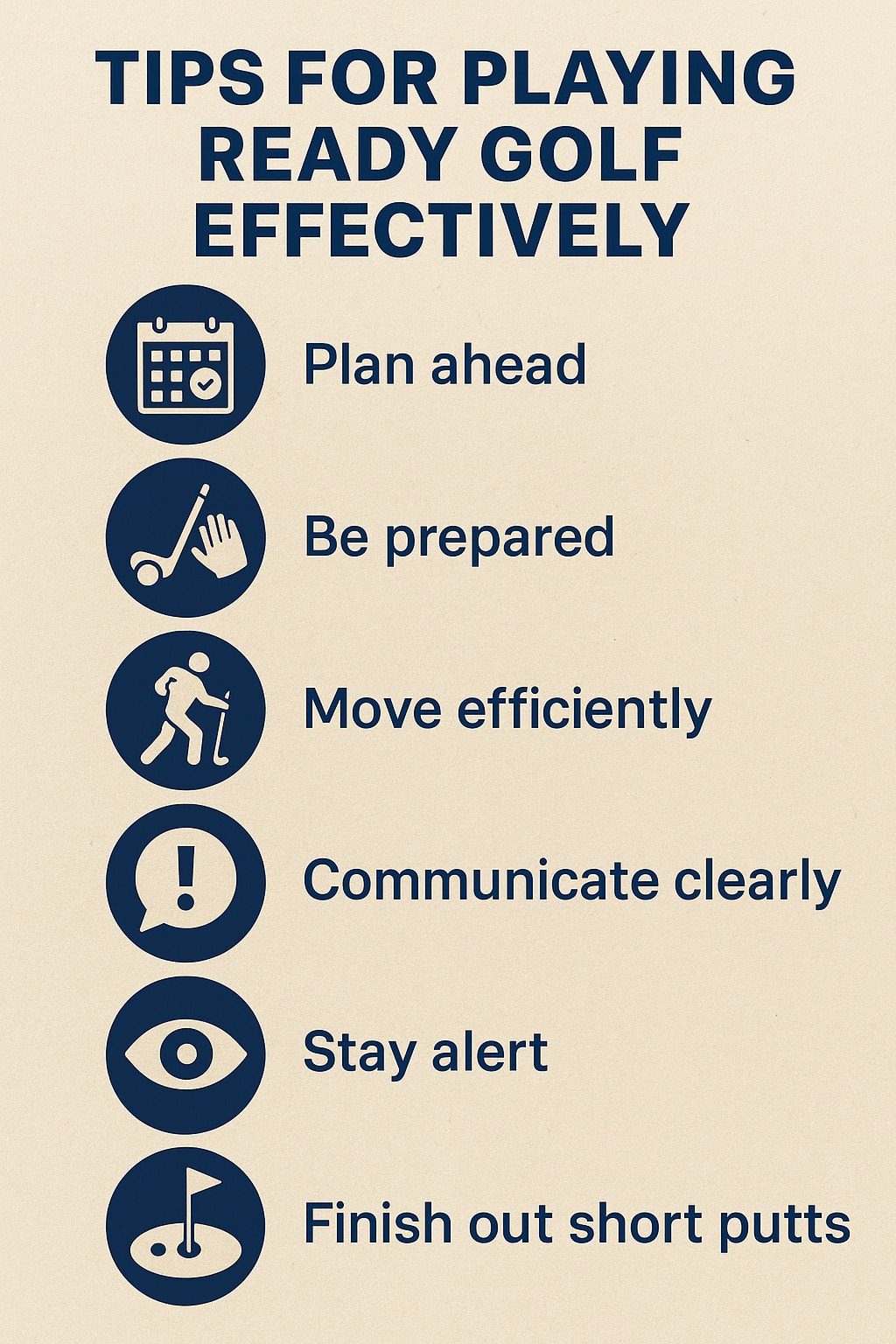
To play ready golf effectively, you should plan ahead, be prepared, move efficiently, communicate clearly, stay alert, and finish out short putts when appropriate.
- Plan ahead: Think about your next shot while others are hitting.
- Be prepared: Have your club, glove, and ball ready before it’s your turn.
- Move efficiently: Walk with purpose and limit practice swings.
- Communicate clearly: Let your group know you’re playing out of turn.
- Stay alert: Always be aware of other players’ positions.
- Finish out short putts: Tap in when safe instead of marking and waiting.
Embracing ready golf is one of the easiest ways to keep the game fun, fast, and enjoyable for everyone in your group.
FAQs about Ready Golf
Is ready golf allowed in competitions?
Yes, many amateur events and club tournaments encourage ready golf to maintain pace, as long as it’s done safely.
Does ready golf mean rushing your shots?
No. It means playing efficiently when ready—not hurrying—while still taking proper care with each shot.
Can ready golf improve my score?
It can help by keeping your rhythm and reducing downtime, which often leads to better focus and fewer mistakes.
Is ready golf only for beginners?
No. Golfers of all levels use ready golf to improve pace and enjoyment, especially in non-professional settings.
Get instant access to the PDF version of this article with additional resources and insights.