
TL;DR – Provisional in One Line
A provisional ball is a declared backup shot you hit when your original ball may be lost or out-of-bounds, saving time and one penalty stroke under Rule 18.3.
Key Takeaways
- A provisional ball is used when the original may be lost or out of bounds
- You must declare it clearly using the word “provisional” before hitting
- It’s not allowed if the ball might be in a penalty area
- The provisional becomes the ball in play if the original is lost or OB
- If the original is found in bounds within 3 minutes, abandon the provisional
- Playing a provisional helps you save time and stay within Rule 18.3
What Is a Provisional Ball in Golf?
A provisional ball in golf is a second ball played in case your original ball may be lost outside a penalty area or out of bounds. It’s a backup shot that helps you save time and avoid walking back to the original spot if your first ball can’t be found or is out of play.
Under Rule 18.3 of the Rules of Golf, you must clearly declare that you’re hitting a “provisional” before making the stroke. If your original ball is found in bounds and playable, you must abandon the provisional. But if the original is lost or out of bounds, the provisional becomes your ball in play, with a one-stroke penalty.
When Can You Play a Provisional Ball?
You can play a provisional ball when your original ball may be lost outside a penalty area or out of bounds.
This situation typically occurs when your shot heads into thick rough, trees, bushes, or near boundary markers. The Rules of Golf (Rule 18.3) allow you to play a provisional to save time and avoid walking back if the original ball is not found or is out of bounds.
To play a provisional:
- You must clearly declare it as a “provisional ball” before making the stroke.
- You must play it before going forward to search for the original ball.
- If the original is found in bounds and playable, you must abandon the provisional.
- If the original is lost or out of bounds, the provisional becomes the ball in play with a one-stroke penalty.
A provisional ball is not allowed if you believe the original may be in a penalty area like water or a marked hazard.
How to Declare a Provisional Ball (Important)
You declare a provisional ball by clearly stating your intention before hitting it, using the word “provisional.”
To declare properly, say something like:
- “I’m playing a provisional.”
- “This is a provisional ball.”
- “Hitting a provisional for my tee shot.”
Declare a Provisional Ball Correctly
- You must declare before making the stroke. If you don’t, and just hit another ball, it automatically becomes the ball in play, even if the original is still findable.
- Avoid vague phrases like “I’ll hit another one” or “just in case” without saying the word provisional, they don’t count as a proper declaration.
- The declaration must happen before you leave the teeing area or move forward to search.
Declaring correctly ensures you’re protected under Rule 18.3, and it gives you the right to continue play without penalty if the original ball is found.
What Happens Next? When to Keep or Abandon the Provisional
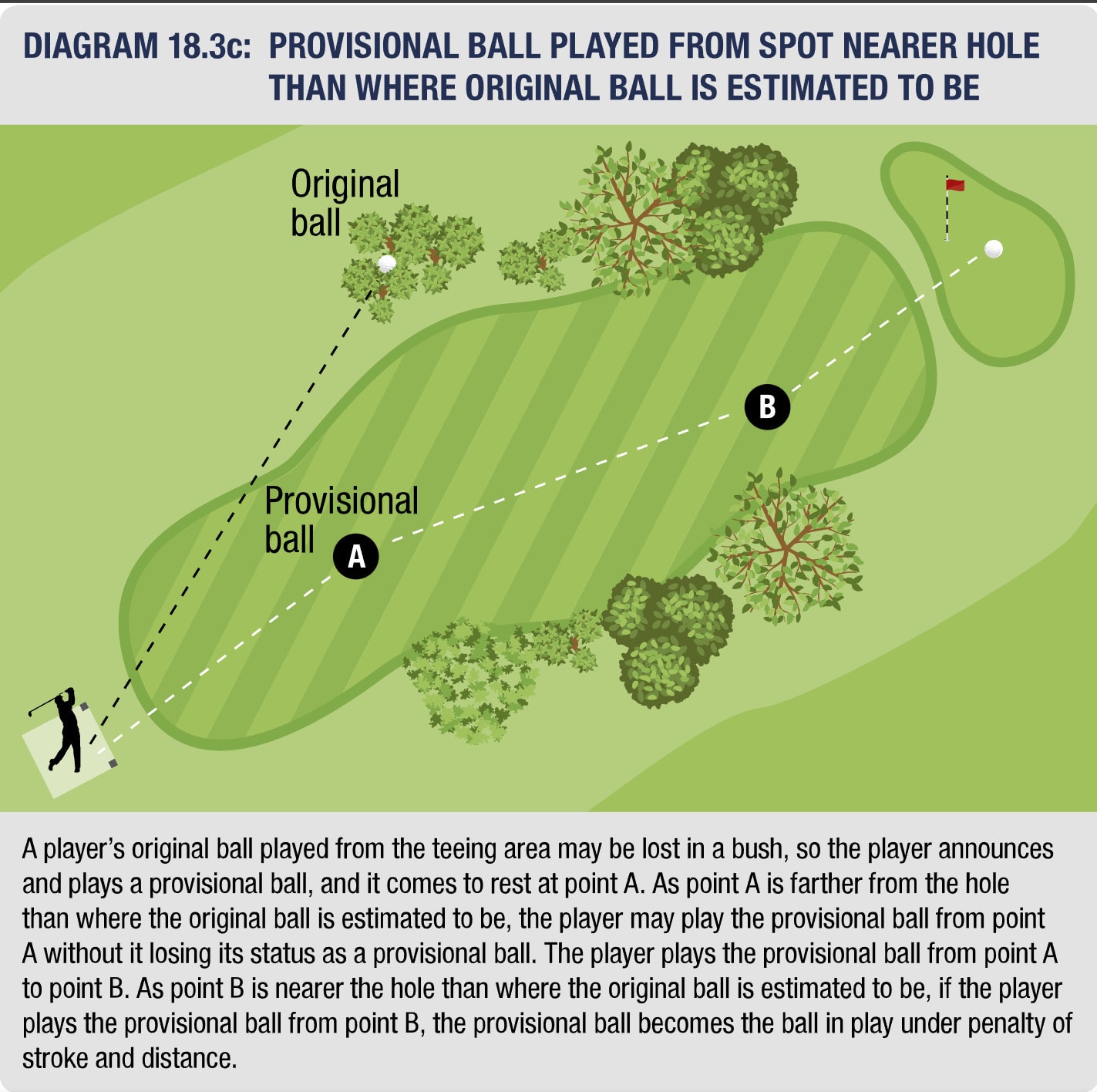
You keep the provisional if the original is lost or out of bounds, you abandon it if the original is found in play, and the provisional becomes the ball in play if it’s played from a point closer to the hole.
1, If the original ball is lost (outside a penalty area) or out of bounds:
The provisional becomes the ball in play, and you add one penalty stroke.
2, If the original ball is found in bounds and playable within 3 minutes:
The provisional is abandoned, and you must continue with the original ball.
3, If you make a stroke with the provisional from a spot closer to the hole than where the original is likely to be:
The original is automatically out of play, even if it’s later found.
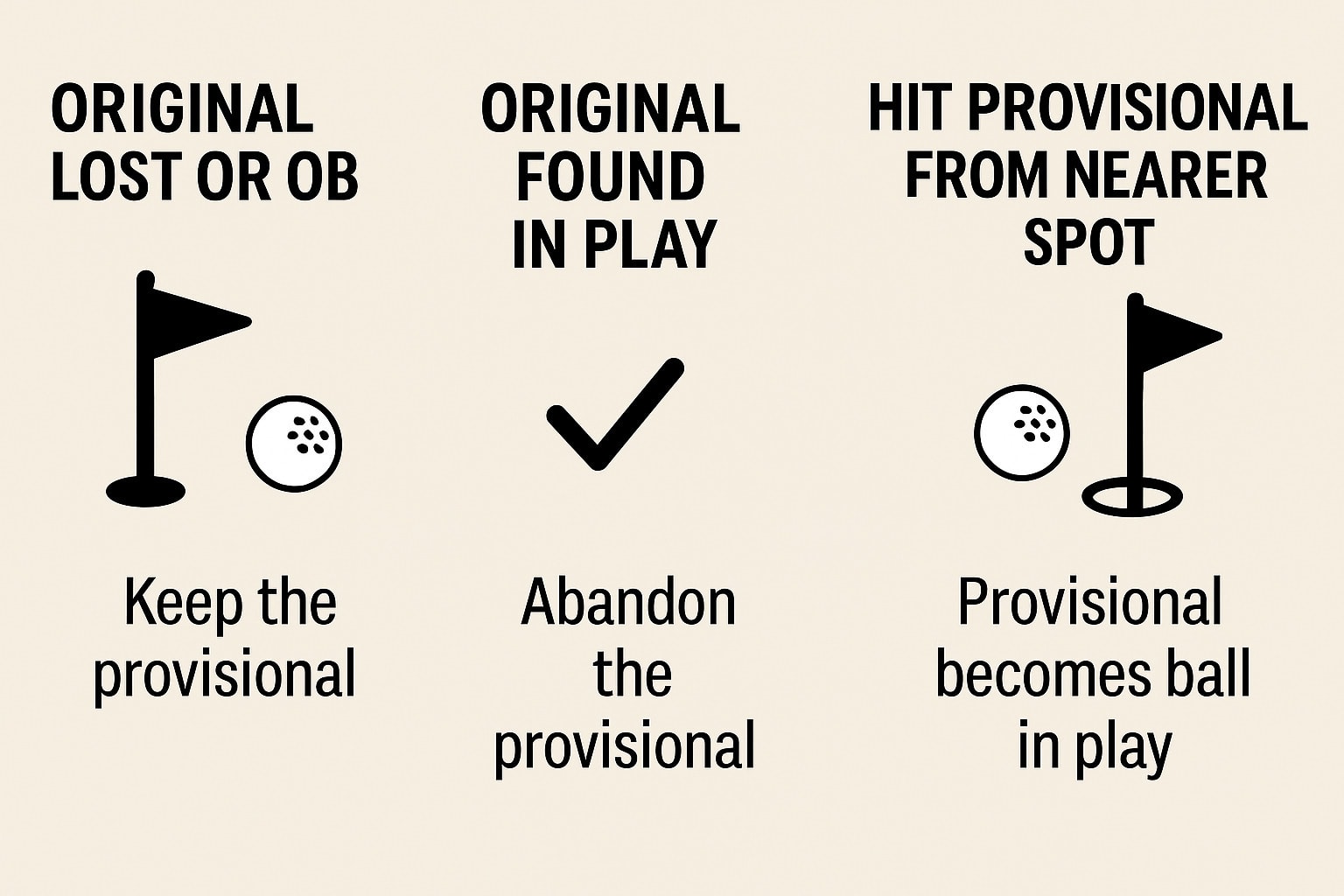
Knowing when to keep or abandon the provisional ensures you follow Rule 18.3 and avoid unnecessary penalties.
Why Playing a Provisional Ball Matters
Playing a provisional ball matters because it helps you stay within Rule 18.3, avoid disrupting the pace of play, protect your score and avoid disqualification, and gain peace of mind with a backup shot ready.
- You stay within the Rules of Golf (Rule 18.3) when your original ball may be lost or out of bounds
- You avoid disrupting pace of play by continuing without walking back
- You protect your score and avoid disqualification for failing to replay a lost or OB ball
- You gain peace of mind knowing you have a valid second shot in play if needed
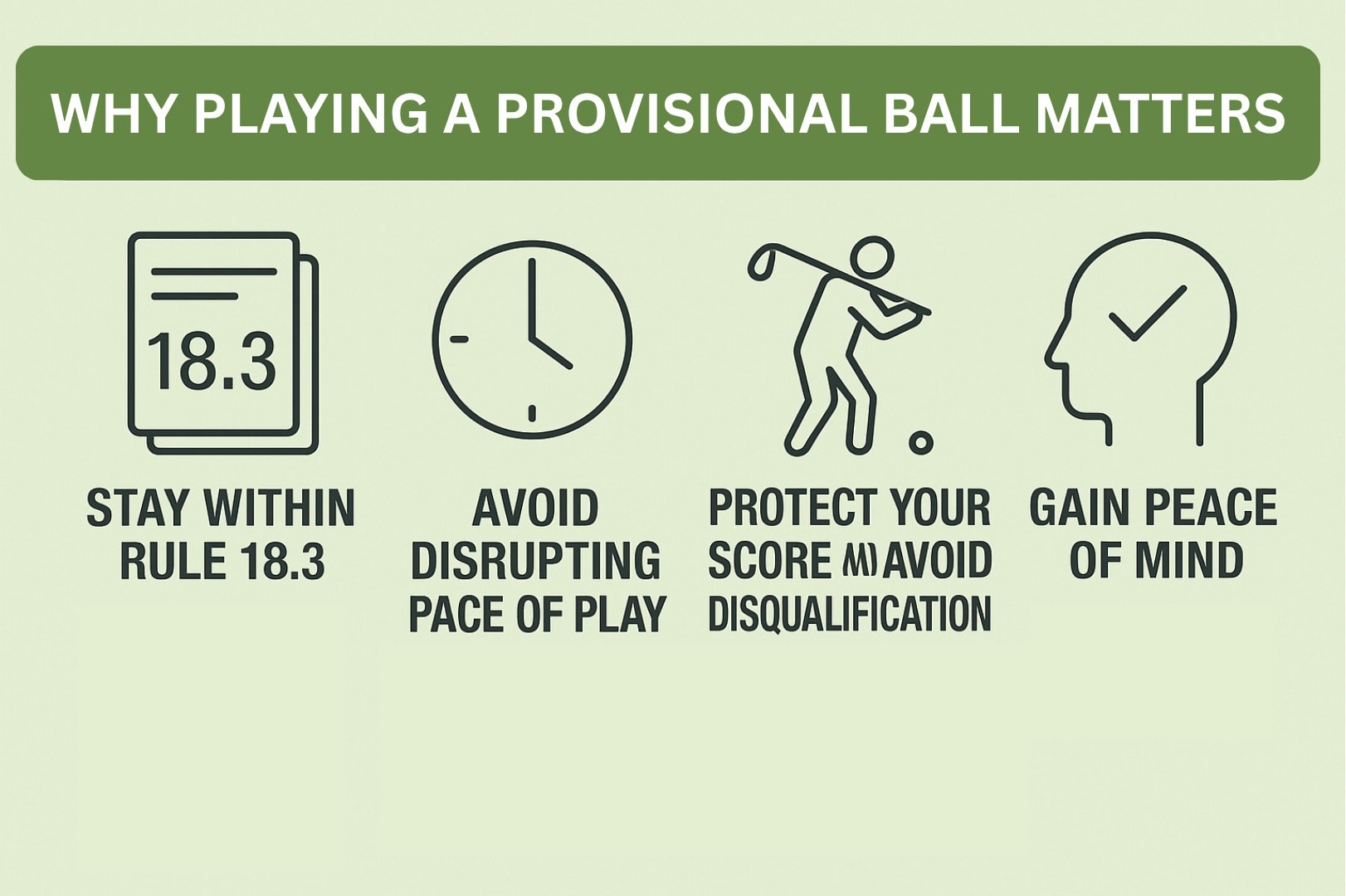
It’s a smart, rule-approved strategy every golfer should understand and use when appropriate.
Common Mistakes with Provisional Balls
Common mistakes with provisional balls include failing to declare it properly, using it when the ball may be in a penalty area, declaring it too late, and playing it from a wrong position.

Failing to declare it properly before the stroke
If you don’t clearly state that it’s a “provisional,” the second ball becomes the ball in play by default, even if the original is found.
Using a provisional when the ball may be in a penalty area
Provisional balls are not permitted if there’s a reasonable chance the original is in a marked penalty area, such as water hazards.
Declaring it too late, after walking forward to search
You must declare and play the provisional before you leave the teeing area or move forward to look for your original ball.
Playing it from a spot closer to the hole than where the original likely lies
Once you play a stroke from closer to the hole, the provisional automatically becomes the ball in play, even if the original is later found.
Mastering the provisional ball is simple, and it can save you strokes, time, and frustration on the course.
Example Scenario
You hit a tee shot into thick trees near the out-of-bounds line and aren’t sure if the ball is in play. Before leaving the tee, you say, “I’m hitting a provisional,” and play another ball.
After a 3-minute search, your original ball isn’t found. Because you declared the provisional correctly and played it from the same spot, that ball becomes your ball in play, with a one-stroke penalty, saving you a walk back to the tee.
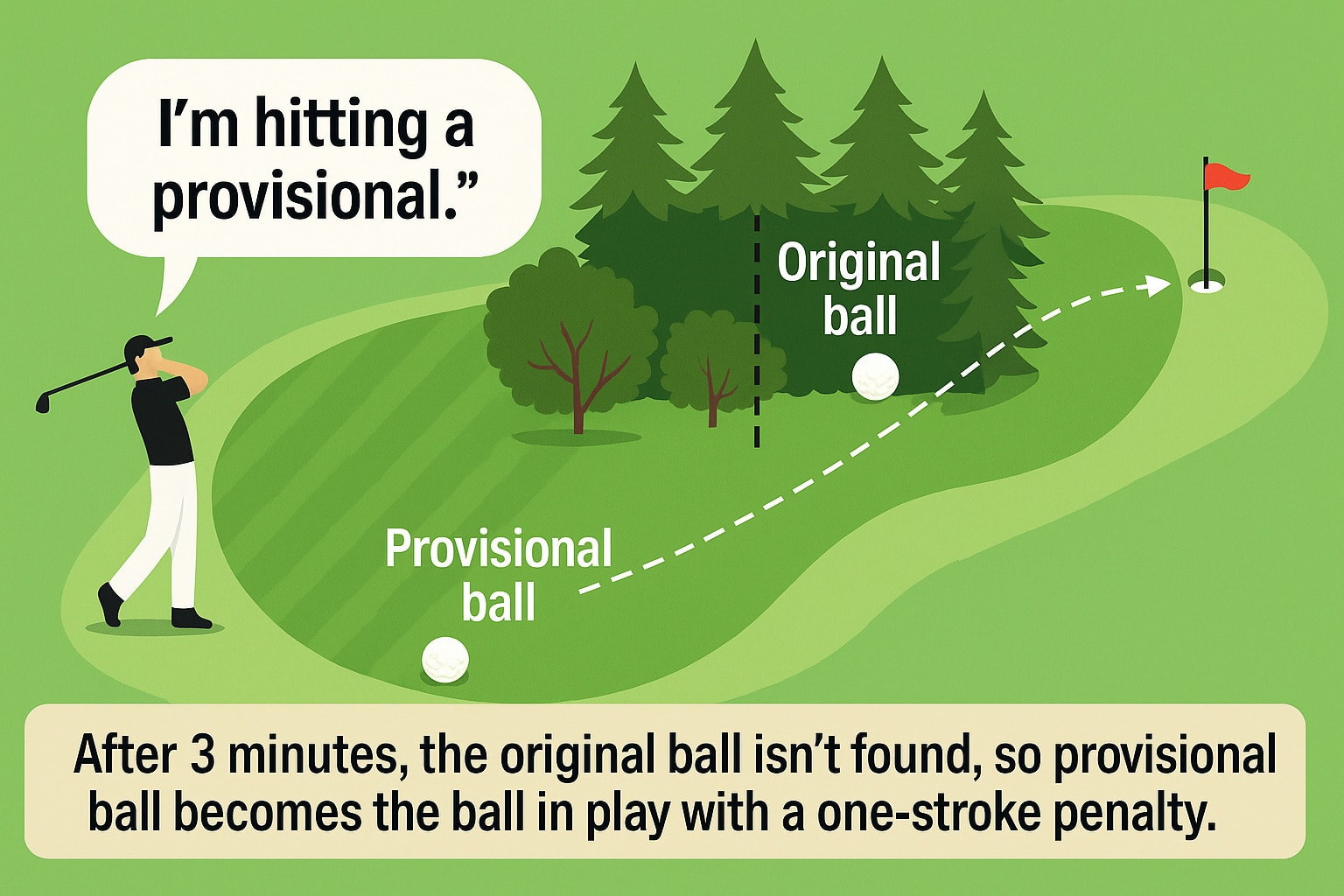
Rule Reference: Rule 18.3 – Provisional Ball
Rule 18.3 of the Rules of Golf governs when and how a provisional ball can be played to save time and avoid unnecessary penalties when a ball may be lost or out of bounds.
Overview of Rule 18.3
Rule 18.3 allows a player to play a provisional ball if the original ball may be:
- Lost outside a penalty area
- Out of bounds
The player must declare it as a provisional before making the stroke and may continue playing the provisional until it becomes the ball in play or is abandoned, depending on the situation.
Key Points of Rule 18.3
18.3a: When a Provisional Ball Is Allowed
A provisional ball is only allowed if the original might be lost outside a penalty area or out of bounds. If it’s known or virtually certain the ball is in a penalty area, a provisional is not permitted.
18.3b: How to Declare a Provisional Ball
The player must say the word “provisional” or clearly state their intent before hitting the shot. Saying “I’ll hit another” is not enough.
18.3c: Playing the Provisional Ball
You may continue playing the provisional from the same distance or farther from the hole than the original ball’s estimated location. The provisional becomes the ball in play if:
- The original is lost or out of bounds, or
- The provisional is played from closer to the hole than where the original is estimated to be.
You must abandon the provisional if the original is:
- Found in bounds (outside a penalty area) within 3 minutes, or
- Found in a penalty area or known to be in it.
You can read the full text of Rule 18.3 in the USGA/R&A Player’s Edition Rulebook here.
Provisional Ball vs Second Ball – Are They the Same?
No, a provisional ball is not the same as a second ball, even though golfers sometimes confuse the terms.
A provisional ball is a specific term under Rule 18.3, used when a ball may be lost outside a penalty area or out of bounds. It must be declared properly before the stroke and only becomes the ball in play under certain conditions.
A “second ball” is an informal phrase that’s not defined in the Rules of Golf. Saying “I’ll hit another one” without declaring it as “provisional” means that second ball becomes the ball in play automatically, even if the original is still findable.
Key difference:
- Provisional ball: Declared, rule-based, conditional
- Second ball: Undeclared, becomes in play by default, may lead to rules violations
To stay within the rules, always use the term “provisional” when appropriate.
FAQs About Provisional Balls
1. When can I play a provisional ball?
You can play a provisional if your original ball might be lost outside a penalty area or out of bounds.
2. Do I have to say “provisional” out loud?
Yes. You must clearly declare it as a “provisional” before hitting. Vague phrases like “I’ll hit another” don’t count.
3. Can I play a provisional if my ball might be in a water hazard?
No. Provisional balls are not allowed if the original might be in a penalty area.
4. How many times can I hit a provisional ball?
You can continue playing the provisional as long as each shot is from the same distance or farther from the hole than where the original ball is estimated to be.
5. What happens if I find my original ball?
If it’s found in bounds and within 3 minutes, you must abandon the provisional and continue with the original.
6. What if I play the provisional from a spot closer to the hole?
It automatically becomes the ball in play, even if the original is later found.
7. Is there a penalty for playing a provisional?
Yes. If it becomes your ball in play, you take one penalty stroke under the stroke and distance rule.
Get instant access to the PDF version of this article with additional resources and insights.