
TL;DR – Lost Ball in One Line
A lost ball is one you can’t find within 3 minutes; take one stroke and replay from your last spot.
Key Takeaways
- A lost ball is one that is not found or identified within 3 minutes.
- You must take stroke-and-distance relief with a one-stroke penalty.
- The original ball is out of play once a replacement is used or time expires.
- Provisional balls help avoid walking back and save time.
- Lost balls often happen in deep rough, woods, or blind shots.
- Always watch your ball closely and play a provisional when in doubt.
What Is a Lost Ball in Golf?
A lost ball in golf is any ball that cannot be found or identified within three minutes of starting the search. According to the Rules of Golf (Rule 18.2a), once this time limit is up, the ball is considered lost, even if it’s later found.
When a ball is lost, the player must take a one-stroke penalty and replay the shot from the original spot, following the stroke-and-distance rule. This means you return to where you hit the last shot, add a penalty stroke, and play again.
2019 Rule Change: Search Time Reduced
2019 Rules update: the search window for a potentially lost ball was cut from 5 minutes to 3 minutes, streamlining play and trimming long waits.
- Old rule (pre-2019): 5-minute limit to find or identify your ball.
- New rule (2019-present): 3-minute limit, ball is lost once that clock expires.
- Why the change? Speed up rounds, keep groups moving, and reduce frustration.
- On-course tip: Start looking immediately and enlist partners to spot, every second now matters twice as much.
When Is a Ball Considered Lost?
A ball is considered lost under Rule 18.2a(1) when it is not found within 3 minutes, a provisional ball is played and becomes the ball in play, the player puts another ball into play, or the player makes a stroke from a different spot:
- Not found within 3 minutes: The search time limit starts once you or your caddie begin looking. If the ball isn’t found or identified in that window, it’s lost.
- Provisional ball becomes ball in play: If you declare and hit a provisional ball, and then play it again before finding the original, the original is automatically lost.
- Another ball is put into play: If you drop or place a new ball under a rule (like unplayable ball relief), the original is no longer in play, even if later found.
- Stroke made from a different spot: If you abandon the search and play a new stroke from a different location (like back at the tee), the original ball is deemed lost.
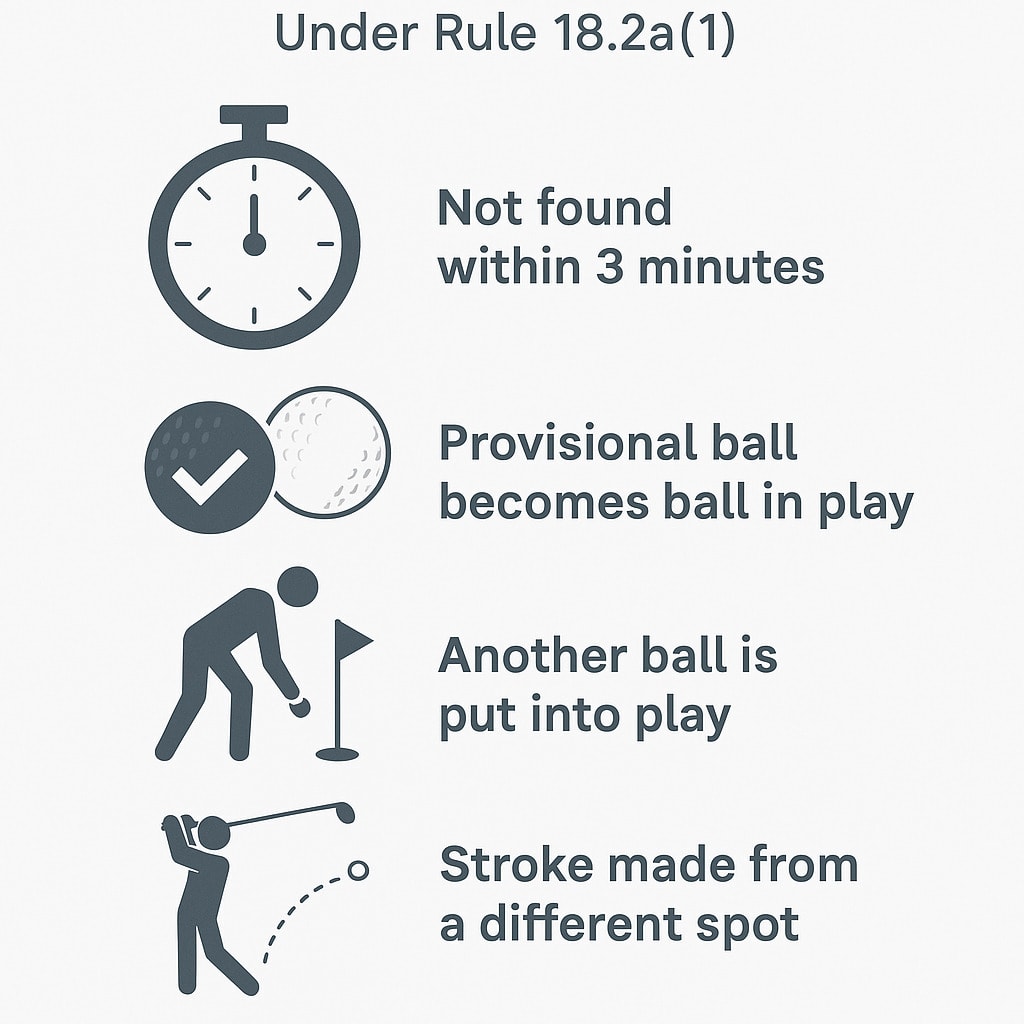
Even if your ball is found afterward, it remains lost if any of these rules have already taken effect.
Rules & Penalties for a Lost Ball
If your ball is lost, the rules require a one-stroke penalty, replaying the shot from the original spot, no relief near the lost area, ball becomes out of play, and you must walk back unless a provisional was played, all under Rule 18.2b of the Rules of Golf.
- One-stroke penalty: You must add one penalty stroke to your score.
- Replay from original spot: You must return to where the last shot was made and hit again.
- No relief near where ball was lost: You cannot drop close to the lost location, only stroke-and-distance is allowed.
- Ball is out of play once deemed lost: Even if it’s found later, it cannot be used.
- Walk back if no provisional was played: Without a provisional, you must return to replay the shot, which delays play.
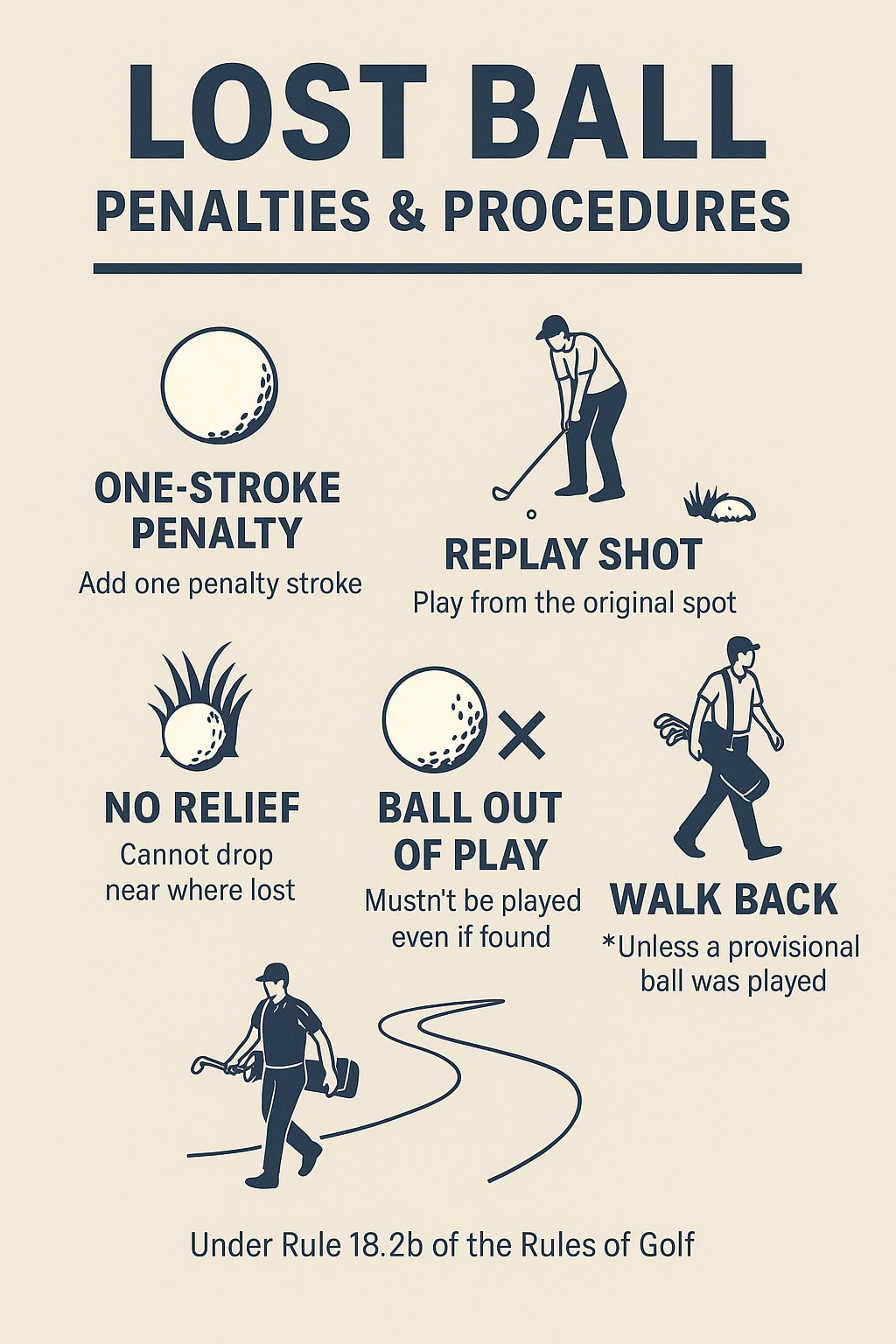
Playing a provisional ball helps avoid these penalties and keeps the game moving.
Rules of Golf: Lost Ball: Rule 18.2a & 18.2b Explained
Under Rule 18.2a, your ball is considered lost if it’s not found or identified within three minutes of starting your search.
- If a ball is found but it’s uncertain whether it’s yours, you’re allowed reasonable time to identify it, even if that goes beyond the three-minute window.
- A ball is only out of bounds if all of it lies beyond the boundary edge of the course.
According to Rule 18.2b, when your ball is lost or out of bounds, you must take stroke-and-distance relief:
- Add one penalty stroke
- Replay from where the previous stroke was made (see Rule 14.6)
Exception: If it’s known or virtually certain what happened to the ball under another rule (like it was carried away by water or a spectator), you may be allowed to substitute a ball under that rule instead.
See full rule at: Rule 18
Difference Between Lost Ball and Out of Bounds
Lost ball and out of bounds differ in cause, how it’s determined, course markings, penalty, use of provisional ball, and replay location, even though both result in the same stroke-and-distance penalty.
| Aspect | Lost Ball | Out of Bounds (OB) |
|---|---|---|
| Cause | Ball not found or not identified within 3 minutes | Ball completely crosses outside the course boundary |
| How It’s Determined | Based on time and identification rules | Based on course boundary lines or white stakes |
| Course Markings | No specific markings; depends on visibility and terrain | Marked by white stakes, lines, or fences |
| Penalty | One stroke and replay from previous spot | One stroke and replay from previous spot |
| Provisional Ball | Strongly recommended if ball may be lost | Strongly recommended if ball may be OB |
| Replay Location | Same spot as original stroke | Same spot as original stroke |
While the penalties are the same, understanding these differences helps golfers make quicker decisions and apply the correct rules during play.
What Is a Provisional Ball and When to Use It?
A provisional ball is a backup shot used when your original ball may be lost outside a penalty area or out of bounds, helping you save time and avoid a walk-back.
- What it is: A provisional ball is a second ball played in advance under Rule 18.3, in case the original ball is lost or out of bounds.
- When to declare: You must announce your intention clearly before hitting it (e.g. “I’m playing a provisional ball”).
- When to use it:
- If your ball may be lost outside a penalty area (e.g. deep rough or woods)
- If it may be out of bounds
- If you’re unsure where the ball landed
- If the original is found in play: You must abandon the provisional and continue with the original ball.
- If the original is lost or OB: The provisional becomes the ball in play, with a one-stroke penalty.
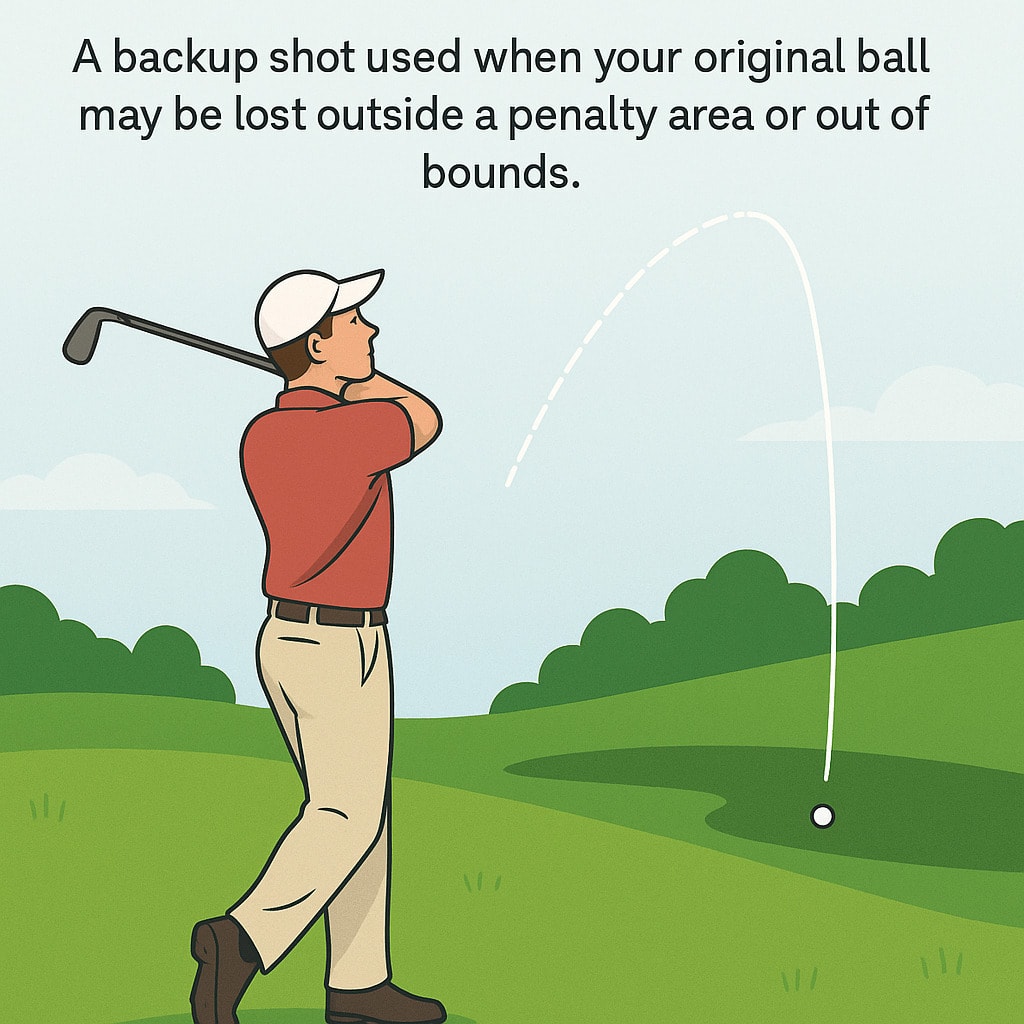
Using a provisional ball is a smart way to keep the game moving and avoid unnecessary backtracking.
Common Situations That Lead to a Lost Ball
Lost balls often happen due to deep rough, thick trees, blind shots, plugged lies, sun glare, and poor visibility, especially when no one sees exactly where the ball lands:
- Deep rough or tall grass: The ball sinks below the surface and becomes nearly invisible.
- Thick trees or wooded areas: Shots into dense forest make it hard to locate or even enter the area safely.
- Blind shots: On holes where the landing area isn’t visible, it’s easy to lose track of the ball’s direction or distance.
- Plugged lies in soft ground: Wet or muddy fairways can cause the ball to bury on impact.
- Sun glare or low light: Late afternoon sun or twilight can hide the ball in flight or on the ground.
- Distractions or poor tracking: Not watching the ball closely after hitting or relying too much on others to spot it.
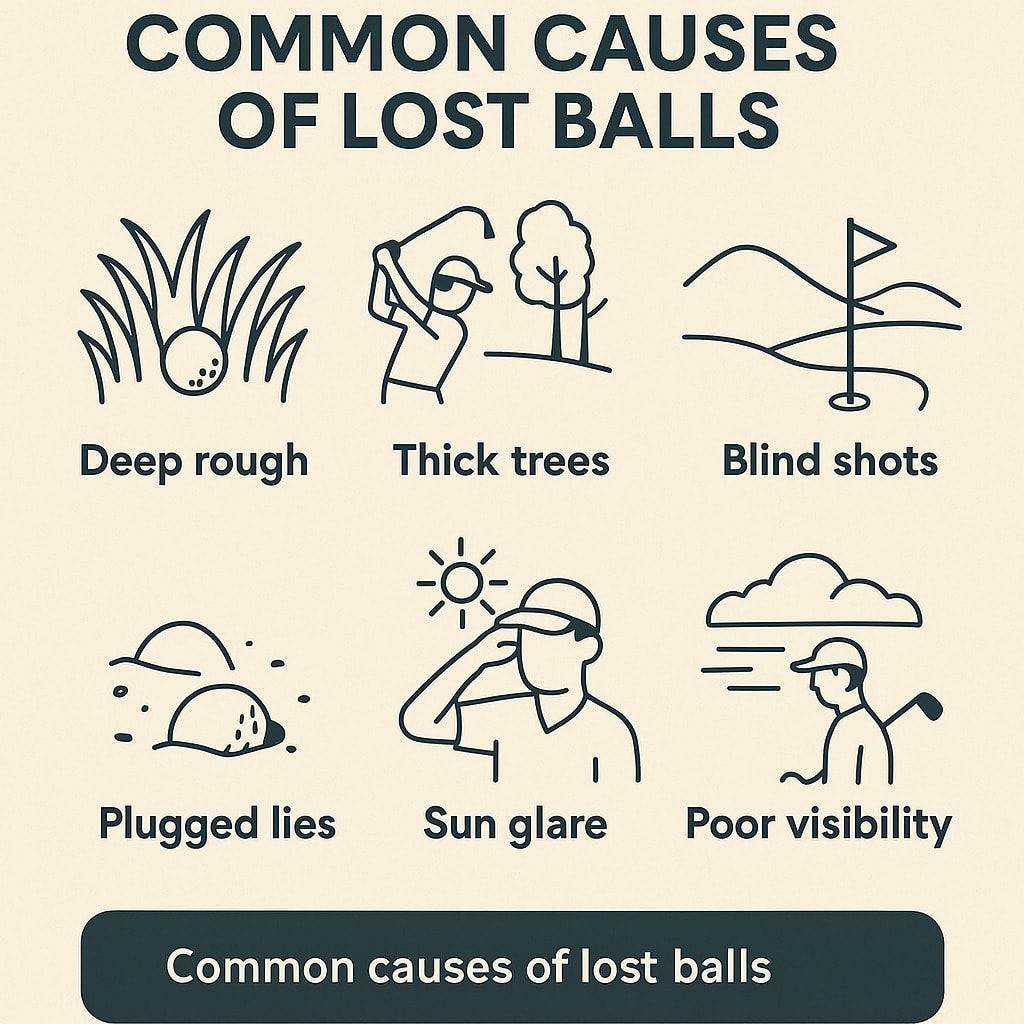
Being aware of these situations helps you anticipate trouble and play a provisional ball when necessary.
Tips to Prevent Losing Your Ball
To avoid losing your ball, you should watch your ball carefully, use unique markings, ask playing partners to help spot, walk directly to the landing area, play a provisional ball, use high-visibility balls, and know common trouble areas.
- Watch your ball carefully: Track it from start to finish, don’t look away too early.
- Use unique markings: Draw a line or initials on your ball to help identify it quickly.
- Ask playing partners to help spot: Let others know you might need help tracking the shot.
- Walk directly to where you think it landed: Don’t delay or detour, go straight to the landing area.
- Play a provisional ball: If you think the ball might be lost or out of bounds, declare and hit a provisional.
- Use higher-visibility balls: Bright colors can make a big difference in rough or low light.
- Know common trouble areas: Stay alert on blind holes, near hazards, or in thick rough.
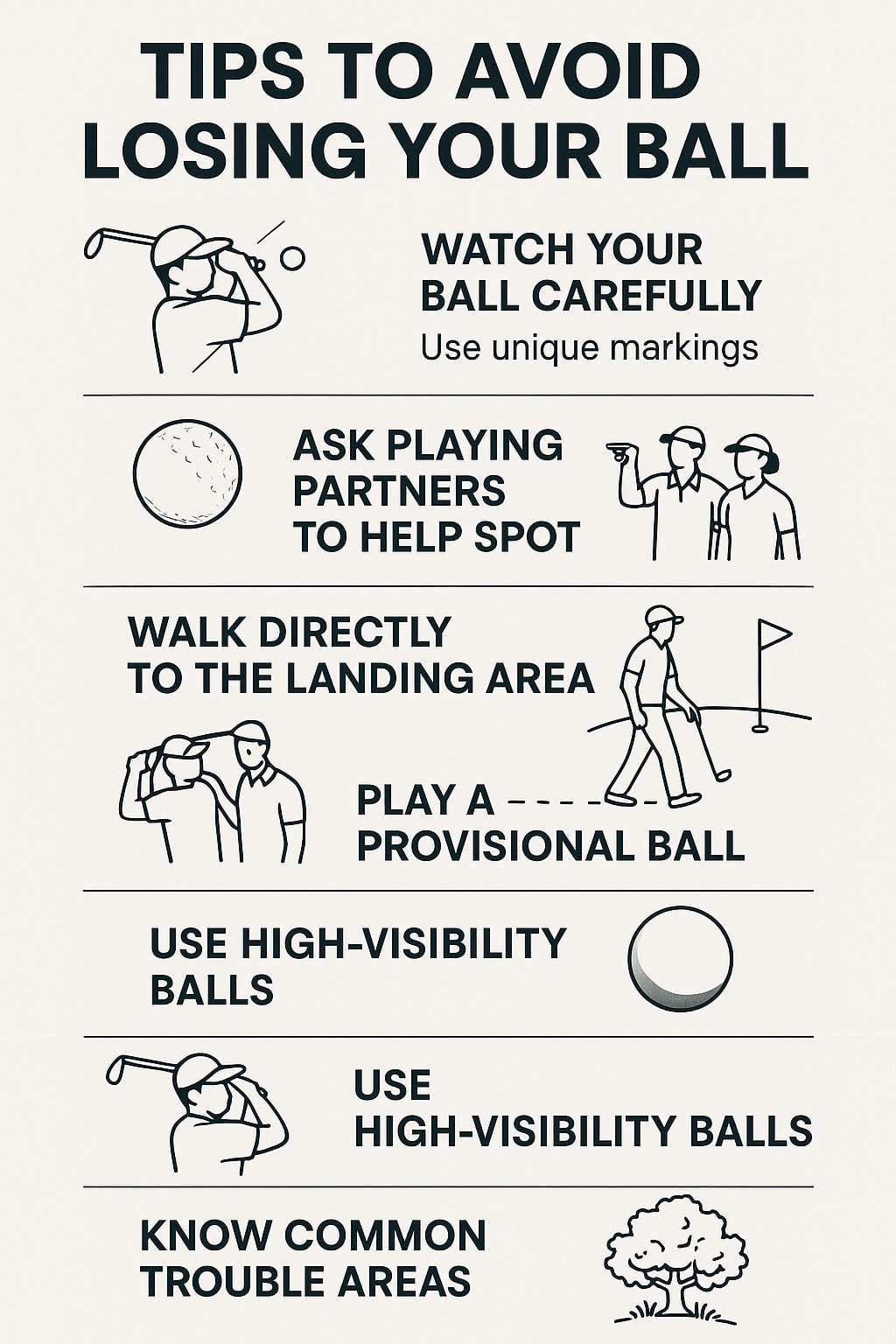
A little extra focus and preparation can save you strokes and frustration.
FAQs About Lost Balls in Golf
Can I declare my ball lost to save time?
No. Under the Rules of Golf, a ball is only considered lost if it meets specific conditions (like exceeding the 3-minute search limit or being replaced). You can’t just declare it lost to avoid looking.
What happens if I find my original ball after playing a new one?
If you’ve already put another ball into play (like a provisional or a dropped ball), the original is no longer in play, even if you later find it. It remains lost.
Do I get free relief if my ball is buried or plugged?
Only if the ball is found and confirmed as yours. If it’s embedded in the general area (not sand or rough), you may be entitled to free relief under Rule 16.3.
Do I always have to walk back and replay the shot?
Yes, unless you played a provisional ball. If the original is lost or out of bounds and no provisional was played, you must return to the original spot and replay with a one-stroke penalty.
Get instant access to the PDF version of this article with additional resources and insights.